 Comparison
Luxury Vinyl vs Laminate: Installation Costs Compared
Last Updated: November 14, 2026
Quick Summary
Comparing luxury vinyl vs laminate installation costs, both floors sit in a similar supply-and-fit bracket, but the money splits differently between materials, subfloor prep and labour. LVT tends to carry more of its cost in the material and the prep, while laminate tends to carry more in the trims, underlay and the risk of a wavy subfloor.
- Click LVT is the fastest and cheapest fitting method, with labour typically below glue-down.
- Laminate can sometimes go down over a subfloor that LVT would need skimmed first.
- Prep cost generally scales with the area and the severity of the problem.
- LVT wins on water resistance, handling splashes far better than laminate at the seams.
- Over ten years, LVT often needs less repair while laminate can swell at the seams.
Table of Contents
- Luxury Vinyl vs Laminate Installation Costs at a Glance
- What Drives LVT Flooring Installation Cost
- What Drives Laminate Flooring Installation Cost
- Subfloor Preparation Cost for Flooring: The Hidden Line
- LVT Flooring Cost per Room: Worked Examples
- Water Resistance, Durability and Underfloor Heating
- DIY vs Professional Fitting: Labour Rates and Real Risks
- Ten-Year Cost of Ownership: Which Works Out Cheaper?
- Frequently Asked Questions
Luxury Vinyl vs Laminate Installation Costs at a Glance
Comparing luxury vinyl vs laminate installation costs comes down to this: both floors sit in a similar supply-and-fit bracket, but the money splits differently between materials, subfloor prep and labour. Both floors sit in a similar supply-and-fit bracket, and the pattern is worth understanding before you ask for a quote. LVT tends to carry more of its cost in the material and the prep; laminate tends to carry more in the trims, underlay and the risk of a wavy subfloor.
Below, we break down what actually drives each quote, where the hidden subfloor line hurts, and how the two compare over a decade of ownership.
| Factor | LVT | Laminate |
|---|---|---|
| Material cost | Higher per square metre | Lower per square metre |
| Subfloor prep | Critical, often extra | Critical, often extra |
| Water resistance | Strong with correct fitting | Limited at seams |
| Underfloor heating | Usually compatible | Check the board spec |
| Best for | Kitchens, bathrooms, busy halls | Living rooms, bedrooms |
What Drives LVT Flooring Installation Cost
LVT flooring installation cost is driven by four things: the wear layer, the plank format, the fitting method and how fussy the room is to fit around. Understanding how each one moves the quote is the difference between a budget that holds and one that gets revised halfway through the job.
Wear Layer and Format
The wear layer is the clear top film that takes the scuffs. A domestic-grade layer suits bedrooms and low-traffic rooms; a commercial-grade layer costs more and suits hallways, kitchens and rental properties. Choosing a commercial-grade wear layer generally increases the material cost, because the vinyl itself is thicker. Pricing depends on quantity, dates and delivery, so check current prices on our website or request a quote.
Plank size changes the fitting time as well as the material cost. Big planks mean fewer joins but more cutting around doorways and pipes, and the offcut waste on a herringbone or chevron layout can run noticeably higher than on a straight plank.
Fitting Method: Click, Glue-Down and Loose-Lay
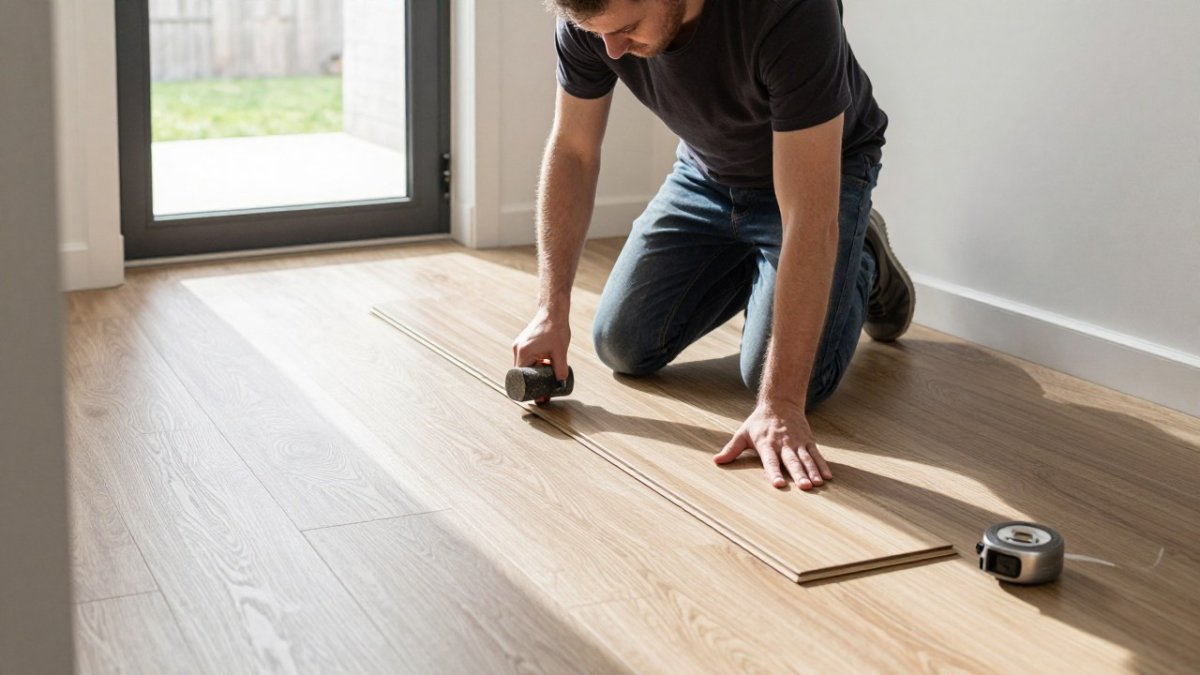
Most LVT clicks together as a floating floor, which is the fastest and cheapest method to fit. Glue-down LVT costs more in labour because the subfloor must be primed and the adhesive needs time to tack off, but it is the better choice for large rooms, heavy footfall and anywhere the floor may see temperature swings.
As a guide, the labour line for click LVT typically sits below that for glue-down in the same room, and the gap widens on larger areas because the adhesive stage scales with square metres. Ask your fitter which method the product is warrantied for, some ranges void the warranty if glued when they are designed to float.
Room Complexity and Labour Rates
Rooms with chimney breasts, boxed pipes or several doorways add fitting hours. Measuring the actual room rather than relying on the floor plan helps, because a "small" bathroom with a wet room zone can take longer than a straightforward bedroom twice its size.
Labour rates for LVT fitting vary with the job, and the rate per square metre generally drops as the area rises because set-up time is spread across more floor.
Watch out: a quote that looks cheap per square metre but excludes adhesive, primer, trims and waste removal is rarely the cheaper job once the extras are added back in.
What Drives Laminate Flooring Installation Cost
Laminate flooring installation cost is driven by board thickness, the AC rating and the underlay you choose. Thicker boards with a higher AC rating generally cost more but resist dents in busy rooms. Underlay is usually needed, and acoustic underlay adds to the cost.
Board Thickness and AC Rating
The AC rating tells you how much wear a board is built to take. A lower rating suits a spare bedroom; a higher rating suits a hallway or a home with pets. Boards below a certain thickness can feel hollow underfoot and are less forgiving on an uneven subfloor.
Subfloor Preparation Cost for Flooring: The Hidden Line
Subfloor preparation cost for flooring is the line most online quotes leave out, and it is the one that decides whether your floor stays flat. Both LVT and laminate need a clean, level base, but they tolerate imperfection differently, and that difference is where the real cost gap between the two products opens up.
Why the Two Products Need Different Prep
Laminate is a floating floor with a built-in underlay or a separate foam or acoustic underlay beneath it. It will bridge minor undulations, but it will also telegraph them: a ridge in the subfloor becomes a hollow-sounding spot and a hinge point for the click joints.
In practice, laminate can sometimes go down over a subfloor that LVT would need skimmed first, and glue-down LVT is the least forgiving of all because the adhesive has nowhere to compensate. That is why two quotes for the same room can differ by hundreds of pounds once the prep is priced properly.
The Prep Options and What Each One Costs
- Scraping and cleaning: removing old adhesive, tack strips and staples. The cheapest option, but only enough when the base is already sound and flat.
- Latex screed / self-levelling compound: the standard fix for dips and minor undulations. Priced per square metre plus a primer, and it needs curing time before the floor goes down, which can add a day to the programme.
- Plywood overlay: used over timber boards that are springy, cupped or too uneven to screed. Priced per sheet plus fixing, and it raises the finished floor height, which matters at door thresholds.
- Damp-proof membrane: essential over concrete that has no existing damp course, and a common hidden extra on ground floors.
- Moisture testing: a simple check that is often skipped and later blamed on the product when a floor lifts.
Prep cost generally scales with the area and the severity of the problem, so a large, badly out-of-level room can see prep rival the material cost.
How to Price Prep Before You Commit
Ask for the prep to be quoted as a separate line with the method named, not as a lump sum labelled "preparation". A fitter who has measured the floor should be able to tell you whether the base needs scraping only, a skim, or an overlay, and roughly how much curing time that adds.
Watch out: skipping prep to save money is the single most common reason a new floor ripples or clicks within a year. A floor laid over an uneven base will fail, and the fix, uplift, new prep and a replacement floor, costs more than the prep ever would.
LVT Flooring Cost per Room: Worked Examples
LVT flooring cost per room depends on the area, the wear layer and the prep, so treat any per-room figure as a starting point rather than a quote. Here is how we would think through three typical rooms.
- Small bathroom, awkward shape: small area, but cutting around a wet room zone and toilet adds fitting time. Prep is usually light.
- Kitchen-diner: mid-size area, high traffic, so a stronger wear layer is worth it. Expect prep if the old floor comes up uneven.
- Hallway and stairs: small on paper, but stairs are slow to fit and trims add cost. Prep matters because hallways take the most footfall.
Water Resistance, Durability and Underfloor Heating
LVT wins on water resistance. A well-fitted LVT floor with sealed joins handles splashes and spills in kitchens and bathrooms far better than laminate, whose core can swell if water reaches the seams. Laminate still suits dry rooms well and resists everyday scratches.
Both floors can work with underfloor heating if the board or tile is rated for it, but always check the manufacturer's spec before you buy. Acoustic insulation and thermal conductivity vary by product, so match the underlay to the system.
DIY vs Professional Fitting: Labour Rates and Real Risks
Fitting charges are the swing factor in any comparison. Doing it yourself can save the labour cost but shifts the risk onto you. A common mistake is underestimating the prep and the trimming, which is where most DIY floors go wrong. If you are weighing up the DIY route, our guide on how to prevent damaged skirting boards covers the collateral damage to avoid during fitting.
Professional fitting can bring a flat, properly prepped base and clean trims, and it may protect the warranty. A professional fit is generally advisable for LVT in wet rooms and for any room where the subfloor is questionable.
Ten-Year Cost of Ownership: Which Works Out Cheaper?
Over ten years, the cheaper floor is not always the one with the lower quote. LVT usually costs more up front but shrugs off spills and heavy traffic, so it often needs less repair. Laminate costs less to buy but can swell at the seams if water gets in, which means replacement rather than repair.
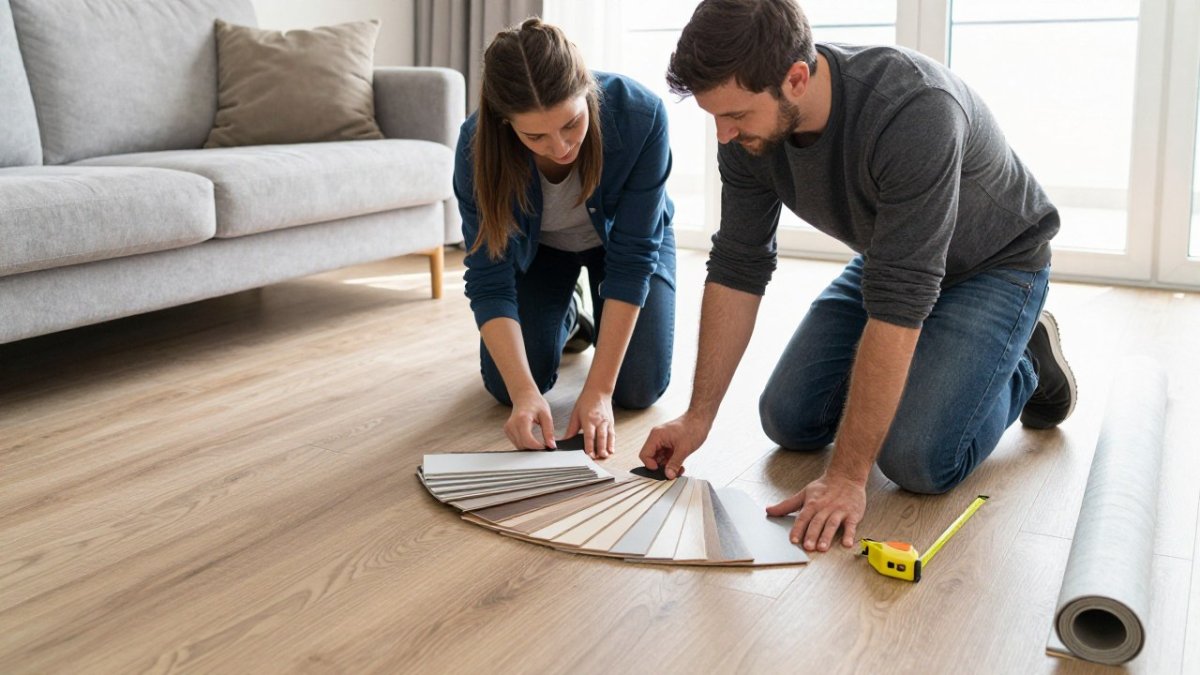
As a general rule, for busy family homes and wet areas, LVT can earn back its higher material cost through fewer replacements. For dry, low-traffic rooms, laminate is often the budget-friendly pick.
The real challenge is not choosing between LVT and laminate on price alone, it is matching the floor to the room and getting the prep right.
Frequently Asked Questions
Is luxury vinyl more expensive to install than laminate?
Usually yes, by a modest margin. LVT planks are thinner and more flexible, so fitters spend longer on subfloor preparation and levelling to stop joints telegraphing through. Laminate is thicker and more forgiving over minor undulations. The gap narrows on large, open rooms and widens in older properties with uneven floors, where LVT prep can add a meaningful amount to the total. Always ask for a quote that separates materials, fitting and prep so you can see where the money goes.
How much does it cost to install LVT flooring per square metre?
Fitting charges for luxury vinyl vs laminate vary with the wear layer, plank format, room shape and whether furniture needs moving. Pricing depends on the room, the layout and the preparation needed, including herringbone layouts, multiple doorways, and screed that needs levelling compound. For current prices or a quote, please visit our website.
Does LVT or laminate need more subfloor preparation?
LVT generally needs more. Its planks are thin and follow the contours of the floor beneath, so ridges, dips and old adhesive show through within months. A latex levelling compound is often needed to get the surface flat. Laminate tolerates small imperfections because of its thicker core and built-in underlay, though anything over a few millimetres across a two-metre straightedge still needs attention. Subfloor preparation cost for flooring is the line most likely to be underestimated in any budget.
Can you install luxury vinyl or laminate flooring yourself?
Click-lock systems are genuinely DIY-friendly in a square, empty room. The difficulty is everything around the edges: cutting neatly around door frames, scribing skirting, keeping expansion gaps consistent, and getting the subfloor flat enough. Mistakes tend to show as lifting edges, gaps at the walls and hollow sounds underfoot. If the room is a bathroom, wetroom or high-traffic area, professional fitting protects the warranty and the finish.
Which is cheaper over time, luxury vinyl or laminate?
LVT usually wins on ten-year cost of ownership in wet areas and busy family rooms. It handles splashes, mopping and pet accidents without swelling, so it rarely needs replacing early. Laminate costs less upfront and suits bedrooms and living rooms well, but water damage at joints can force a whole-room replacement. Factor in the cost of one early replacement and the cheaper option upfront often stops being the cheaper option overall.