 Comparison
How to Choose the Best Vinyl Flooring for Underfloor Heating
Quick Summary
Vinyl flooring suits underfloor heating when the product and heating system are matched correctly. Glue-down or thin sheet vinyl performs best, and the surface should never exceed the manufacturer's temperature limit, which is about 27°C for many products.
- Vinyl heats and cools quickly, so warmth reaches the room with little delay.
- MP Global Products says vinyl should generally not exceed 80.6°F (about 27°C).
- Set the thermostat with a floor sensor so the system cuts out before the surface overheats.
- Glue-down LVT and sheet vinyl are the strongest performers on heat transfer and stability.
- Keep total floor build-up near 0.15 m²K/W or below; a thick underlay usually breaks this.
Table of Contents
- Why Vinyl Works With Underfloor Heating, and Where It Doesn't
- Vinyl Flooring Temperature Limit for Underfloor Heating: What Manufacturers Allow
- LVT Flooring and Underfloor Heating: Comparing Vinyl Types Side by Side
- Vinyl Flooring Thermal Resistance and Total Floor Build-Up
- Electric vs Water Underfloor Heating for Vinyl
- Installation and Commissioning Checklist for Vinyl on Heated Floors
- Booking a Free Home Visit to Choose Your Heated Vinyl Floor
- Frequently Asked Questions
Why Vinyl Works With Underfloor Heating, and Where It Doesn't
Vinyl flooring can work well over underfloor heating, but only when the product and the heating system are matched correctly. Nu-Heat and Beauflor both state that vinyl and luxury vinyl tile (LVT) are generally suitable, with Beauflor adding the condition that the heating system must be installed properly Nu-Heat underfloor heating floor coverings guide. At Mobile Carpets and Flooring SW Ltd, we help homeowners choose vinyl flooring for heated floors, and the right answer depends on the details below.
Vinyl is a thin material, which is the main reason it suits heated floors. MP Global Products notes that vinyl heats up and cools down quickly, so the warmth from the heating reaches the room without much delay MP Global Products guidance on vinyl and underfloor heating. That quick response is a real benefit, but it also means the floor surface needs careful temperature control.
Vinyl is not suitable for unrestricted heat. Temperature restriction is one of vinyl's main limitations. Check the manufacturer's instructions for each product before you buy, because limits differ between ranges.
Vinyl Flooring Temperature Limit for Underfloor Heating: What Manufacturers Allow
A vinyl floor should not be heated beyond the limit set by its manufacturer. MP Global Products says vinyl should generally not exceed 80.6°F (about 27°C), while Nu-Heat gives a UK-facing limit of below 27°C Nu-Heat floor temperature guidance. The two figures are close, but the honest advice is to follow the specific product's data sheet rather than assume one universal number.
Surface temperature matters more than the air temperature in the room. Set your thermostat with a floor sensor so the system can cut out before the surface gets too warm.
A common mistake is setting the thermostat high because the room feels cold. The floor surface can overheat well before the room reaches a comfortable temperature, which can damage the vinyl and affect the adhesive.
LVT Flooring and Underfloor Heating: Comparing Vinyl Types Side by Side
Most guides stop at 'LVT is fine' and leave you to guess which format suits your room. The four vinyl formats behave quite differently over a heated floor, and the differences matter more than the brand name on the box.
Sheet vinyl. Sheet vinyl is the thinnest common format, typically 2-3.5 mm including the wear layer, so heat passes through quickly and the floor feels warm soon after the system starts. The trade-off is that sheet vinyl has little inherent rigidity, so it depends entirely on a flat, sound subfloor and a full-spread adhesive. Over underfloor heating, sheet vinyl is best in bathrooms, kitchens and utility rooms where a seamless, water-resistant surface is the priority and the room is used in short bursts.
Glue-down LVT. Glue-down luxury vinyl tile is bonded directly to the subfloor with a full-spread adhesive, which makes it the most thermally efficient LVT format. There is no trapped air layer, no floating core and no underlay to insulate the heating. It is also the most stable under repeated heating and cooling because the adhesive holds every tile in place. The constraint is installation: the subfloor must be smooth, dry and primed, and the adhesive must be one the manufacturer approves for underfloor heating. Glue-down LVT suits whole-house installations and rooms with heavy foot traffic.
Click LVT. Click or floating LVT is faster to install and easier to lift later, but the floating construction introduces two issues over underfloor heating. First, the click joints expand and contract with temperature, so the manufacturer's expansion gaps at perimeters and doorways must be followed exactly. Second, many click products require an underlay, and a thick acoustic underlay adds thermal resistance that slows heat transfer. If you choose click LVT, look for a product rated for underfloor heating with a thin, heat-conductive underlay rather than a deep foam one.
Rigid-core (SPC) LVT. Stone-plastic composite or rigid-core LVT has a dense mineral core that resists indentation and handles temperature swings well. It is often the best choice for rooms with heavy furniture or direct sunlight, but the rigid core is denser than flexible LVT, so heat transfer is slightly slower. Rigid-core products are commonly installed as click or glue-down; the glue-down version performs better over heating because it eliminates the air gap beneath the plank.
| Format | Typical thickness | Heat response | Installation constraint | Best rooms |
|---|---|---|---|---|
| Sheet vinyl | 2-3.5 mm | Fastest | Full-spread adhesive; subfloor must be flat | Bathrooms, kitchens, utilities |
| Glue-down LVT | 2.5-4.5 mm | Fast | Subfloor prep and heating-rated adhesive | Whole-house, high traffic |
| Click LVT | 4-6 mm | Moderate | Expansion gaps; thin heat-rated underlay only | DIY retrofits, bedrooms |
| Rigid-core LVT | 4-6 mm | Moderate | Dense core; glue-down version preferred | Sunrooms, heavy furniture |
Typical thickness
A practical rule: the thinner and more firmly bonded the format, the better it performs over underfloor heating. Sheet vinyl and glue-down LVT are the strongest performers on heat transfer and stability; click and rigid-core products can work well but demand closer attention to underlay choice and expansion detailing.
Watch out: a common failure is pairing click LVT with a thick acoustic underlay sold as 'suitable for underfloor heating', the underlay may be heat-resistant but still insulate the floor enough to make the system struggle to reach temperature.
Vinyl Flooring Thermal Resistance and Total Floor Build-Up
Heat output from any underfloor heating system is limited by the thermal resistance of everything above the heating element. That includes the vinyl, the adhesive, any underlay, the smoothing compound and the subfloor itself. Manufacturers express this as thermal resistance (R-value), measured in m²K/W, and the sum of all layers is what the heating system has to push through.
A practical threshold most practitioners work to is a total build-up resistance of no more than about 0.15 m²K/W above the heating element for vinyl floors. Some heating suppliers publish a slightly higher limit, and some vinyl manufacturers publish a lower one, so the binding figure is whichever is stricter. If the total exceeds the limit, the system may still run, but it will need a higher flow temperature or longer run times to deliver the same warmth, which raises running costs and can push the floor surface toward its temperature limit.
Typical resistance contributions are roughly as follows. A 3 mm sheet vinyl adds around 0.01-0.02 m²K/W. A 4.5 mm glue-down LVT adds around 0.02-0.03 m²K/W. A 5 mm click LVT with a 1.5 mm heat-rated underlay can add 0.05-0.08 m²K/W or more, depending on the underlay. A thick acoustic underlay of 5 mm or more can add 0.10 m²K/W on its own, which is why it is usually the layer that breaks the budget.
Worked example: a glue-down LVT of 4.5 mm (0.025 m²K/W) over a 3 mm smoothing compound (0.005 m²K/W) and a 2 mm adhesive layer (0.002 m²K/W) totals about 0.032 m²K/W, comfortably inside the threshold. The same LVT laid as a click product over a 5 mm acoustic underlay (0.10 m²K/W) totals about 0.13 m²K/W, which is close to the limit and leaves little margin for error. Swap in a 10 mm underlay and the total exceeds the threshold, and the heating system will underperform.
The practical steps are straightforward. Ask the vinyl manufacturer for the product's thermal resistance, not just its temperature limit. Ask the underlay supplier for the same figure. Add the adhesive and smoothing compound contributions, which are small but not zero. Compare the total against the heating system's published maximum. If the total is too high, the fix is usually to remove or thin the underlay rather than to raise the flow temperature.
Watch out: some installers compensate for a high-resistance build-up by increasing the flow temperature, which can push the floor surface past the vinyl's limit and damage the adhesive or cause seams to lift, the correct response is to reduce the build-up, not to overheat it.
Electric vs Water Underfloor Heating for Vinyl
Both electric and water-based systems can sit beneath vinyl, but they suit different projects. The choice affects installation effort, running costs and how quickly the floor responds.
Electric Systems: Foil Mats and Cable Mats
Electric systems are the usual choice for retrofits and smaller rooms. Thermosphere recommends a foil heating system for use beneath vinyl finishes, and foil mats are generally thin, which suits the heat-transfer requirements of vinyl Thermosphere best underfloor heating for vinyl. Cable mats work well too, but they are usually thicker, so check the build-up height.
Electric systems respond quickly, which makes them practical for bathrooms and rooms used at set times. Pair them with a floor sensor and a programmable thermostat to keep the surface within the vinyl's limit.
Water-Based Systems in Vinyl Installations
Water-based systems suit new builds and whole-house projects. They take longer to respond than electric systems, and the pipework adds depth to the floor build-up. If you use vinyl over a water system, the same surface temperature limits apply, so the boiler or heat pump must be controlled carefully.
Confirm the flow temperature with your heating engineer and the vinyl manufacturer before installation. A water system can be set too hot without a clear warning, so a mixing valve and sensor are sensible precautions.
Installation and Commissioning Checklist for Vinyl on Heated Floors
A good installation protects the floor and the heating system. Work through these checks before and after the vinyl goes down:
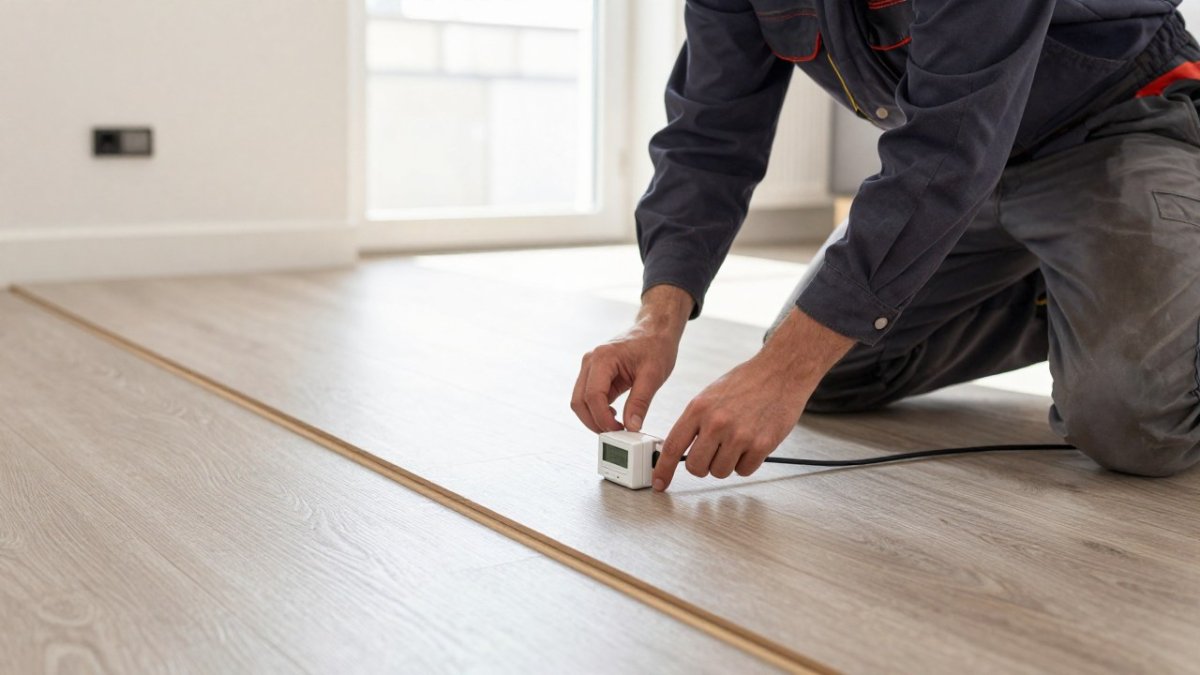
- Confirm the vinyl product's maximum surface temperature in writing
- Check the underlay and adhesive are suitable for underfloor heating
- Verify the total floor build-up with the heating supplier
- Fit a floor sensor and a thermostat with a surface temperature limit
- Test the heating before laying the vinyl, to find any cold spots
- Allow the adhesive to cure as the manufacturer advises before switching on
- Bring the heating up slowly over several days, not all at once
- Record the thermostat settings for the homeowner
Watch out: switching the heating to full power on a freshly laid floor can damage the adhesive and cause the seams to lift. Bring the temperature up gradually as the adhesive cures.
Booking a Free Home Visit to Choose Your Heated Vinyl Floor
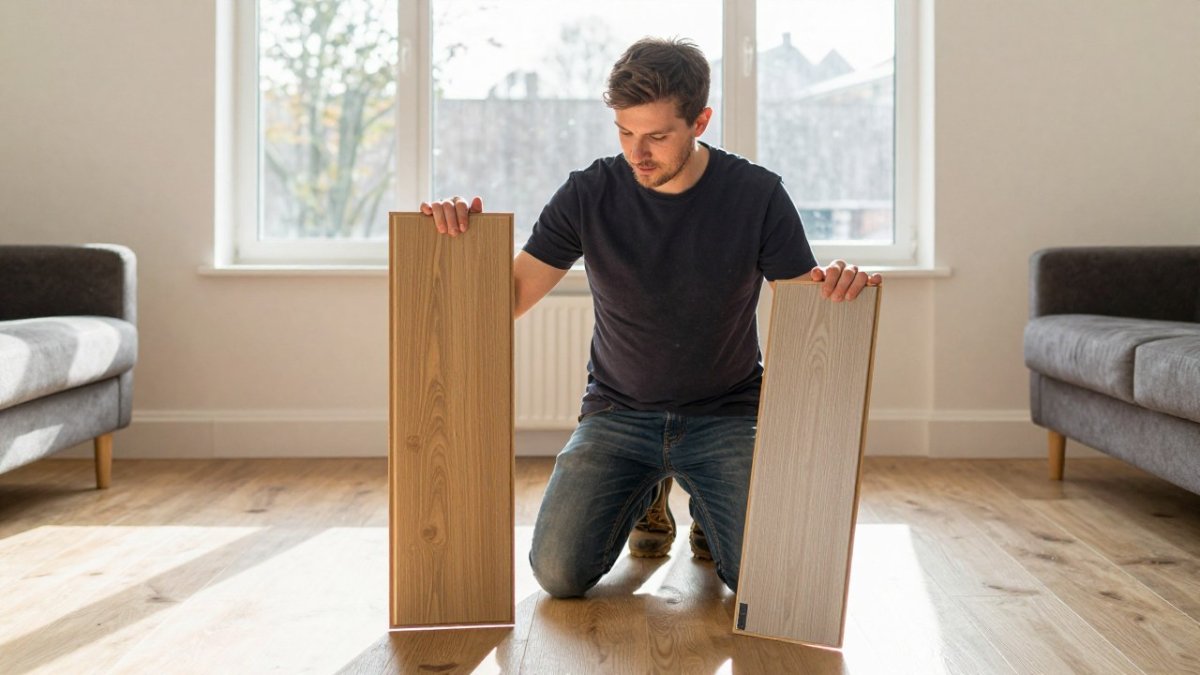
Choosing a vinyl floor for underfloor heating is easier when you can see samples in your own home. Our mobile showroom brings a selection of samples to your door, so you can compare them in your own home. Start by browsing our luxury vinyl tile range to see the styles available before your visit.
When you are ready to choose, you can arrange an LVT appointment consultation and have a specialist talk through your heating system and room layout. If you would rather talk first, a phone consultation lets you ask questions about temperature limits and build-up before committing. To request a quote or get in touch about your project, contact us and a member of the team will reply.
Frequently Asked Questions
Can you use vinyl flooring with underfloor heating?
Yes, in most cases, but suitability depends on the specific product and how the heating system was installed. Vinyl floorcoverings are generally suitable only where the underfloor heating has been installed properly. Check the vinyl manufacturer's instructions and your heating installer's guidance before buying, and ask both parties to confirm compatibility in writing. Thin vinyl usually responds quickly to heat, which is one reason it is widely specified for heated floors.
Is LVT suitable for underfloor heating?
Luxury vinyl tile (LVT) is generally suitable for underfloor heating, LVT conducts heat well and is waterproof, which makes it practical in kitchens and bathrooms. Confirm the maximum surface temperature with the LVT manufacturer, as limits vary between products, and make sure your thermostat is set accordingly.
What temperature should underfloor heating be set to under vinyl flooring?
Do not exceed the temperature limit stated by your vinyl manufacturer. Manufacturer limits vary, so rely on the limit in your product's own instructions and your heating supplier's guidance. Set the thermostat conservatively and let the floor warm up gradually rather than running it at maximum.