 Comparison
Are LVT Floors Good for Hallways? Pros and Cons
Last Updated: November 12, 2026
Quick Summary
LVT flooring is a strong choice for most hallways if you buy a thick enough wear layer and fit it correctly. It is water-resistant and scratch-resistant, though deep damage usually means replacing a plank rather than sanding it out.
- Ask for the wear layer figure in millimetres before buying for a busy hallway.
- Choose a textured finish over high-gloss, since smooth LVT gets slick with wet shoes.
- Sweep grit first, then damp-mop with a pH-neutral cleaner; avoid steam mops.
- Run planks lengthways to make a tight hallway feel longer.
- Confirm layout direction, threshold profiles, subfloor overlay and click-lock versus glue-down before the fitter arrives.
Table of Contents
- Is LVT Flooring Suitable for Hallways?
- The Pros of LVT Flooring in a Busy Hallway
- LVT Flooring Disadvantages You Should Know
- LVT vs Laminate Flooring: Which Suits a Hallway?
- How to Clean LVT Flooring Without Dulling the Surface
- Fitting LVT in Narrow or Awkward Hallways
- Book a Home Visit and See LVT Samples in Your Hallway
- Frequently Asked Questions
Is LVT Flooring Suitable for Hallways?
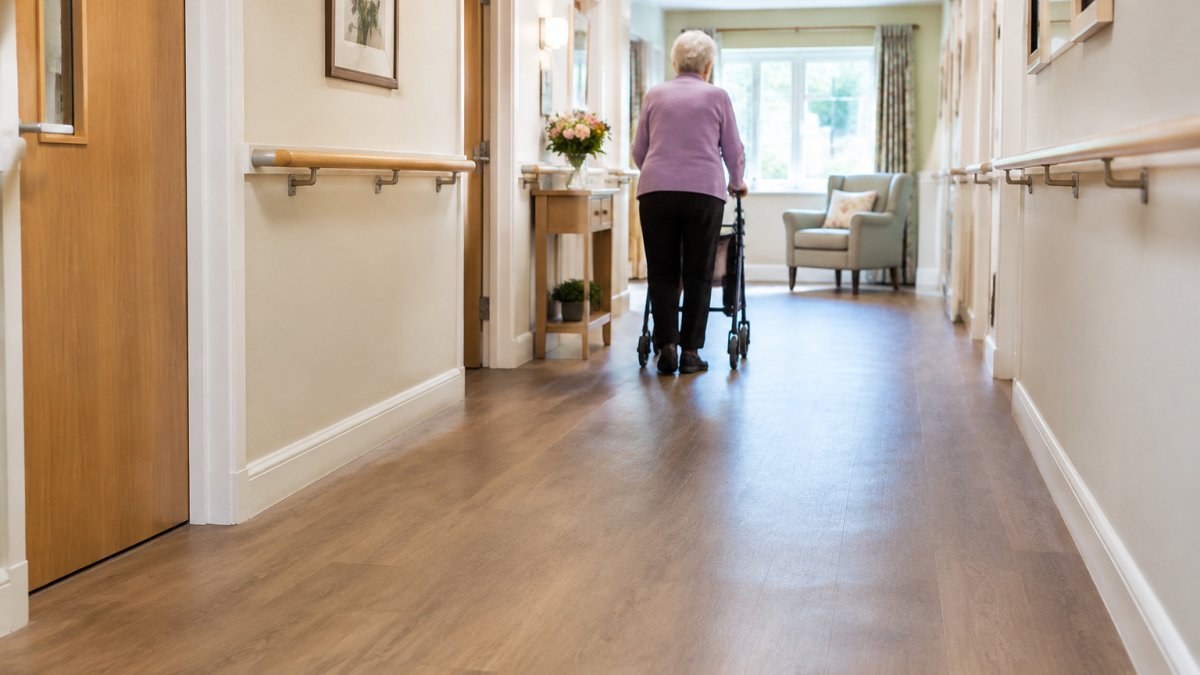
Yes, LVT flooring is a strong choice for most hallways, provided you buy a thick enough wear layer and fit it correctly. Luxury vinyl tile is a synthetic floor covering built from layers: a printed design layer under a clear protective wear layer, backed by a rigid or flexible core. You can browse our LVT range to see the actual products and options available.
Hallways are the hardest-working floor in most homes. Every pair of shoes, every wet umbrella and every dropped bag passes through them. Below, we break down the pros and cons of LVT for hallway flooring, compare it with laminate, and explain what to check before you buy.
The Pros of LVT Flooring in a Busy Hallway
The main advantage is resilience. LVT is water-resistant, so wet shoes and muddy paws do not swell or stain the surface the way they can with timber. Most ranges also carry a scratch-resistant top coat, which matters in a hallway where grit gets walked in daily.
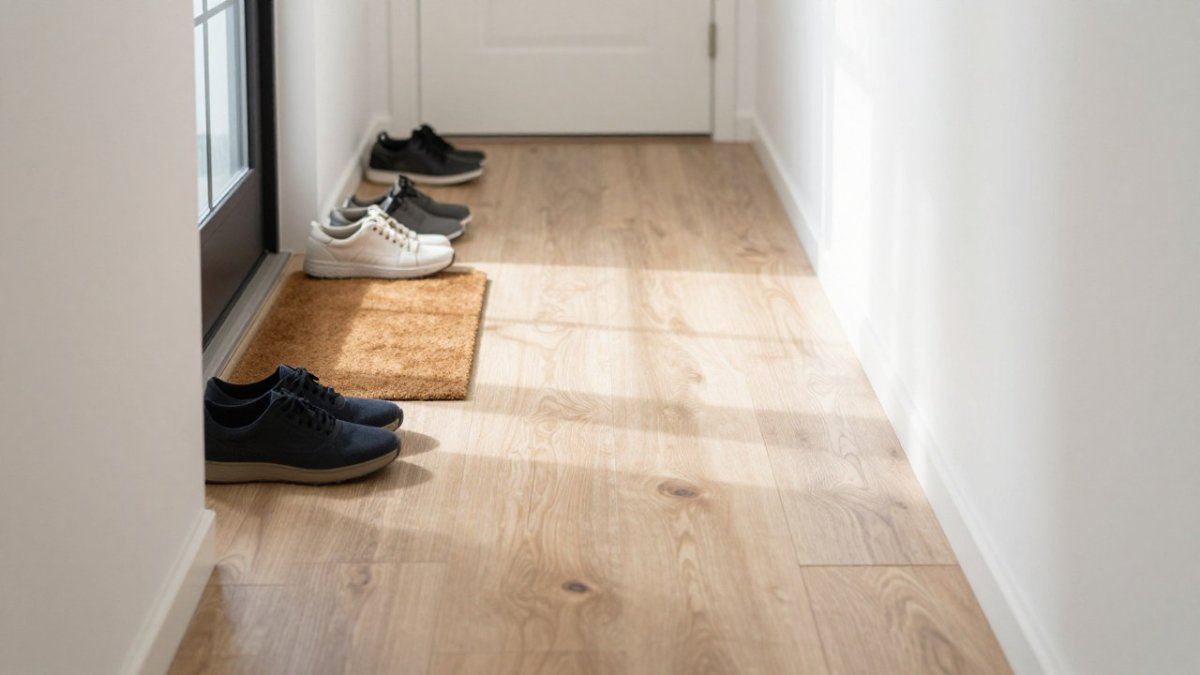
Other practical wins:
- Easy cleaning. A damp mop handles most marks.
- Warm underfoot. Vinyl feels softer than tile or stone.
- Design choice. Realistic wood and stone patterns suit period and modern homes alike.
- Thin profile. LVT sits low, so it rarely clashes with door clearance.
Wear Layer Thickness and Realistic Durability
Wear layer thickness is the number that decides how long an LVT floor lasts in a hallway. The wear layer is the clear top film that takes the abrasion. A thicker layer resists scuffing and dulling for longer under heavy foot traffic.
For a busy hallway, ask for the wear layer figure in millimetres before you buy. Thicker wear layers are generally better suited to concentrated use. The British Standards Institution guide to flooring standards sets out how products are classified for domestic and commercial wear, which helps you compare like with like.
Grip, Grit and Wet Shoes: Slip Resistance Explained
Slip resistance matters most where floors get wet, and a hallway by the front door is exactly that spot. Smooth LVT can become slick when rain is walked in, so choose a textured surface finish rather than a high-gloss one.
Textured planks trap less surface water and give shoe soles something to grip. If your hallway doubles as an entry point for a wet garden or a bathroom, it is worth looking at safety flooring options designed for slip resistance. Watch out: a polished, high-shine LVT looks superb in a showroom but can be the wrong pick for a hallway that regularly sees wet shoes.
LVT Flooring Disadvantages You Should Know
Repairability is the weak point. If the wear layer is deeply gouged, you usually cannot sand it out the way you would with solid timber. A damaged tile or plank often has to be lifted and replaced, and on a glue-down floor that means a fitter's job rather than a quick touch-up.
Other drawbacks to weigh:
- Sun fade. Strong direct sunlight through a glazed door can discolour some products over time.
- Subfloor sensitivity. LVT needs a flat surface; uneven boards can telegraph through.
- Not natural. It looks convincing, but it is still a synthetic floor.
None of these should rule LVT out. They simply mean you plan for repairs and prep the subfloor properly.
LVT vs Laminate Flooring: Which Suits a Hallway?
LVT wins on moisture, while laminate wins on price and rigidity. Laminate has a wood-fibre core that swells if water sits on it, so a hallway with wet shoes is a risk. LVT's vinyl core shrugs off spills and damp.
| Feature | LVT flooring | Laminate flooring |
|---|---|---|
| Water resistance | Water-resistant core | Swells if water sits |
| Feel underfoot | Softer, warmer | Harder, louder |
| Repair | Replace damaged plank | Replace damaged board |
| Best for | Hallways, kitchens, wet shoes | Dry, low-moisture rooms |
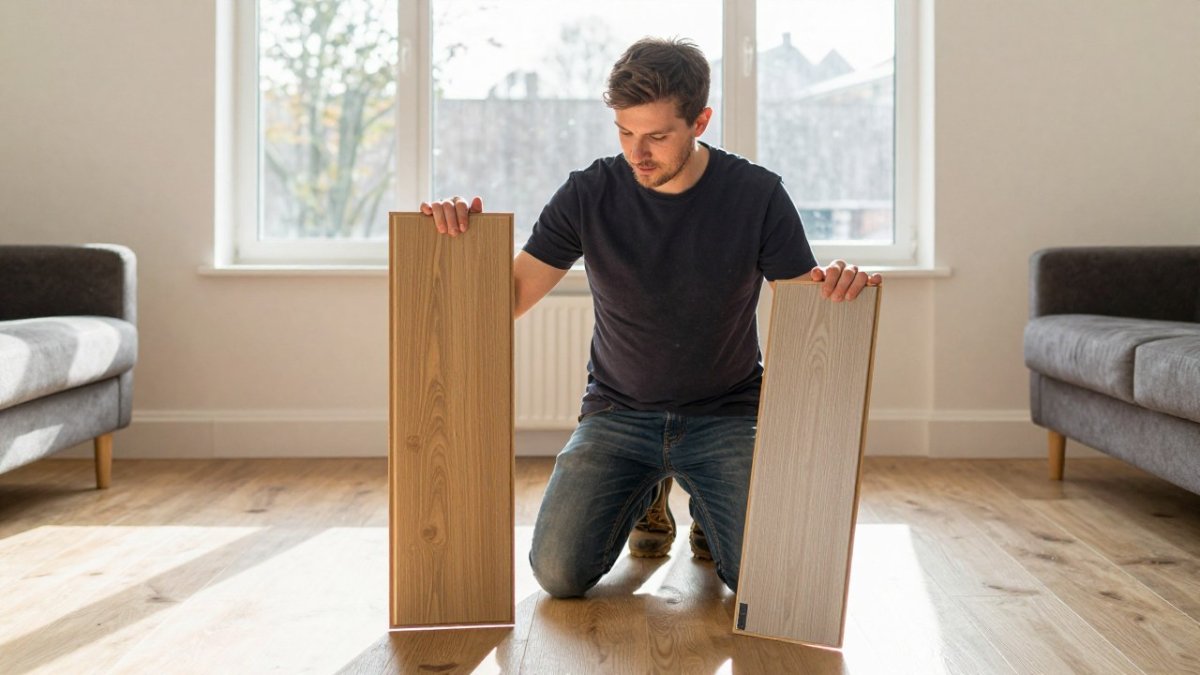
If you want to weigh both side by side, compare our laminate range against LVT before deciding. For a hallway, we would lean LVT in most homes.
How to Clean LVT Flooring Without Dulling the Surface
Cleaning LVT is simple, but the wrong products will dull the finish. Sweep or vacuum grit first, then damp-mop with a pH-neutral cleaner. Avoid abrasive pads, bleach-heavy solutions and steam mops, which can lift edges over time.
A doormat at each entrance does more for the floor than any cleaner. It traps grit before it becomes scratch damage.
Fitting LVT in Narrow or Awkward Hallways
Narrow or irregular hallways punish poor planning because every doorway, turn and threshold exposes the layout. A hallway is also the one room where the floor must meet several other floors, carpet in a living room, tile in a bathroom, a metal threshold at the front door, so the fitting detail matters as much as the plank you choose.
Layout direction and the visual effect
Planks run lengthways make a tight hallway feel longer and draw the eye toward the far door. Running them across the width makes the space feel wider but shorter, which can suit a short, wide entrance hall. In an L-shaped or dog-leg hallway, a single direction rarely works throughout; a common pattern is to run planks along the longest uninterrupted sightline and accept a transition where the hallway turns. Herringbone and chevron layouts look striking but multiply the cutting in an awkward space, so budget for more waste and more fitter time.
Doors, thresholds and clearance
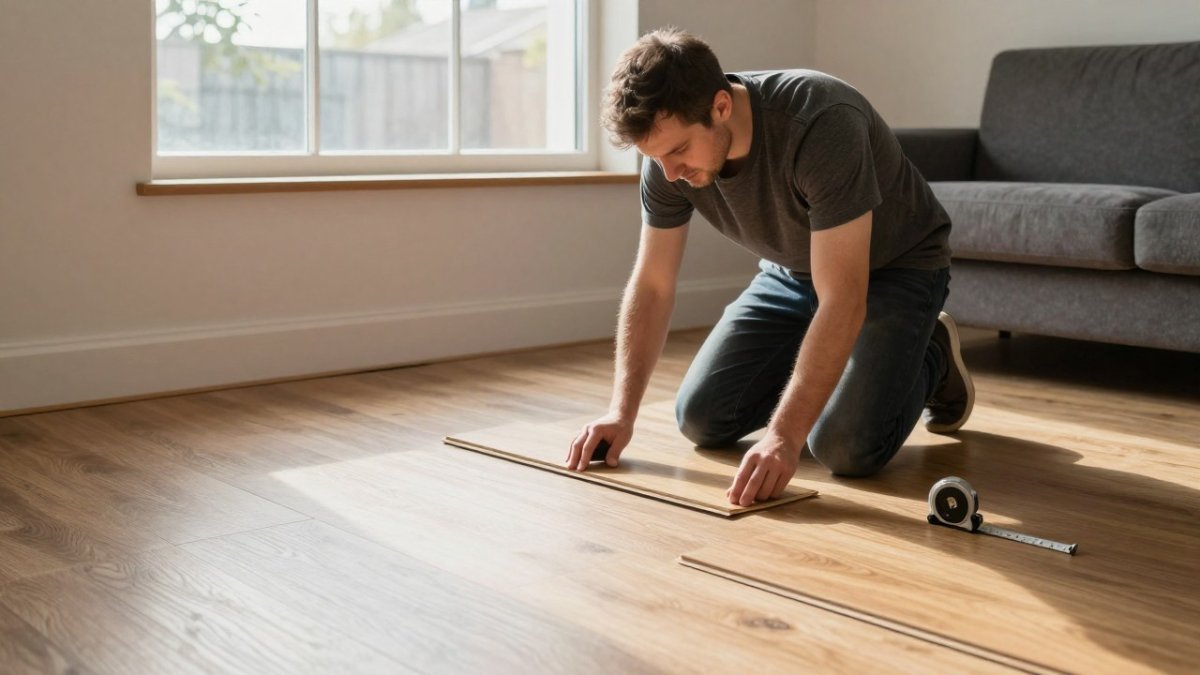
Measure door clearance before you order. LVT sits low, but a thick rigid core plus underlay can still foul a door that already clears the old floor by only a few millimetres. The usual solutions are to undercut the door casing and architrave, or to trim the door itself. At the front door, a threshold strip bridges the gap between LVT and the external sill; at internal doorways, a transition profile covers the joint between LVT and carpet or tile. Plan these profiles at the measuring stage, not after the floor is down, because the wrong profile is obvious every time you walk through.
Subfloor preparation in a hallway
LVT needs a flat surface. Uneven floorboards telegraph through a flexible plank and show as a visible ridge along the walking line. Fill dips, sand high spots and check for movement in old boards before fitting. In older homes, a plywood overlay is often the quickest route to a flat base. Moisture is the other risk: a concrete subfloor at ground level should be tested, and a damp-proof membrane used where readings are high, because trapped moisture damages adhesive and backing.
Click-lock versus glue-down in a tight space
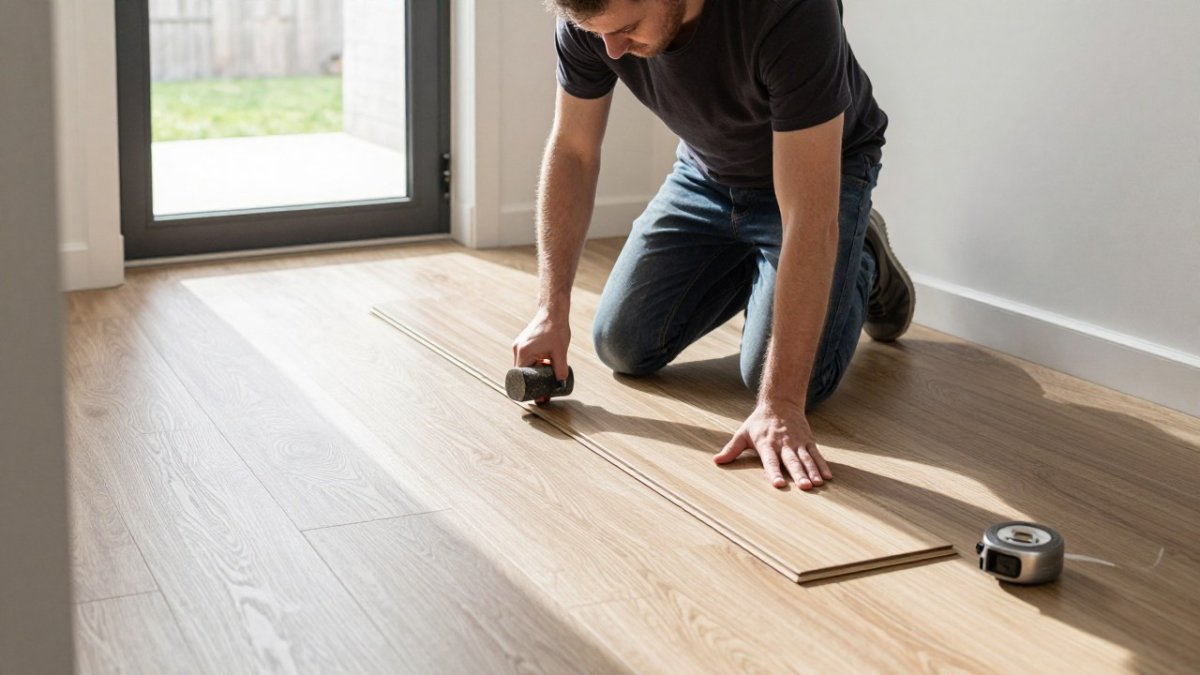
Click-lock suits a floating floor and is faster to lay, but in a narrow hallway the expansion gap at each wall must be covered by skirting or beading, and a floating floor can feel slightly hollow underfoot. Glue-down gives a firmer, quieter feel and handles awkward cuts around door frames more neatly, but it is a fitter's job and damaged planks are harder to lift later. In a hallway that sees heavy traffic, many fitters prefer glue-down for stability; in a rental or a quick refurbishment, click-lock is the pragmatic choice.
Stairs and transitions
If the hallway includes a staircase, LVT on the treads needs a suitable nosing and a secure adhesive, and the junction between the hall floor and the first tread is a high-wear point. Watch out: a floating click floor run up to a stair nosing without a proper expansion allowance can lift at the edge within a season. Plan the stair transition as part of the layout, not as an afterthought.
What to decide before the fitter arrives
Confirm the layout direction, the threshold profiles at every doorway, whether the subfloor needs an overlay, and whether you are specifying click-lock or glue-down. In a narrow hallway those four decisions determine whether the finished floor looks deliberate or improvised, and they are far cheaper to settle before the first plank is cut.
Book a Home Visit and See LVT Samples in Your Hallway
Deciding on hallway flooring is far easier when you can see the plank in your own light, against your own walls. Our mobile showroom brings thousands of samples to your door, and our consultants guide you through the options. You can book an appointment or contact us to arrange a visit and ask questions before you commit.
Hallway flooring has to survive grit, wet shoes and constant traffic, and choosing the right LVT means matching wear layer and texture to your home. Mobile Carpets and Flooring SW Ltd brings the showroom to you, with expert guidance, thousands of samples and professional fitting as a single supply-and-fit package. Get started with Mobile Carpets and Flooring SW Ltd and choose a hallway floor with confidence.
Frequently Asked Questions
Is LVT flooring suitable for a hallway?
Yes, in most homes. LVT flooring is water-resistant, easy to wipe clean and holds up well under heavy foot traffic, which suits a hallway's mix of wet shoes, grit and constant use. The deciding factors are wear-layer thickness (look for a thicker layer where traffic is concentrated) and fitting it properly on a flat subfloor. If your hallway is narrow or has awkward corners, a fitter can cut planks around doorways and turns without visible joins in the wrong places.
What are the main LVT flooring disadvantages?
The biggest drawback is repair. If the wear layer is gouged or scratched deeply, the damaged tile or plank usually has to be replaced rather than patched, so keep a few spare boards from the same batch. LVT also needs a flat, clean subfloor before fitting, and it will not add the resale value that solid wood can. Cheap, thin wear layers wear through faster in a busy hallway, so the specification matters more than the label on the box.
How durable is LVT in a busy hallway?
Durability comes down to the wear layer. Thicker wear layers handle concentrated foot traffic, grit and the odd dropped key far better than thin ones, and the surface texture helps hide scuffs between cleans. LVT resists water and stains well, but sharp grit dragged in on shoes can dull the surface over time, so a doormat at the entrance is worth fitting. Expect several years of good service in a family hallway before any board needs attention.
Is LVT warmer and quieter than tiles, and how does it compare with laminate?
LVT feels warmer and quieter underfoot than ceramic or porcelain tiles, and it works with underfloor heating. Against laminate, LVT wins on moisture: laminate's core can swell if water sits on the joints, while LVT shrugs off wet shoes and spills. Laminate is often cheaper to buy and feels harder underfoot. For a hallway where damp coats and rainy days are routine, LVT flooring is usually the safer long-term choice.