 how-to
How to Prevent Damaged Skirting Boards: 7 Essential Steps
Table of Contents
- Identifying the Cause of Baseboard Damage
- How to Repair Water Damaged Skirting Boards
- Preventing Vacuum Damage to Baseboards
- Selecting Durable Baseboard Materials to Prevent Damage
- Skirting Board Protection Strips and Preventative Hardware
- Moisture Control and Water Infiltration Prevention
- Tools and Techniques for Baseboard Maintenance
- Frequently Asked Questions
Identifying the Cause of Baseboard Damage
Understanding what damages your baseboards is the first step toward preventing it. Baseboards face threats from multiple sources, and each requires a different prevention strategy.
Water damage remains the most destructive force. Moisture infiltration from leaks, condensation, or high humidity causes wood rot and swelling in traditional timber skirting boards. This damage often starts invisibly behind the baseboard surface, compromising structural integrity before you notice anything wrong. Damp-proofing and moisture barriers are essential defences here.
Physical impact damage comes next. Heavy furniture, vacuum cleaners, pet claws, and foot traffic all leave their marks. Unlike water damage, impact damage is visible immediately, making it easier to address before it worsens. Protective hardware and durable materials can significantly reduce this type of wear.
Expansion gaps and settling also cause problems. As your home ages and temperature fluctuates, materials expand and contract. Inadequate spacing between baseboards and flooring can lead to buckling, cracking, and nail holes that weaken the trim's profile.
Pet damage deserves special attention. Dogs and cats scratch, chew, and urinate on baseboards, creating both aesthetic damage and potential water infiltration points. If you have pets, prevention requires targeted strategies beyond standard maintenance.
How to Repair Water Damaged Skirting Boards
Water damaged skirting boards require swift action to prevent further deterioration. The repair approach depends on damage severity and the material involved.
For minor surface damage, the fix is straightforward. Sand the affected area lightly with fine-grit sandpaper to remove discolouration and soft fibres. Once dry, apply a wood filler matching your baseboard colour. After the filler sets, sand smooth and apply a protective coating or finish to match the surrounding trim. This approach works well when water damage hasn't penetrated deeply.
Moderate damage, where the wood feels soft or shows signs of rot, requires more aggressive treatment. Remove the damaged section using a sharp utility knife, cutting away all compromised material. Fill the cavity with epoxy wood filler, which hardens to a density that resists future moisture infiltration. Sand and finish to blend with the existing baseboard.
Severe water damage often means replacing the entire baseboard section. If rot has compromised more than 30% of the trim's depth, structural integrity is questionable (peer-reviewed research). Remove the damaged trim carefully, inspect the subfloor for moisture damage, and allow the area to dry completely before installing replacement skirting boards. Use moisture-resistant materials like PVC baseboard or composite trim in areas prone to water exposure.
Prevention is far more cost-effective than repair. Caulking gaps between the baseboard and flooring with flexible sealant stops water infiltration at the source. Inspect caulk annually and refresh it where cracking appears. In bathrooms and kitchens, a silicone caulk provides superior water resistance compared to standard acrylic options.
Preventing Vacuum Damage to Baseboards
Vacuum cleaners cause surprisingly significant damage to baseboards, particularly in households with regular cleaning routines. The spinning brush head strikes trim edges, and hose attachments scrape surfaces during cleaning.
The simplest prevention method is awareness. Train household members to keep vacuum heads at least 2-3 centimetres away from baseboards. Use hose attachments for tight spaces rather than the main brush head. This small habit adjustment prevents most vacuum-related damage.
Physical barriers offer reliable protection. Baseboard guards, flexible plastic or rubber strips that attach to the trim, absorb impact from vacuum contact. These guards are particularly valuable in high-traffic areas and households with frequent cleaning. They're removable, making them suitable for rental properties or temporary protection.
For permanent protection, consider baseboard edge guards made from impact-resistant materials. These thicker protective strips are installed directly onto the baseboard and blend seamlessly with most trim profiles. They're especially useful in commercial spaces or nursing homes where high-traffic areas demand maximum durability.
Material selection matters significantly. PVC baseboards and composite trim resist vacuum damage far better than softwood alternatives. If you're replacing damaged baseboards, upgrading to impact-resistant materials solves this problem permanently. The initial cost is higher, but durability over 20+ years justifies the investment.
Selecting Durable Baseboard Materials to Prevent Damage
Material choice fundamentally determines how well your baseboards resist damage. Different materials offer distinct advantages for different environments and priorities.
MDF trim (medium-density fibreboard) offers affordability and consistent appearance but absorbs moisture readily. Water infiltration causes swelling and delamination, making MDF unsuitable for kitchens, bathrooms, or high-humidity areas. MDF works well in dry living spaces where moisture control is manageable.
Traditional timber baseboards provide classic aesthetics and can last decades with proper maintenance. Hardwoods like oak resist impact better than softwoods, but all timber requires regular sealing to prevent moisture penetration. Solid wood demands the most maintenance but rewards careful homeowners with beauty and longevity.
PVC baseboards combine durability with minimal maintenance. These materials resist water infiltration completely, making them ideal for bathrooms, kitchens, and basements. PVC won't rot, splinter, or warp, and they clean easily. The trade-off is a plastic appearance that doesn't suit all interior styles, though modern PVC profiles mimic wood convincingly.
Composite trim blends wood fibres with plastic resin, offering wood-like aesthetics with superior moisture resistance. Composites resist rot and impact damage exceptionally well. They're more expensive than MDF but less costly than premium hardwood. For homeowners seeking durability without sacrificing appearance, composites represent excellent value.
For prevent damaged baseboards in high-moisture environments, PVC or composite materials are non-negotiable. In dry areas, timber or MDF work adequately if sealed properly. The key is matching material to environment rather than choosing based on appearance alone.
Mobile Carpets and Flooring SW Ltd recommends assessing your home's moisture profile before selecting baseboard materials. Our expert consultants guide you through material options during at-home consultations, ensuring your choice suits both your aesthetic preferences and your home's specific conditions.
Skirting Board Protection Strips and Preventative Hardware
Physical protection systems address impact damage directly, offering a practical layer of defence between baseboards and daily wear.
Protective strips come in several forms. Rubber edge guards attach to baseboard corners and edges, absorbing impact from furniture, vacuum heads, and foot traffic. These strips are removable and don't permanently alter your trim. They're particularly valuable in rental properties or temporary situations.
Corner guards protect the most vulnerable areas, outside corners where furniture edges and door swings strike. These L-shaped guards wrap around corners and can be painted to match your trim or left visible as a design accent. They're inexpensive and highly effective at preventing corner damage.
Baseboard shields, full-height protective panels, offer comprehensive protection in high-traffic commercial spaces. Nursing homes and care facilities often use these shields to protect baseboards from wheelchairs, walking aids, and frequent cleaning. They're durable, easy to clean, and extend baseboard life significantly.
Preventative hardware includes edge banding and trim profiles designed to deflect impact. Modern baseboard profiles increasingly incorporate rounded edges and impact-resistant materials at stress points. When ordering replacement trim, specify profiles with built-in protection features.
For prevent damaged baseboards in commercial or high-traffic residential settings, combining multiple protection strategies works best. A nursing home might use corner guards plus full-height shields plus impact-resistant PVC material. A family home might use edge guards in the kitchen and protective strips near furniture. The approach depends on your specific damage risks.
Installation is straightforward for most protective strips. Clean the baseboard surface thoroughly, measure carefully, and apply adhesive-backed strips directly to the trim. Most strips require no tools and can be installed in under an hour for an entire room.
Moisture Control and Water Infiltration Prevention
Moisture is the silent destroyer of baseboards. Controlling humidity and preventing water infiltration protects your trim investment far more effectively than any repair work.
High humidity environments demand active moisture control. Bathrooms, kitchens, and basements naturally accumulate moisture. Dehumidifiers reduce ambient humidity to safe levels, typically 30-50% relative humidity (the EPA). Running a dehumidifier in high-risk areas prevents condensation on cold surfaces and reduces moisture infiltration at baseboard level.
Ventilation addresses moisture at the source. Bathroom exhaust fans should run for 20-30 minutes after showers, venting humid air outside rather than into your home (the CDC). Kitchen range hoods capture cooking steam. Proper ventilation dramatically reduces the moisture that reaches baseboards.
Caulking and sealing create moisture barriers. Gaps between baseboards and flooring are water infiltration highways. Silicone caulk provides superior flexibility and water resistance compared to standard acrylic options. Inspect caulk annually, cracks and gaps compromise protection. Re-caulk every 3-5 years or when you notice deterioration.
Expansion gaps, small spaces between baseboard and flooring, are intentional design features that allow for material movement. These gaps should be 3-5mm wide. If gaps are larger, moisture penetrates easily. Smaller gaps restrict necessary expansion. Proper spacing during installation prevents both water infiltration and buckling damage.
A moisture meter helps identify problem areas before damage becomes visible. Test baseboards in bathrooms, kitchens, and basements monthly. Readings above 15% indicate excessive moisture. Investigate the source, leaks, condensation, or poor ventilation, and address it immediately.
Subfloor moisture is often overlooked. Water damage to baseboards frequently originates from subfloor moisture wicking upward. Installing a moisture barrier between flooring and subfloor during renovation projects prevents this problem. For existing installations, ensure proper drainage around your home's foundation and maintain gutters to direct water away from the structure.
Tools and Techniques for Baseboard Maintenance
Proper maintenance requires specific tools and techniques. Having the right equipment makes prevention and minor repairs manageable for homeowners.
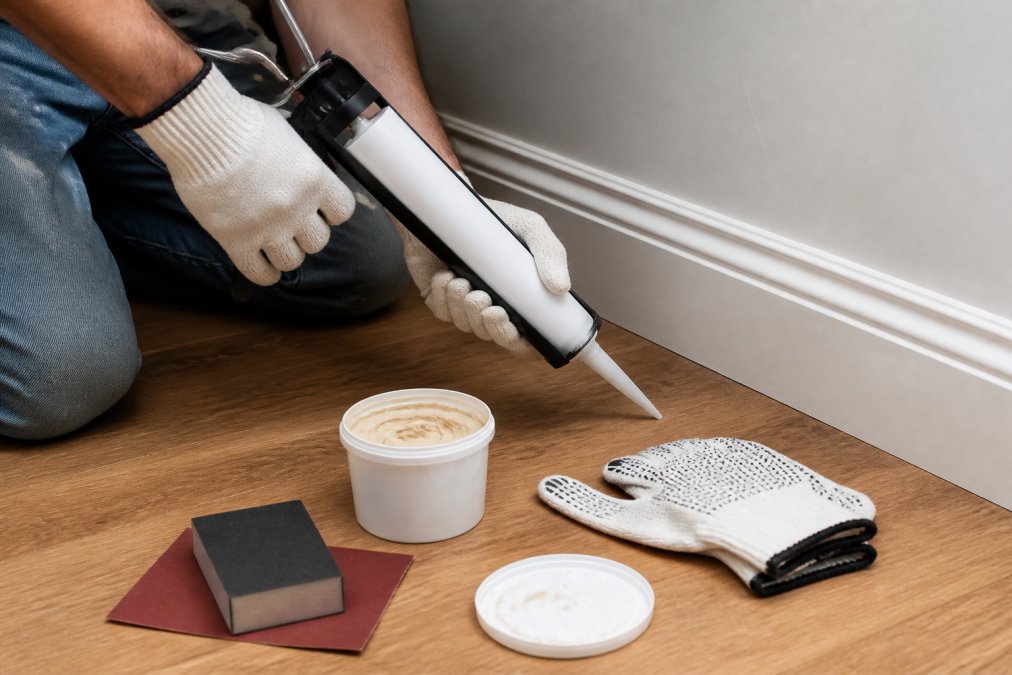
Essential tools for baseboard maintenance include:
- Caulk gun (for applying flexible sealant and wood filler)
- Utility knife (for removing damaged sections and trimming caulk)
- Sandpaper assortment (120, 150, and 220-grit for smoothing repairs)
- Wood filler and epoxy filler (for filling gaps and damage)
- Moisture meter (for detecting hidden moisture problems)
- Paintbrush or foam applicator (for finish coats)
- Protective gloves and safety glasses (for personal protection)
Caulking technique is fundamental. Apply caulk in a continuous bead along gaps between baseboard and flooring. Smooth the bead with a wet finger or caulk tool to ensure proper adhesion and appearance. This simple technique prevents most water infiltration problems.
Sanding technique matters for professional-looking repairs. Sand with the grain when possible, using progressively finer grits. Start with 120-grit to remove damage, progress to 150-grit for smoothing, and finish with 220-grit for a polished surface. This gradual approach prevents over-sanding and maintains the baseboard profile.
Finish application protects your work. After repairs, apply matching paint or stain to blend repairs with existing trim. Use quality finishes designed for trim, they provide better protection and durability than budget alternatives.
Regular maintenance prevents damage more effectively than reactive repairs. Inspect baseboards quarterly, caulk gaps annually, and refresh protective coatings every 3-5 years. This simple schedule catches problems early and extends baseboard life dramatically.
Mobile Carpets and Flooring SW Ltd's professional fitters use these techniques during installation and can recommend maintenance schedules tailored to your specific materials and environment.
Damaged baseboards compromise both aesthetics and home protection. Whether you're dealing with water damage, impact wear, or preventative concerns, the strategies outlined here address each challenge systematically.
The most effective approach combines material selection, environmental control, and regular maintenance. Choose durable materials suited to your home's moisture profile. Control humidity actively in high-risk areas. Inspect regularly and address small problems before they become expensive repairs.
Mobile Carpets and Flooring SW Ltd brings expert guidance directly to your home through our mobile showroom service. Our consultants assess your specific baseboard challenges, recommend materials that prevent damage in your environment, and ensure professional installation that protects your investment. Book an appointment today and transform how your home's trim performs for decades to come.
Frequently Asked Questions
Q: What is the best way to protect skirting boards from vacuum cleaner damage?
A: Use skirting board protection strips or edger guards designed to absorb impact from vacuum heads. These flexible barriers reduce direct contact between the vacuum and your baseboard. Alternatively, install corner guards or bumpers in high-traffic areas. When vacuuming, keep the machine head slightly angled away from the wall, and consider using a brush attachment rather than a hard plastic head. Regular inspection helps catch scuffs early before they become structural damage.
Q: How can I prevent water damage to baseboards in bathrooms?
A: Install a moisture barrier and ensure proper ventilation by running an extractor fan during and 20 minutes after showers. Seal the joint between the baseboard and floor with flexible silicone caulk to block water infiltration. Consider using PVC or moisture-resistant MDF baseboards in wet areas rather than solid wood. Place a dehumidifier in high-humidity rooms, and wipe down baseboards if water splashes occur. Check regularly with a moisture meter to catch dampness early.
Q: Are MDF baseboards more prone to damage than solid wood?
A: MDF trim is more vulnerable to water damage and swelling than solid wood because it absorbs moisture quickly, leading to expansion and rot. However, MDF resists dents and impact better than some softwoods, making it suitable for high-traffic areas when properly sealed. PVC baseboards offer the best water resistance and durability in moisture-prone spaces. For long-term protection, apply a protective coating to MDF and ensure expansion gaps are maintained during installation to prevent warping.
Q: How often should I inspect my baseboards for signs of wear?
A: Inspect baseboards every 3-6 months, especially in high-traffic areas, bathrooms, and kitchens. Look for signs of water infiltration, soft spots indicating rot, nail holes, surface scratches, or discolouration. Early detection of damage allows you to address issues with caulking, wood filler, or sanding before structural integrity is compromised. In commercial settings like nursing homes with high-traffic areas, monthly inspections help maintain safety and appearance standards.
This article was written using GrandRanker