 Comparison
Water-Resistant Flooring for Kitchens and Bathrooms: A Buyer's Guide
Last Updated: November 7, 2026
Quick Summary
Water-resistant flooring is a floor that tolerates surface moisture without swelling, warping or lifting, but it is not fully waterproof. For kitchens and bathrooms, LVT, SPC, sheet vinyl and tile suit wet rooms best, while standard laminate suits only occasional spills.
- Waterproof flooring keeps water out of the core; water-resistant flooring only tolerates surface moisture.
- Standing water in seams is the main risk, and water-resistant laminate can swell if it reaches the core.
- Check whether the manufacturer's installation guidance and warranty cover wet areas before buying.
- A waterproof core will not help if water reaches the subfloor through unsealed edges.
Table of Contents
- What Water-Resistant Flooring Actually Means
- Comparing Laminate, LVT, SPC, Vinyl and Tile for Wet Rooms
- Vinyl Flooring for Kitchens and Bathrooms: Choosing the Right Type
- Best Flooring for Wetrooms: Installation and Slip Safety
- Total Cost of Ownership, Warranty and Repairability
- Water-Resistant Flooring Maintenance: Keeping Floors Protected
- Booking Your At-Home Flooring Consultation
- Frequently Asked Questions
Choosing flooring for a kitchen or bathroom means choosing something that will sit under spills, steam and the odd dropped bottle every single day. This buyer's guide from Mobile Carpets and Flooring SW Ltd explains which water-resistant options suit wet rooms, where their limits lie, and what to ask before you commit. The advice below is based on general flooring knowledge for kitchens and bathrooms.
What Water-Resistant Flooring Actually Means
Water-resistant flooring is a floor that tolerates surface moisture for a time without swelling, warping or lifting. Water-resistant flooring is not the same as flooring that is fully waterproof, and the difference matters most where water pools. A kitchen splash or a mopped floor is manageable for most products. Standing water in a seam is not.
Waterproof vs Water-Resistant Flooring: Where the Limits Lie
Many buyers use "waterproof" and "water-resistant" interchangeably, but the two describe different performance. Waterproof flooring is designed so that water cannot penetrate the core, even if it sits on the surface for a long period. Water-resistant products resist surface moisture but can still swell if water reaches the edges or joints.
The practical test is simple. Ask whether the product is rated for wet rooms and whether the manufacturer's installation guidance covers wet areas. A bathroom with a shower area needs more than a floor that survives a splash. Check the warranty wording too, because many guarantees exclude standing water or damage from poor sealing.
Comparing Laminate, LVT, SPC, Vinyl and Tile for Wet Rooms
Each material handles moisture differently, so the right choice depends on the room. The table below compares the five main options on the factors that actually decide whether a floor survives a kitchen or bathroom.
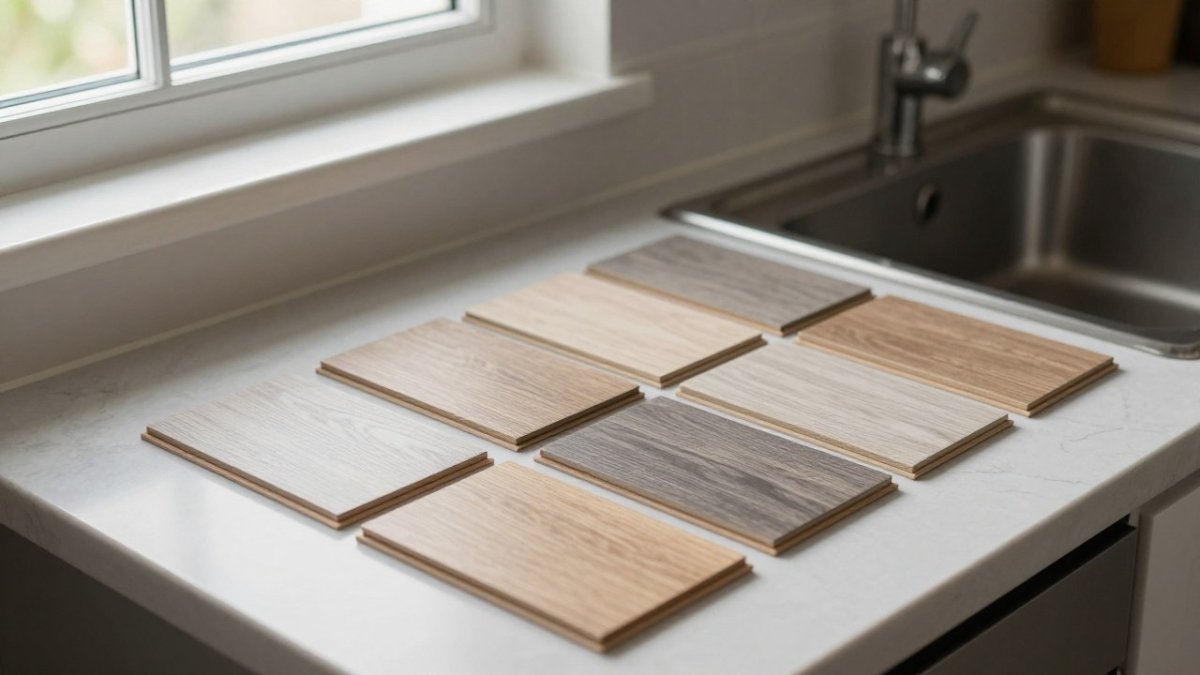
| Material | Water tolerance | Comfort underfoot | Durability | Installation | Maintenance | Pricing (supply only) |
|---|---|---|---|---|---|---|
| Laminate (water-resistant) | Resists splashes and damp mopping; swells if water reaches the core or seams | Moderate; warmer than tile with underlay | Good for kitchens; edge sealing is critical | Floating click; needs expansion gaps and sealed edges | Dry or damp cleaning; avoid soaking | £15-£35 per m² |
| LVT (luxury vinyl tile) | Waterproof core and backing; tolerates standing water on the surface | Warm and quiet underfoot | High; resists dents and scuffs | Glue-down or click; glue-down gives a tighter seal | Damp mop with pH-neutral cleaner | £25-£50 per m² |
| SPC (stone plastic composite) | Rigid waterproof core; stable under temperature change | Firmer than LVT but warmer than tile | Very high; holds shape well | Click or glue-down; heavy and rigid | Damp mop; avoid steam unless approved | £25-£45 per m² |
| Vinyl sheet | Waterproof; welded seams leave few entry points | Soft and warm | Good; can tear or lift at edges if poorly fitted | Full-spread adhesive; seams welded | Washable; avoid abrasive cleaners | £12-£30 per m² |
| Tile (porcelain or ceramic) | Fully waterproof; grout lines need sealing | Hard and cold; underfloor heating helps | Very high; chips and cracks on impact | Rigid adhesive bed; needs level subfloor | Grout cleaning; reseal periodically | £30-£70 per m² |
Laminate: Standard laminate swells when wet. You can view the laminate range and check which options are rated for damp areas. Water-resistant laminate with a sealed edge suits kitchens with occasional spills, but we would not recommend it for a shower room. The weak point is the joint: water that sits in a seam can wick into the core and cause swelling that no surface coating will stop.
Luxury vinyl tile (LVT): LVT is a common choice for kitchens and bathrooms. You can browse the luxury vinyl tile range to see its water-resistance credentials. It suits families who want a durable, easy-to-clean floor in high-traffic spaces.
SPC (stone plastic composite): SPC has a rigid core that resists water and temperature change. It holds its shape well in kitchens and bathrooms and installs with a click system. Its rigidity means the subfloor must be flat, because any hollows will show through and can cause joint stress.
Vinyl sheet: Sheet vinyl with a welded seam leaves few joints for water to enter. It is a dependable option for small bathrooms and cloakrooms. The quality of the fitter matters more than with any other option, because a lifted edge lets water straight underneath.
Tile: Porcelain and ceramic tile are commonly used in wet rooms. Grout lines typically need sealing, and tile is harder underfoot and less forgiving on dropped items. Tile is generally regarded as resistant to standing water, provided the grout and substrate are sound.
Watch out: a waterproof core does not make a waterproof floor if water can reach the subfloor through unsealed edges, so the fitting method matters as much as the material.
Vinyl Flooring for Kitchens and Bathrooms: Choosing the Right Type
Vinyl covers a wide range, so the type you pick matters. Rigid-core vinyl and LVT resist water well. Thin, flexible vinyl without a core can curl at the edges in damp rooms. Ask which type a product is and read the spec sheet before you buy.
A common mistake is choosing the right material but the wrong fitting method. Glue-down installation often gives a tighter seal around toilets and cabinets. Floating click systems are quicker to lay but need careful edge sealing in wet areas.
Best Flooring for Wetrooms: Installation and Slip Safety
A wet room needs a floor that drains toward the outlet, stays firm and does not become slippery when wet. Slip resistance is often overlooked, yet it matters more than appearance in a bathroom.
Look for a slip-resistance rating and ask about the surface finish. Matt finishes generally grip better than high-gloss ones. Good installation also matters: the subfloor must be level and the falls must be correct so water does not pool.
Watch out: installing a floating floor directly against a shower tray without sealing the perimeter can let water wick underneath and cause swelling that no warranty will cover.
Total Cost of Ownership, Warranty and Repairability
The lowest price per square metre is not always the cheapest floor over its life. Consider how long it will last, how easily a damaged plank can be replaced, and what the warranty actually covers. The figures below are typical supply-only bands for the materials covered in this guide; fitting, underlay and subfloor preparation are additional and vary with the room.
| Cost element | Typical range | Notes |
|---|---|---|
| Laminate (water-resistant) | £15-£35 per m² | Underlay often included in click systems |
| LVT | £25-£50 per m² | Glue-down adds adhesive and labour |
| SPC | £25-£45 per m² | Heavier, so delivery costs can be higher |
| Vinyl sheet | £12-£30 per m² | Welded seams add fitting time |
| Tile | £30-£70 per m² | Adhesive, grout and sealing add to the total |
| Underlay (where required) | £3-£10 per m² | Not used under glue-down or tile |
| Subfloor preparation | £10-£30 per m² | Levelling compound or ply overlay |
| Uplift and disposal of old floor | £5-£15 per m² | Varies with the existing covering |
A realistic total for a 6 m² bathroom therefore ranges from roughly £400 for sheet vinyl with basic preparation to over £1,000 for tile with full subfloor work. The gap between the cheapest and most expensive option is usually smaller than homeowners expect once fitting and preparation are included.
Warranty wording matters more than the headline length. Most manufacturers' guarantees cover manufacturing defects, not damage caused by water ingress through unsealed edges, poor subfloor preparation or standing water left on the surface. A 20-year residential warranty on a waterproof core is of little use if the claim is excluded because the perimeter was not sealed. Ask for the warranty document before you buy, not after.
Repairability is worth checking. Click-fit planks can be lifted and replaced individually, while glued or sheet flooring can be harder to repair without replacing a larger area. Keep spare planks from the original batch where possible, because dye lots change and a later match may be visibly different.
Expected life varies with the room. A well-fitted LVT or tile floor in a bathroom can last 15-20 years; laminate in a busy kitchen may need replacing sooner if spills are frequent. Factoring replacement into the decision often makes the mid-range option the cheaper choice over time.
Pricing depends on the product, the quantity, the room layout and delivery. Please contact us for current prices tailored to your project.
Water-Resistant Flooring Maintenance: Keeping Floors Protected
Good maintenance extends the life of any water-resistant floor. Wipe up spills promptly, avoid steam mops unless the manufacturer approves them, and use a pH-neutral cleaner rather than harsh chemicals. Check seams and skirting boards periodically for any gaps where water could collect.
Place mats at sinks and by shower doors to catch water before it reaches the floor, and avoid leaving standing water on any surface.
Booking Your At-Home Flooring Consultation
If you are planning a kitchen or bathroom refit, the simplest next step is to see the samples in your own space. Our mobile showroom brings thousands of samples to your door, so you can compare colours and finishes against your actual lighting and layout. Book a home consultation with our flooring experts. If you would rather talk first, arrange a phone consultation and we will talk through the options for your room. For slip-sensitive areas, you can also browse our safety flooring range.
Frequently Asked Questions
What is the best water-resistant flooring for kitchens and bathrooms?
For most kitchens and bathrooms, rigid-core vinyl (SPC or LVP) and porcelain tile are the strongest choices because they tolerate spills and standing water well when fitted with sealed joints. Water-resistant laminate suits kitchens with light splash exposure but is less reliable in bathrooms. The right answer depends on the room, how much water it sees and your budget. Our consultants bring samples to your home so you can check how each option looks and feels in the actual space before deciding.
Is water-resistant laminate suitable for a bathroom?
Water-resistant laminate can work in a bathroom with low moisture exposure, such as a separate WC or a room with good ventilation, but it is not ideal for wet rooms or areas near showers and baths. Its core can swell if water penetrates the joints for long periods. Check the manufacturer's guidance on bathroom use and make sure joints are sealed. For areas that will see regular standing water, a rigid-core vinyl or tile is usually the safer choice.
What is the difference between water-resistant and waterproof flooring?
Water-resistant flooring resists moisture on the surface but can be damaged if water seeps through seams or edges over time. Waterproof flooring, typically rigid-core vinyl or tile, is designed to keep water from penetrating the core even when it sits on the surface for longer. Both still need prompt cleaning of spills and properly sealed edges. Labels vary between manufacturers, so check the product specification rather than relying on the marketing term alone.