 Comparison
Signature Floors Alternative for Nursing Homes: 4 Options
Table of Contents
- Why Look Beyond Signature Floors for Your Nursing Home?
- Nursing Home Flooring at a Glance: Comparison Table
- 1. Luxury Vinyl Tile (LVT): The High-Traffic Workhorse
- 2. Rubber Flooring: Best for Fall Prevention and Comfort
- 3. Epoxy Flooring Systems: Maximum Hygiene for Wet Areas
- 4. Natural Linoleum: The Sustainable, Antibacterial Choice
- How to Choose Slip Resistant Flooring for Elderly Care
- Meeting CQC Compliant Flooring for Care Homes: Key Standards
- Frequently Asked Questions
Last Updated: September 9, 2026
Choosing the right Signature Floors alternative for nursing homes carries real weight. The floor affects resident safety, comfort, and staff's ability to maintain hygiene. At Mobile Carpets and Flooring SW Ltd, we know a beautiful floor that fails on safety or infection control is a costly mistake. This guide breaks down four credible alternatives, comparing durability, slip resistance, and the practical realities of running a care facility.
A Signature Floors alternative for nursing homes must do more than look good; it must withstand wheelchairs, assist with falls, and stand up to rigorous cleaning. The most common mistake is choosing based on aesthetics alone, only to replace it within a few years. Below, we show how to evaluate each option against daily care demands, focusing on technical specifications that matter, not just marketing.
Why Look Beyond Signature Floors for Your Nursing Home?
Most facility managers start with a known brand and work backwards, limiting options. A Signature Floors alternative for nursing homes should be selected on specific performance criteria: slip resistance, impact resistance, and how the material handles constant sanitisation.
No single flooring type wins in every area. A product that excels in a wetroom may feel too hard in a lounge; one that offers comfort underfoot might stain in a dining area. Match the material to the specific zone rather than rolling out one solution across the building.
Many projects prioritise upfront cost over life-cycle cost. A cheaper floor needing replacement in five years costs far more than a durable option lasting fifteen, especially factoring in the disruption of moving residents during installation.
Nursing Home Flooring at a Glance: Comparison Table
To make an informed choice, you need to compare the main contenders side by side. Here is a summary of four primary Signature Floors alternatives for nursing homes.
| Flooring Type | Best For | Key Strength | Main Drawback |
|---|---|---|---|
| Luxury Vinyl Tile (LVT) | Corridors, bedrooms | High-traffic durability | Requires subfloor preparation |
| Rubber Flooring | Physio rooms, fall-prone areas | Impact absorption, comfort | Higher installation cost |
| Epoxy Systems | Kitchens, wetrooms | Seamless, maximum hygiene | Long curing time during install |
| Natural Linoleum | Lounges, living areas | Antibacterial, sustainable | Needs specific maintenance |
The table highlights the trade-offs: LVT is the workhorse, rubber is safer for falls, epoxy is most hygienic, and linoleum is better for indoor air quality. Your choice depends on which factor you prioritise for each room.
1. Luxury Vinyl Tile (LVT): The High-Traffic Workhorse
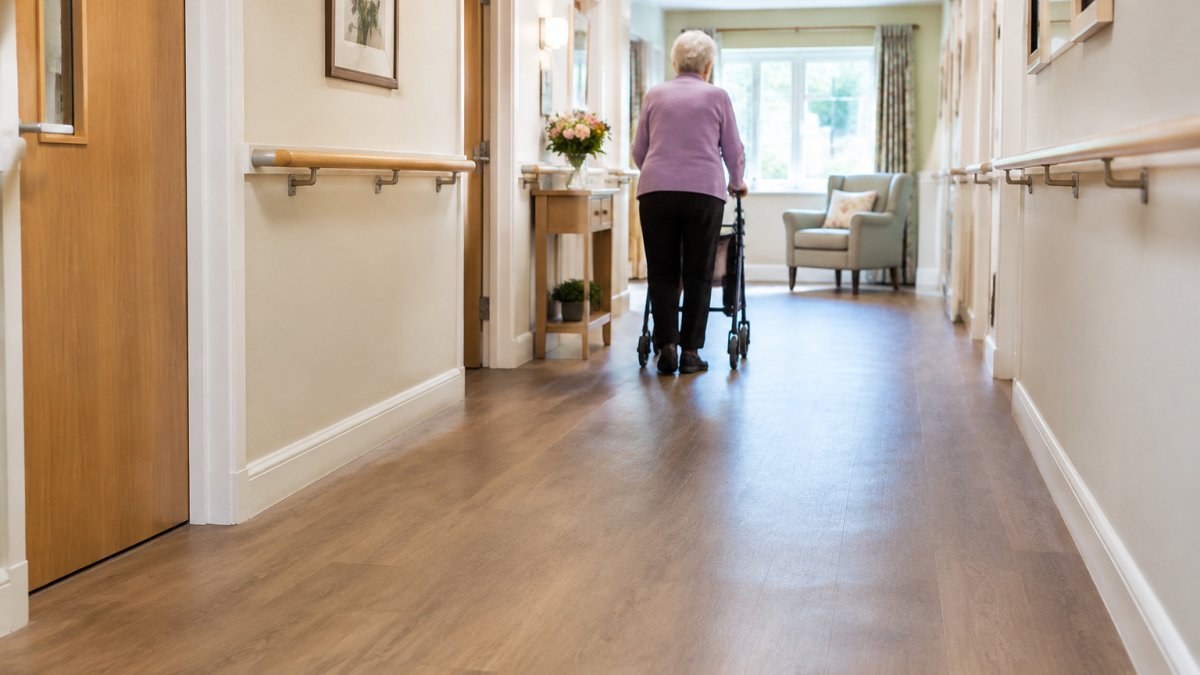
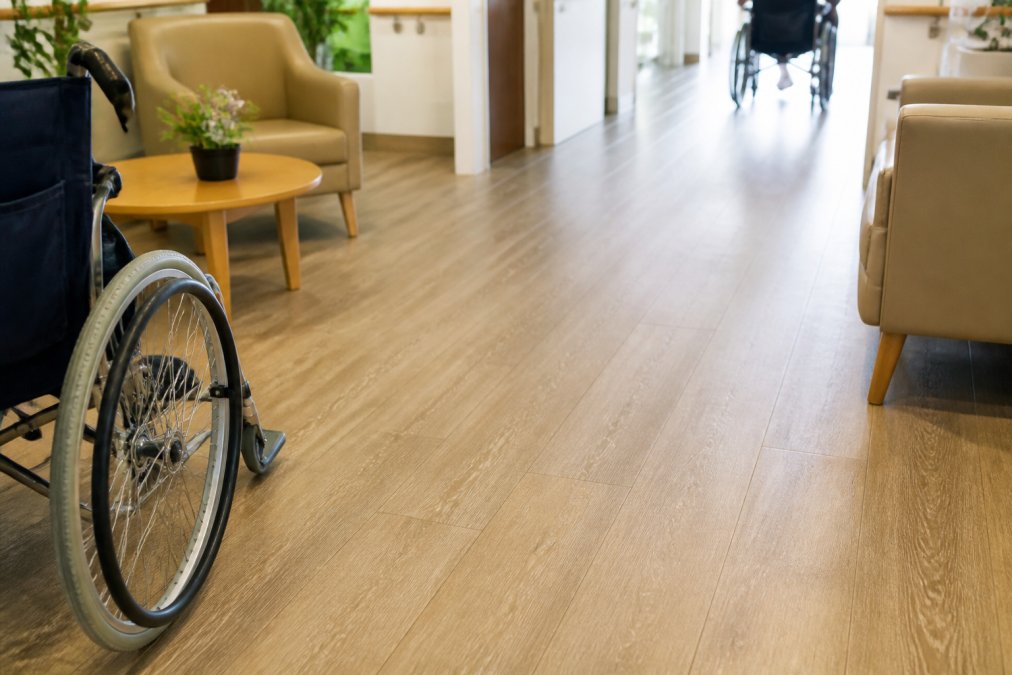
For corridors and bedrooms with constant movement, Luxury Vinyl Tile is often the most practical choice. LVT offers high slip resistance for residents using mobility aids, and its waterproof construction allows frequent sanitisation without damage.
LVT's durability is its standout feature, withstanding medical equipment, wheelchairs, and heavy traffic without wear. This makes it a dependable Signature Floors alternative for nursing homes where longevity is non-negotiable. It also offers excellent acoustic properties, reducing noise in busy communal areas.
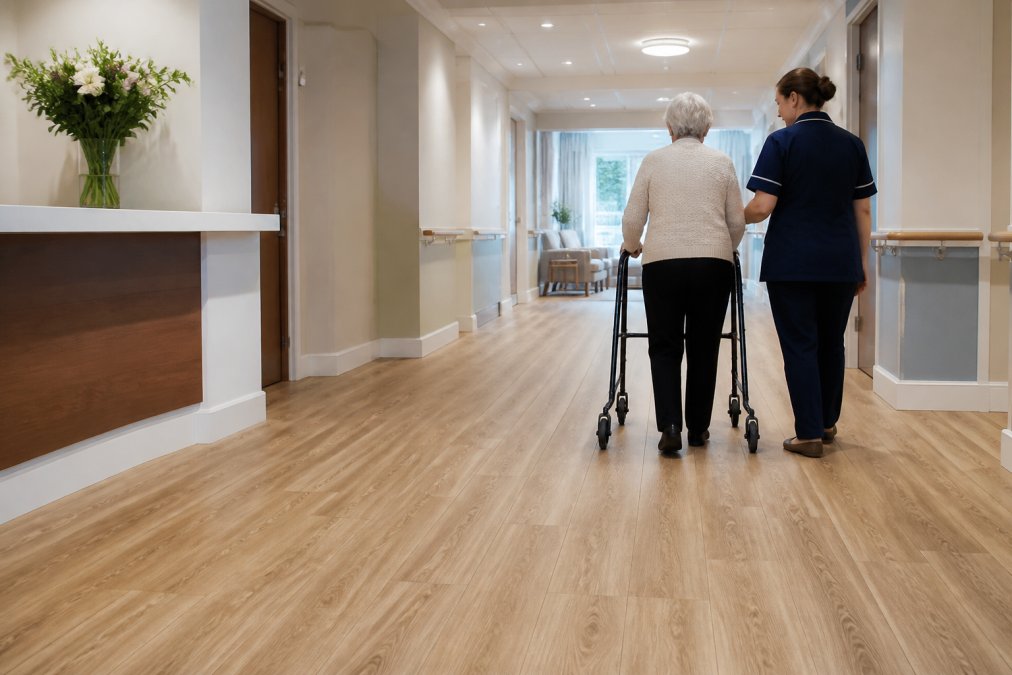
The main drawback is that LVT requires professional sub-floor preparation for optimal longevity. If the subfloor is uneven, the tiles will eventually show it. Skipping this step to save money leads to premature failure and a costly redo.
2. Rubber Flooring: Best for Fall Prevention and Comfort
When fall prevention is the priority, rubber flooring is superior. Its impact absorption reduces injury risk when a resident falls, and its naturally slip-resistant texture provides grip even when wet. This makes it an excellent Signature Floors alternative for nursing homes focusing on physiotherapy rooms and corridors.
Rubber is also remarkably comfortable underfoot. It resists indentation from heavy furniture and its sound-dampening qualities contribute to a quieter environment.
The trade-off is cost. Rubber is generally more expensive to install than standard vinyl. However, weighed against the potential cost of a serious fall injury, the investment often justifies itself. Get a quote from a specialist installer to compare numbers for your floor area.
3. Epoxy Flooring Systems: Maximum Hygiene for Wet Areas
For kitchens, wetrooms, and clinical treatment areas, epoxy flooring systems offer a level of hygiene other materials cannot match. The seamless finish eliminates gaps and crevices where bacteria accumulate, creating a surface impervious to water and contaminants.
Epoxy provides extremely high resistance to chemical cleaners and spills, critical where aggressive disinfectants are used daily. You can also add slip-resistant aggregates to the top coat, customising the finish for consistently wet areas.
The main challenge is installation. It requires professional application and a curing time that limits access, disrupting operations, so careful planning is needed. However, once installed, epoxy has an incredibly long lifespan with minimal wear, making it one of the most durable options.
4. Natural Linoleum: The Sustainable, Antibacterial Choice
If sustainability and indoor air quality are high on your agenda, natural linoleum is compelling. Made from linseed oil and wood flour, it is biodegradable and non-toxic, and unlike many synthetic floors, it does not contribute to VOC emissions.
Linoleum is naturally bacteriostatic, inhibiting microorganism growth without chemical additives. This makes it a strong Signature Floors alternative for nursing homes where infection control is a primary concern, offering passive protection between cleaning cycles.
It is durable enough to withstand heavy rolling loads from beds and wheelchairs, and has self-healing properties where minor scratches disappear over time. The caveat is that linoleum requires a specific maintenance regime, so cleaning staff must be trained on correct products and methods.
How to Choose Slip Resistant Flooring for Elderly Care
Selecting slip resistant flooring for elderly care requires understanding the UK's technical testing framework. The most reliable measure is the pendulum test, expressed as a Pendulum Test Value (PTV). The UK Slip Resistance Group recommends a minimum PTV of 36 for level areas where residents may walk barefoot or in socks, and a higher PTV of 40 or above for ramps and areas prone to frequent wetting, such as entrance lobbies and en-suite bathrooms (hse.gov.uk).
Product data sheets also show the R-rating (R9 to R13), derived from a different test using an angled ramp with oil. While R11 is often cited as 'anti-slip', it does not directly translate to wet slip safety; an R11 floor can still be dangerously slippery when wet and polished. Always ask your supplier for pendulum test values, not just the R-rating, and request the value for the product's intended finish and cleaning regime.
The interaction between floor texture and cleaning chemicals is critical. Some textured surfaces, particularly certain rubber and vinyl products, can trap soap scum and body oils, creating a slippery film that reduces grip. Slip resistance must be assessed 'in-use', after cleaning with your specific chemicals. A common pattern is a floor passing its initial slip test but failing months later because the daily cleaning agent leaves a residue. Specify a neutral pH cleaner and periodically strip and re-apply any required slip-resistant polish.
Consider behaviour under different contamination types. A vinyl floor with a quartz or carbide embossed surface provides good wet slip resistance but can be harder to clean thoroughly. Rubber often provides better dry and wet slip resistance due to inherent friction, but can be damaged by oil-based substances. Epoxy can be customised with slip-resistant aggregates, but aggregate size and density must match your cleaning equipment; overly aggressive aggregates can trap dirt. Balance PTV value, cleanability, and the specific contaminants in each zone.
Meeting CQC Compliant Flooring for Care Homes: Key Standards
Meeting CQC compliant flooring for care homes is about demonstrating a robust, evidence-based decision-making process aligned with the Health and Social Care Act 2008 (Regulated Activities) Regulations 2014 (cqc.org.uk). The CQC does not mandate a specific flooring type, but inspectors will assess whether your choices mitigate risks. Your flooring strategy should be a documented part of your risk management file, showing a clear rationale for each material selection.
A critical, often-overlooked aspect is the link between flooring and pressure ulcer prevention. The CQC's guidance on 'nutrition and hydration' and 'safe care and treatment' implicitly requires considering flooring's impact on mobility and skin integrity. A very hard, thin vinyl floor in a bedroom can increase tissue interface pressure for residents at risk of falls. While a pressure-relieving mattress is the primary intervention, flooring's shock absorption and underlay contribute to pressure management. Documenting this, for example, specifying rubber flooring with a closed-cell foam underlay in a high-dependency unit, demonstrates deeper risk assessment than simply choosing a wipeable surface.
CQC inspectors are increasingly looking at long-term sustainability and value-for-money. A life-cycle cost analysis (TCO) becomes your strongest compliance evidence. A cheaper floor needing replacement in five years, with the disruption of moving residents and interim safety hazards, is not defensible. Your documentation should show a 15-20 year cost projection including not just initial purchase and installation, but also:
- Cleaning labour and chemical costs: A seamless epoxy floor in a wetroom may have a higher installation cost but requires significantly less labour and fewer harsh chemicals to maintain than a tiled floor with grout lines.
- Replacement and downtime costs: The cost of decanting residents, moving furniture, and the clinical risk of relocating vulnerable people during a floor replacement far exceeds the material cost difference.
- Warranty and lifespan: A high-quality rubber floor with a 15-year warranty may be a better investment than an LVT with a 10-year warranty in a high-traffic corridor.
Consider a typical corridor. A life-cycle cost analysis can demonstrate prudent financial management and long-term commitment to resident safety.
Finally, link flooring choices to the specific needs of your resident cohort. For a dementia care home, cite the Dementia Services Development Centre (DSDC) principles: use matte finishes to reduce glare, which can be misinterpreted as water or holes, and ensure colour contrast between floor and walls to aid navigation (dementia.stir.ac.uk). For a home with many wheelchair users, document the flooring's rolling resistance, as high-resistance carpet can increase self-propulsion effort, leading to fatigue. Showing that flooring choices respond to your CQC assessment and residents' clinical profiles moves you from a 'tick-box' exercise to a narrative of proactive, person-centred care.
Frequently Asked Questions
What are the CQC requirements for care home flooring?
CQC does not publish a specific flooring standard, but it inspects against safety and hygiene outcomes under the Health and Social Care Act 2008. Flooring must be slip-resistant, easy to clean, and not create trip hazards. It must support infection control and be suitable for residents with mobility aids. Choosing materials that meet British safety standards like the Pendulum test for slip resistance helps demonstrate compliance during inspections.
Which flooring materials are best for dementia-friendly design?
Sheet vinyl and LVT are strong choices because they can be installed with minimal seams and offer high-contrast colour options. Avoid busy patterns that residents may perceive as obstacles or changes in level. Use matt finishes to reduce glare, which can look like water to someone with dementia. Contrasting colours between walls and floors, and between the floor and doors or furniture, help residents navigate independently.
How does slip resistance impact nursing home flooring choices?
Slip resistance is the single most important safety factor for nursing home flooring. Materials like rubber and textured LVT provide higher slip resistance, especially when wet. The Pendulum Test Value (PTV) measures this: a rating of 36 or above is recommended for elderly care settings. Flooring must stay slip-resistant after cleaning chemicals are applied and as the surface wears, not just when new.
How do you maintain hygiene standards with commercial flooring?
Choose flooring with a seamless or heat-welded finish to prevent bacteria building up in gaps. Epoxy and sheet vinyl are the easiest to deep-clean and sanitise. Follow the manufacturer's maintenance regime, which usually involves daily damp mopping with a neutral cleaner and periodic deep cleaning. Avoid abrasive pads that can damage the wear layer and create rough surfaces where dirt and bacteria collect.