 How-to
How to Prepare Your Home for Flooring Installation: Room-by-Room Steps
Last Updated: November 7, 2026
Quick Summary
To prepare your home for flooring installation, clear small items, valuables and wall hangings, empty cupboards in the work area, and disconnect electronics, leaving large furniture for fitters to move where agreed in advance. Also clear a route from the front door, keep pets and children out of the work area, and let flooring acclimatise in the room before fitting day.
- Agree in writing which large furniture items the fitters will move before fitting day.
- Carpet should be unrolled and left flat in the room for at least 24 hours.
- Laminate and engineered wood usually need 48 to 72 hours of acclimatisation at roughly 18-22°C.
- Only a Gas Safe registered engineer may disconnect or reconnect a gas cooker, hob or fire.
- Flooring installation usually takes one to three days for a typical home.
Table of Contents
- Your Flooring Installation Checklist: What to Do Before Fitting Day
- Moving Furniture Before Flooring Installation: A Room-by-Room Plan
- Protecting Fragile Items, Décor and Wall Hangings
- Disconnecting Appliances, Electronics and Gas Appliances Safely
- Flooring Acclimatisation Before Installation: Temperature, Moisture and Tolerances
- How Long Does Flooring Installation Take?
- Book Your At-Home Flooring Consultation
- Frequently Asked Questions
Your Flooring Installation Checklist: What to Do Before Fitting Day
A flooring installation checklist is the difference between a smooth fitting day and a stressful one. Mobile Carpets and Flooring SW Ltd is a family-run business with over 25 years of experience, and this guide shows you exactly what to do, room by room, before our fitters arrive. Getting this right matters. Clear rooms, dry subfloors and correct acclimatisation all affect how well your new floor performs. Below, we break down every task, who handles it, and how to avoid the mistakes that cause delays.
Who Does What: Homeowner vs Fitter Responsibilities
Most delays on fitting day come from a simple mix-up: nobody agrees who moves the piano. Here is how we split the work.
Homeowner tasks:
- Clear small items, valuables and wall hangings
- Empty cupboards and wardrobes in the work area
- Disconnect electronics
- Provide clear access to the front door and each room
Fitter tasks:
- Move large furniture where agreed in advance
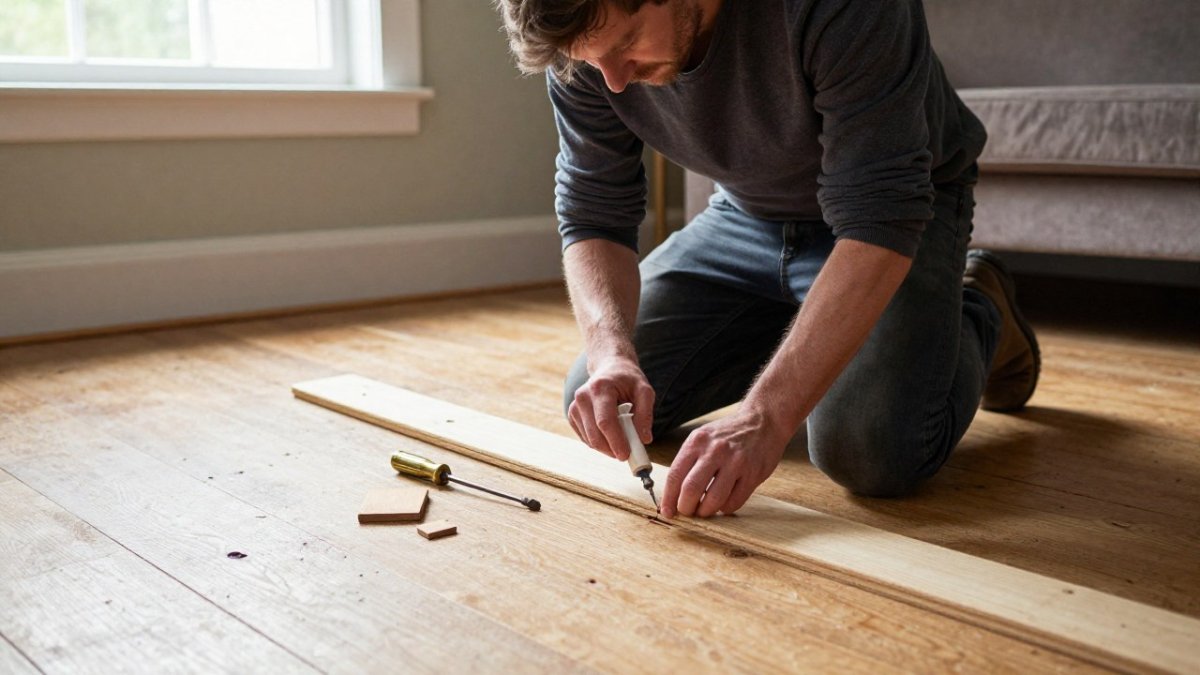
- Fit the new floor and refit trims
Agree the big items in writing before the day. That one step prevents most arguments.
Moving Furniture Before Flooring Installation: A Room-by-Room Plan
Moving furniture before flooring installation follows one rule: anything you can lift yourself should be out of the room. Fitters move heavy pieces, but they need space and a clear route to work safely.

Living rooms, bedrooms and hallways
Start with the easy wins. Strip beds, empty wardrobes and take pictures off the walls. Roll up rugs and stack small items in boxes in a room that is not being fitted.
Then think about the big pieces:
- Sofas and armchairs: move to another room or one corner
- Beds and wardrobes: empty them first, then ask the fitters to shift them
- Bookcases: remove all books and ornaments before moving
- Hallways: clear shoes, coats and furniture so fitters have a clear access route
Kitchens, bathrooms and wetrooms
Kitchens and bathrooms take more planning. Empty lower cupboards completely. Clear worktops near the fitting area. In bathrooms, remove towels, bath mats and anything loose.
Wetrooms need extra care. Specialist safety flooring needs a clean, dry and level base, so clear the whole floor area before the day.
Installation-day logistics and household safety
This is the part most guides skip, and it is where fitting days go wrong. Plan these before the morning:
- Access and parking: Fitters carry heavy rolls and boxes, often repeatedly. Clear the route from the front door to each room, and if you have a driveway, keep it free. On-street parking permits or restricted zones can delay a van, so check whether a temporary suspension or visitor permit is needed and arrange it in advance.
- Safe routes through the home: Decide which route fitters will use and keep it clear of shoes, bags and toys. Protect stair carpets and banisters if materials are being carried upstairs; a fitted sheet or dust sheet over the banister reduces scuffs.
- Pets and children: Keep pets out of the work area, ideally in another room or with a neighbour, and arrange for children to be out or supervised. Open doors and moving materials are a trip hazard, and some adhesives and finishes give off odours that are best avoided by young children and pets until ventilated.
- Ventilation: Adhesives, levelling compound and some finishes release fumes. Open windows where possible and plan to air rooms after fitting. If anyone in the household has respiratory sensitivity, mention it when booking so low-odour products can be discussed.
- Working from home: If you work from home, plan for noise and power interruptions. Fitters may need to use your electricity for tools, and the room you work in may be the one being fitted. Arrange an alternative space or a day away if the job is disruptive.
- Utilities and facilities: If the kitchen or bathroom is out of action, plan meals and washing arrangements for the duration. A larger job can take longer than a single room, so a little forward planning avoids a lot of inconvenience.
Watch out: leaving pets and children in the work area is the most common cause of fitting-day delays, a single loose animal can stop work while it is secured, and a child in the room is a genuine safety risk with tools and open floor voids.
Protecting Fragile Items, Décor and Wall Hangings
Fragile items cause more fitting-day stress than any other task. Wrap glassware, mirrors and ornaments in bubble wrap or newspaper, then box them. Take pictures and paintings off walls, especially in hallways where fitters carry materials through.
A common mistake is leaving décor on high shelves. Vibration from lifting and moving brings things down. Clear shelves fully.
If your walls and skirting boards are a concern, our guide on how to prevent damaged skirting boards walks through the protection steps in detail.
Disconnecting Appliances, Electronics and Gas Appliances Safely
Disconnecting appliances before flooring installation protects both your kit and the fitters. Unplug TVs, computers, routers and lamps, then move them out of the work area. Label cables if you are rewiring later.
Gas appliances are different. For guidance on safe gas work, see the Gas Safe Register.
Water appliances such as washing machines and dishwashers also need disconnecting. Ask us to confirm what your fitter can handle and what needs a specialist.
Flooring Acclimatisation Before Installation: Temperature, Moisture and Tolerances
Acclimatisation is where flooring jobs quietly succeed or fail. Every material reacts differently to the temperature and humidity of your home, and the subfloor beneath it has its own tolerances. Getting both right before fitting day is what stops planks gapping, seams lifting or tiles cracking months later.
Material-specific acclimatisation
Acclimatisation times vary by product, and the manufacturer's instructions always override general guidance.
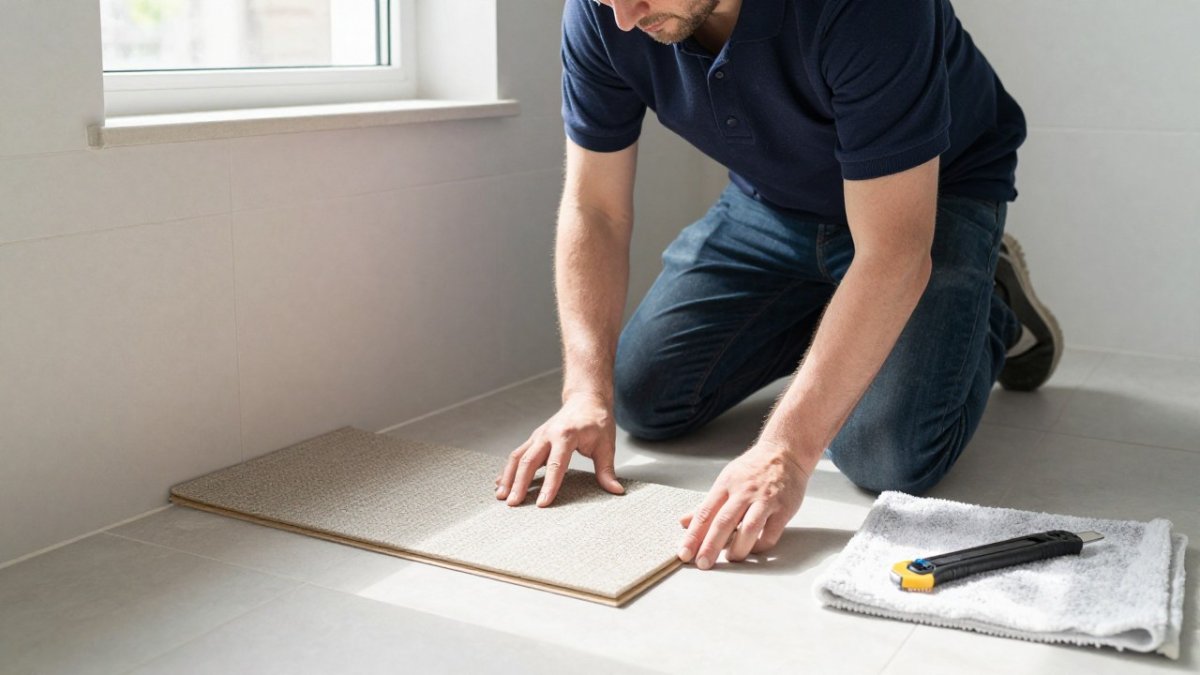
- Carpet: Generally needs little acclimatisation, but it should be unrolled and left flat in the room for at least 24 hours so it relaxes and loses transit creases. Foam-backed and wool carpets settle differently, so check the label.
- Laminate and engineered wood: These are the most humidity-sensitive. Most manufacturers ask for 48 to 72 hours in the room where they will be fitted, with packs laid flat and spaced to let air circulate. Keep the room at a normal living temperature (roughly 18-22°C) and avoid stacking packs against a cold external wall.
- Luxury vinyl tile (LVT) and vinyl: Typically 24 to 48 hours. LVT is dimensionally stable but still benefits from room-temperature storage; cold packs are stiffer and harder to cut cleanly.
- Solid wood: Often needs the longest period, sometimes a week or more, and is the most sensitive to seasonal humidity. Solid wood should be stored in the room, on battens if the floor is cold, and checked with a moisture meter against the subfloor reading.
- Tile: Ceramic and porcelain tile do not acclimatise in the same way, but adhesive and grout do. Store adhesive at room temperature and never mix it in a cold room, as it will not cure properly.
Leave packaging on until fitting day so the material is protected and the batch details stay readable. If you are unsure, ask your supplier to confirm the exact acclimatisation period for the product you have ordered, it is written on the pack and in the technical data sheet.
Moisture testing and subfloor tolerances
Moisture can cause flooring problems, and it is not always visible on the surface.
Practical checks before fitting:
- Concrete subfloors: A professional should carry out a moisture test, either a hygrometer test (placing a sealed box on the slab and measuring humidity over time) or a carbide test. The acceptable reading depends on the flooring type; some manufacturers specify a maximum percentage, others require a surface damp-proof membrane. Do not rely on a visual check.
- Timber subfloors: Check for damp, rot and movement. A moisture meter reading should be compared with the new flooring's expected moisture content; large differences mean the timber needs drying or the floor needs a barrier.
- Flatness tolerances: Most flooring manufacturers specify a maximum deviation over a set distance, commonly around 3mm over 2 metres for many products, though this varies. A straightedge and feeler gauge will show whether the subfloor is within tolerance. High spots can be sanded; low spots need levelling compound.
- When to call a professional: If the subfloor is damp, crumbly, uneven beyond tolerance, or shows signs of previous water damage, stop and get it assessed. Laying a new floor over a failing base wastes the material and the labour.
If you are planning ahead, ask us what your specific flooring requires before fitting day.
How Long Does Flooring Installation Take?
Flooring installation usually takes one to three days for a typical home, depending on room size, flooring type and subfloor condition. A single small room can be done in a day. A whole house, or a job needing subfloor repairs, takes longer.
Here is a rough guide:
| Job | Typical Duration | Notes |
|---|---|---|
| Single small room | Half a day to 1 day | Carpet or LVT |
| Living room plus hallway | 1 to 2 days | Includes old floor removal |
| Whole house | 2 to 3 days | Depends on room count |
| Wetroom or bathroom | 1 to 2 days | Extra prep for safety flooring |
| Subfloor repairs needed | Add 1 day | Damp or uneven base |
Fitting times also depend on access and how much furniture needs moving. We confirm your timeline before the day so you can plan around it. If you are weighing up engineered wood flooring, ask us about its fitting requirements.
Book Your At-Home Flooring Consultation
The biggest challenge in preparing for a new floor is knowing what your home actually needs. Every room is different, and guessing leads to wasted time and money.
That is where we come in. Mobile Carpets and Flooring SW Ltd brings a premium mobile showroom to your door, with thousands of samples to browse in your own space.
Get started with Mobile Carpets and Flooring SW Ltd and prepare your home with confidence. You can book an at-home flooring consultation or get in touch to arrange a time that suits you.
Preparing your home does not have to be a scramble.
Frequently Asked Questions
Do I need to move furniture before flooring installation?
Yes, in most cases. Clear the room of furniture, rugs and clutter before the fitters arrive so they can work without obstruction. Large items such as wardrobes and sofas should be emptied and moved to another room. If you cannot move something yourself, ask your flooring provider in advance how it should be handled. Moving furniture before flooring installation also protects your belongings from dust and accidental damage.
How long does flooring installation take?
Installation time depends on the flooring type, room size and subfloor condition. Rooms with old flooring to remove take longer, so plan for some flexibility in case subfloor repairs or moisture issues appear once the old floor is lifted.
Does new flooring need to acclimatise before installation?
Yes. Many flooring materials, especially LVT, engineered wood and laminate, need to sit in the room where they will be fitted so they adjust to the temperature and humidity. This is called flooring acclimatisation before installation. Follow the manufacturer's guidance on acclimatisation time and keep the room at a normal living temperature.
Should I remove skirting boards before new flooring is fitted?
Not always. Whether skirting boards need removing depends on the flooring chosen. Removing skirting can add disruption, especially if it is original or painted. Ask us before fitting day whether your chosen flooring needs the skirting removed. If you plan to replace skirting anyway, mention it early so the fitting sequence can be planned around it.