 How-to
How to Choose Easy-Clean Flooring for Care Homes
Last Updated: November 19, 2026
Quick Summary
Easy-clean flooring for care homes is a covering that can be cleaned and disinfected quickly and repeatedly while staying safe underfoot, comfortable for residents and durable under constant traffic. Choose it room by room, because hygiene, slip resistance, comfort and durability pull against each other and no single material wins everywhere.
- Sheet vinyl has the fewest seams, making it best for wet rooms, sluices and corridors.
- Specify a higher slip rating for wet rooms and en-suites than for bedrooms.
- Check that your disinfectants are compatible with the floor before specification, not after installation.
- Deep clean and re-apply polish often every three to six months in heavy-traffic corridors.
- Phase installation by wing or floor so residents keep safe access to bathrooms and communal areas.
Table of Contents
- What Easy-Clean Flooring for Care Homes Must Handle
- Care Home Vinyl Flooring: Sheet, Tile and Wood-Effect Options
- Non-Slip Flooring for Care Homes: Safety and Slip Ratings Explained
- Wetroom Flooring for Care Homes: En-Suites and Bathrooms
- Easy-to-Clean Commercial Flooring: A Room-by-Room Selection Guide
- Matching Flooring to Your Cleaning and Disinfection Routine
- Durability, Whole-Life Cost and Installation Disruption
- Book a Mobile Showroom Visit for Your Care Home
- Frequently Asked Questions
What Easy-Clean Flooring for Care Homes Must Handle
Easy-clean flooring for care homes is a floor covering that can be cleaned and disinfected quickly and repeatedly while staying safe underfoot, comfortable for residents and durable under constant traffic. At Mobile Carpets and Flooring SW Ltd, a family-run business with over 25 years of experience, we believe the floors that last are the ones chosen around the cleaning routine, not just the look.
Four demands pull against each other: hygiene, slip resistance, comfort and durability. A floor that wins on one often loses on another. The Health Design Center review of flooring and safety examined how flooring relates to patient and healthcare-worker safety, and the takeaway is that no single material wins everywhere. Room-by-room choices beat one-floor-fits-all decisions.
Care Home Vinyl Flooring: Sheet, Tile and Wood-Effect Options
Care home vinyl flooring is the default for most communal and clinical spaces, and for good reason: a sealed surface resists moisture, stains and bacteria, and it wipes clean without fuss. The choice is really between three formats.
- Sheet vinyl: fewest seams, so less dirt traps and easier disinfection. Best for wet rooms, sluices and corridors.
- Vinyl tile: replaceable tile by tile if one area is damaged. Best for offices and back-of-house areas.
- Wood-effect vinyl: gives a homely appearance in lounges and dining rooms without the upkeep of real timber.
| Format | Seams | Best For | Watch Out |
|---|---|---|---|
| Sheet vinyl | Minimal | Wet rooms, corridors | Harder to patch |
| Vinyl tile | Many | Offices, back-of-house | Dirt in joints |
| Wood-effect vinyl | Low to moderate | Lounges, dining rooms | Pattern repeats |
Watch out: a warm, homely look is worth having, but never trade slip resistance for it in a bathroom.
Non-Slip Flooring for Care Homes: Safety and Slip Ratings Explained
Non-slip flooring for care homes is flooring rated for slip resistance in wet and dry conditions, usually expressed through a pendulum test value (PTV) or an R rating. Higher numbers mean more grip. The NIHR SAFEST systematic review of shock-absorbing flooring looked at shock-absorbing floors for preventing fall-related injuries among older adults and staff, which shows how seriously the sector treats this.
Three practical rules:
- Specify a higher slip rating for wet rooms and en-suites than for bedrooms.
- Match the rating to the actual cleaning method, since a polished finish can become slick when damp.
- Check thresholds and transitions, which are where trips happen.
Resident comfort matters too. Softer, cushioned vinyl is kinder underfoot for dependent elderly persons and reduces the jarring of a stumble.
Wetroom Flooring for Care Homes: En-Suites and Bathrooms
Wetroom flooring for care homes has to do three jobs at once: drain water, grip underfoot and resist constant disinfection. Sheet vinyl with welded seams and a coved skirting is the usual answer because water cannot get behind it and bacteria have nowhere to collect.
Safety flooring with a textured surface is a sensible pick for en-suites, even where a smoother finish would look smarter. Moisture resistance and stain resistance are important here, and drainage falls should be checked before any covering goes down.
Easy-to-Clean Commercial Flooring: A Room-by-Room Selection Guide
Easy-to-clean commercial flooring works best when each room gets the covering that suits its traffic and moisture levels. This is the gap most guides leave out.
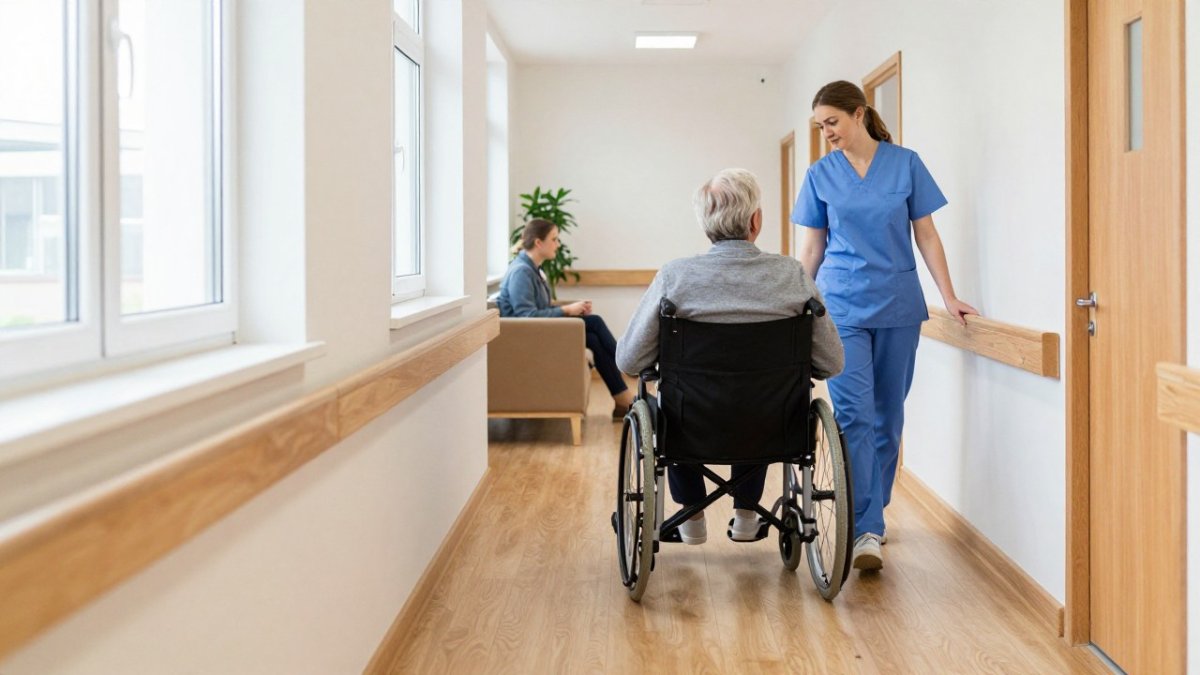
- Resident rooms: cushioned vinyl or carpet tiles for warmth and a homely appearance, with a hard floor at the doorway.
- Communal areas: wood-effect vinyl or tight-loop carpet tiles that handle constant foot traffic and moving furniture.
- Wet rooms and en-suites: sheet safety vinyl, welded and coved.
- Corridors: sheet vinyl in a mid-tone that hides scuffs and supports resident independence.
- Dining and lounges: wood-effect vinyl for easy spill clean-up.
For skirting protection during and after fitting, our guide on how to prevent damaged skirting boards covers the practical steps.
Matching Flooring to Your Cleaning and Disinfection Routine
The most common mistake is choosing a floor for how easily it cleans and then discovering the home's disinfectants attack it. Armstrong Flooring's senior living guidance makes the point plainly: an easy-to-clean floor is only part of the solution, and the covering must be compatible with the community's actual cleaning products and methods. Most flooring manufacturers publish a compatibility list for their vinyl and safety floors, and it is worth requesting this before specification rather than after installation.
A workable routine separates daily, periodic and spill-response tasks, because each puts different demands on the floor finish.
Daily cleaning
- Sweep or vacuum high-traffic areas to remove grit before it abrades the surface.
- Damp mop with the correct dilution of a neutral or manufacturer-approved detergent, never a stronger mix, which leaves residue that attracts soil.
- Spot-clean body-fluid spills immediately with a product from the manufacturer's approved list, then rinse to remove residue.
- Check entrance matting is in place; most ingrained dirt in corridors arrives on wheels and shoes.
Periodic cleaning
- Deep clean or scrub and re-apply the manufacturer's recommended polish or dressing at the interval stated in the maintenance guide, often every three to six months in heavy-traffic corridors.
- Inspect welded seams and coved skirting for lifting or discolouration; these are the first places bacteria collect.
- Review the floor quarterly for wear, dull patches or damage, and log findings so replacement can be planned rather than reactive.
Spill response
- Absorb liquid spills with paper roll or a dedicated spill kit before mopping, to avoid spreading contamination.
- Use a chlorine-releasing disinfectant only at the dilution on the label; stronger is not safer for the floor and can dull vinyl.
- Rinse and dry the area after disinfection so the surface is not left slick for residents.
Watch out: bleach-heavy products used at strength can dull a vinyl surface and shorten its life, and some quaternary ammonium disinfectants leave a film that traps dirt if not rinsed. Ask the flooring supplier for a written compatibility statement naming the products the home actually uses, and keep it with the maintenance file.
Durability, Whole-Life Cost and Installation Disruption
Durability under heavy foot traffic separates a floor that lasts a decade from one that looks tired in two years. Health Facilities Management on functional healthcare flooring notes that hard-flooring design is moving towards better safety, cleanability and appearance, which is good news for care settings. But durability is only half the buying decision; the other half is what the floor costs to own.
Whole-life cost drivers
Whole-life cost is more than the fitting price. It includes:
- Purchase and installation, including adhesive, screed preparation and trim.
- Cleaning labour and consumables over the service life.
- Repair of damaged areas, replaceable tiles can be swapped individually, whereas sheet vinyl may need a patch or a full re-cover.
- Replacement frequency, which is shorter in wet rooms and corridors than in bedrooms.
- Downtime cost while a room is closed for fitting or repair.
Sheet vinyl usually wins on whole-life cost in wet areas because welded seams reduce water ingress and the surface resists repeated disinfection. Replaceable tiles win where damage is likely, such as back-of-house or plant rooms, because a single tile can be lifted without closing the area. A common pattern is that the cheapest quote per square metre is rarely the lowest whole-life cost once cleaning labour and repair are counted.
Installation and refurbishment planning
Installation disruption is the part nobody warns you about. Plan room closures in phases, keep corridors passable and expect adhesive and trim work to take longer than the sales conversation suggests. Practical steps:
- Survey subfloors first; damp or uneven screed adds drying and levelling time before any covering goes down.
- Phase work by wing or floor so residents keep safe access to bathrooms and communal areas throughout.
- Confirm adhesive cure and access times with the installer, and keep residents off newly laid floors until the manufacturer's stated time has elapsed.
- Sequence wet rooms and en-suites first if they are the highest-risk areas, then corridors, then bedrooms.
- Agree a snagging walk-round before final handover so lifting seams or thresholds are corrected while the installer is still on site.
Watch out: closing a corridor without a signed diversion route can push residents onto unfamiliar flooring and increase trip risk; agree the route with the care manager before work starts.
Book a Mobile Showroom Visit for Your Care Home
Choosing easy-clean flooring for care homes is easier when you can see and feel the samples in the actual room. Our mobile showroom brings thousands of samples to your door, so you can compare flooring options in your own space. As a family-run business with over 25 years of experience, our expert consultants guide you through your selection, and our skilled fitters guarantee professional installation.
Get your care home flooring decision right the first time. Book a mobile showroom visit with Mobile Carpets and Flooring SW Ltd and compare samples in your own rooms, with expert guidance on safety ratings and cleaning routines before you commit.
Frequently Asked Questions
What is the easiest flooring to clean in a care home?
Sheet vinyl is usually the easiest to keep clean because it has few seams where dirt and bacteria collect. A sealed surface wipes down quickly, stands up to frequent mopping and tolerates the disinfectants most care settings use. Safety flooring with a textured surface needs a brush or scrubber rather than a plain mop to clear trapped soil. Whatever you choose, check the manufacturer's guidance on which cleaning products are compatible, since the wrong disinfectant can dull or damage the wear layer over time.
Is vinyl flooring suitable for care homes?
Yes. Care home vinyl flooring is one of the most common choices for residential facilities because it is moisture resistant, easy to clean and available with slip-resistant finishes. Sheet vinyl suits corridors, dining rooms and wet areas, while wood-effect vinyl gives bedrooms and lounges a homely appearance without the upkeep of real timber. Look for products with a sealed surface and a slip rating suited to the room, and confirm the range is compatible with your cleaning regime before specifying it.
How do you choose non-slip flooring for care homes?
Match the slip rating to the room and the people using it. Bathrooms, en-suites and wet rooms need a higher rating than bedrooms or lounges. Ask for the product's test data rather than relying on a general non-slip claim, and check how the surface performs when wet, not just dry. Bear in mind that textured safety flooring traps more soil, so plan a cleaning routine that includes scrubbing. Talk to your supplier about resident mobility and falls risk so the specification fits your actual building.
Can LVT flooring be used in care homes?
LVT works well in bedrooms, lounges and communal areas where a homely appearance matters, and many ranges offer wood and stone effects with a durable wear layer. It handles constant foot traffic and moving furniture better than carpet in high-use spaces. For wet rooms and en-suites, check that the specific product is rated for wet areas and that seams are sealed properly. LVT is not the automatic choice for every room, so compare it against sheet vinyl where hygiene and minimal seams matter most.