 How-to
9 Ways to Prevent Bathroom Slips for Seniors at Home
Quick Summary
Most bathroom slips can be prevented with a room-by-room risk check, non-slip flooring, properly fitted grab rails, and secure shower mats and seats. Start by walking the route from bed to toilet and spotting wet floors, loose rugs and missing support.
- Most falls happen on the way to the toilet, in the shower, or stepping out of the bath.
- Choose a textured or matt floor finish and check the slip-resistance rating before buying.
- Fit a grab rail beside the toilet at seat height plus 150-200 mm.
- Use fixed, screwed fittings for any seat or rail that takes body weight.
- Wipe the shower floor and tray edge after each use and run the extractor fan 15-20 minutes.
Table of Contents
- Start With a Room-by-Room Bathroom Risk Check
- Choosing Non-Slip Bathroom Flooring for Elderly Users
- How to Prevent Falls in the Shower
- Fitting Bathroom Grab Rails for Elderly Users in the Right Places
- Using Non-Slip Shower Mats and Seating Safely
- Clearing Trip Hazards, Improving Light and Toilet Access
- Booking Your Bathroom Safety Consultation in Plymouth
- Frequently Asked Questions
Start With a Room-by-Room Bathroom Risk Check
Last Updated: November 18, 2026
Most falls in the bathroom happen on the way to the toilet, in the shower, or while stepping out of the bath, and many of these bathroom slips are preventable with a quick check. A slip is rarely caused by one big problem. It is usually a handful of small ones that add up, such as a wet floor, a loose rug, or nothing to hold onto. Starting with a simple walk-through before buying anything is a sensible approach. Here is how to do it.
Stand in the doorway of each room and look at it as if you were seeing it for the first time. Then walk the route you take most often.
Walking the Route From Bed to Toilet
Night-time trips are where many falls begin. Walk the route slowly, in the dark if you can, and note what you find.
- Check the floor between the bed and the bathroom door for rugs or cables
- Look at the step or threshold into the bathroom and note any height change
- Test the light switch. Can you reach it without stretching?
- Notice how far the toilet sits from the bed and how much space there is to turn
Watch out: A rug with a rubber backing can feel safe but still slide on a hard floor. Lift the corners and check.
Spotting Wet Floor and Residue Hazards
Water and soap residue make tiles, vinyl and painted floors much more slippery, and these bathroom slips often go unnoticed until someone is already on the floor. Look for:
- Puddles or damp patches after a shower
- Soap scum on the floor, especially near the bath edge
- Bath mats that curl at the corners or slide when stood on
- Surfaces that feel slick when you walk across them in socks
Once you have a list, you can start making decisions about flooring and fittings.
Choosing Non-Slip Bathroom Flooring for Elderly Users
Flooring is the base of bathroom safety. A surface with good grip reduces the chance of a slip every time someone steps out of the shower. Many households focus on fittings first and forget the floor underneath them.
A textured or matt finish is generally a safer choice than a high gloss one. Ask for the slip-resistance rating on the product sheet before you commit. Vinyl and LVT are commonly chosen for a balance of grip, warmth underfoot and easy cleaning.
If you are planning a wetroom or accessible bathroom, a mobile showroom visit can let you see and feel sample surfaces in your own home.
How to Prevent Falls in the Shower
The shower is one of the highest-risk areas in the home. Standing on a wet surface, stepping over a tray edge and balancing on one leg while washing are all common causes of falls.
Follow these steps to reduce the risk:
- Fit a non-slip mat or textured surface on the shower floor
- Install a grab rail that is within easy reach from inside the shower
- Use a shower seat if standing for long periods is tiring
- Keep shampoo and soap on a shelf within reach, not on the floor
- Wipe the floor and the tray edge after each use to clear residue
Fitting Bathroom Grab Rails for Elderly Users in the Right Places
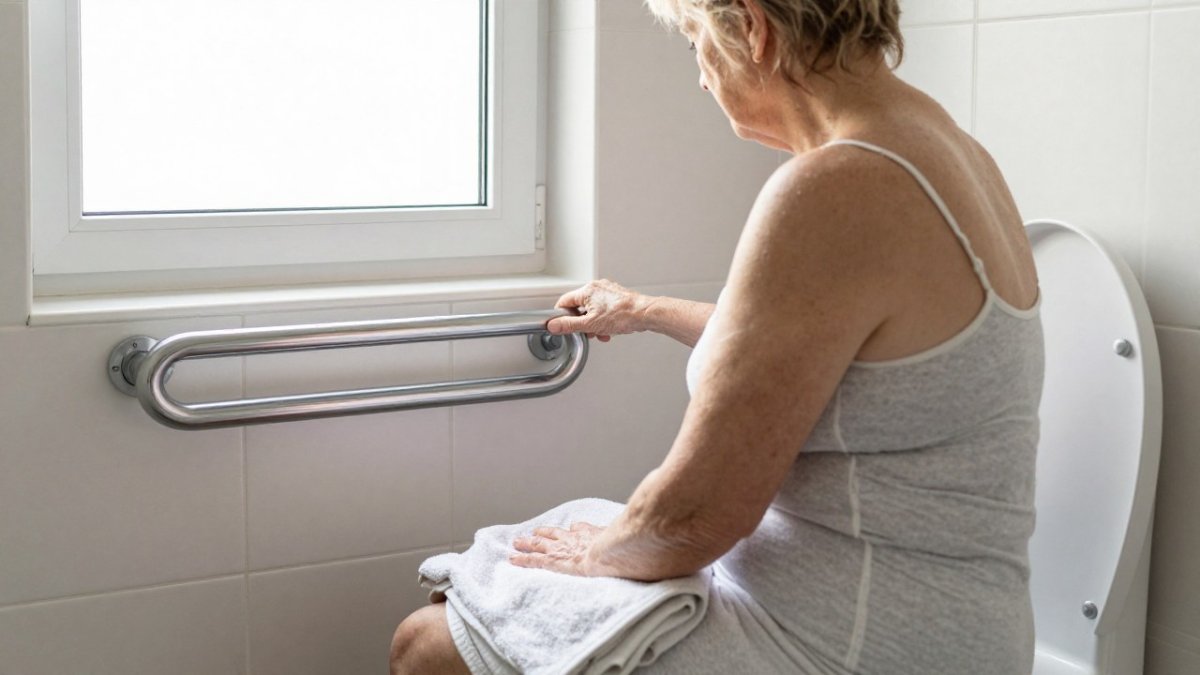
A grab rail only helps if it is in the right place and fitted properly. A rail that wobbles or is mounted in the wrong spot can cause a fall instead of stopping one. Placement and fixing are important to how well a rail performs.
Where Rails Should Go
Fit rails where people naturally reach for support, and check the height by standing in the position the rail will be used from:
- Beside the toilet: a horizontal rail at roughly seat height plus 150-200 mm, positioned so the hand can grip it before standing. A rail on the wall nearest the toilet is a common suggestion, and a second rail on the opposite side can help where space allows.
- In the shower: a vertical rail near the shower entry and a horizontal rail inside the enclosure at chest height. A vertical rail lets the user pull themselves up gradually; a horizontal rail gives steadying support while standing.
- Beside the bath: a horizontal rail along the long wall at roughly bath-rim height, plus a vertical rail at the tap end to help with stepping in and out.
- Near the door: a short vertical rail on the hinge side of the door frame if the threshold is raised or the floor changes level.
Avoid fitting a single diagonal rail unless a professional has assessed the user, because the grip angle changes as the hand slides along it.
Choosing and Fixing the Rail
Rails with a grip-friendly diameter and a textured or coated finish are generally easier to hold when wet. Stainless steel and coated steel are common choices.
Watch out: A rail fixed only into plasterboard or tile without a solid backing will pull out under load. Fixings must reach the wall structure, timber studs, masonry, or a proprietary reinforcing board installed behind the tiles. A reputable installer will use appropriate fixings for the load and test the rail before handing it over.
Never use a grab rail as a towel rail or to hang clothing, and do not fit a rail where it blocks the door swing or a clear turning space.
The article gives these placement and height guidelines for grab rails, which you can check against your own bathroom.
| Location | Rail type | Height or detail |
|---|---|---|
| Beside the toilet | Horizontal | Seat height plus 150-200 mm |
| Shower entry | Vertical | Near the shower entry |
| Inside shower | Horizontal | Chest height |
| Beside the bath | Horizontal | Roughly bath-rim height |
| Bath tap end | Vertical | Helps stepping in and out |
| Door hinge side | Short vertical | Where threshold is raised |
Using Non-Slip Shower Mats and Seating Safely
Shower mats and seats are inexpensive ways to add grip and support, but the right choice depends on how the user transfers, how much they can stand, and the shape of the bathroom. A common pattern is to buy the first product on the shelf and find it does not fit the space or the person.
Matching the Seat to the Transfer
Use this guide to narrow the choice before buying:
- Can stand but tires quickly: a small shower stool or a wall-mounted fold-down seat inside the enclosure. Check the seat height, roughly 450-480 mm suits most users, and make sure the feet sit flat on the shower floor, not on the tray edge.
- Needs to sit to wash but can step into the shower: a shower chair with arms gives something to push up from. Look for non-slip ferrules on all four legs and a seat with drainage holes.
- Cannot step over a bath rim: a bath board or a transfer bench that spans the bath rim lets the user sit and swing the legs over. Measure the bath width and check the bench's maximum user weight before buying.
- Uses a wheelchair or has very limited standing: a wheeled shower commode or a level-access wetroom with a fixed seat is usually the safer route. A mobile showroom visit lets you compare seat heights and foot clearance in your own bathroom.
Watch out: A suction-mounted seat or rail can release without warning on a textured or tiled surface. Fixed, screwed fittings are the safer choice for any seat that takes body weight.
Mats, Strips and Ongoing Checks
Choose a mat with suction cups or a weighted backing that stays flat, and check it after every wash. A curled edge is a trip hazard. Replace suction mats when the cups harden or stop gripping. Non-slip strips on a shower tray should be replaced when the grit wears smooth or the adhesive lifts at the edges.
Wipe the floor and tray edge after each use to clear soap residue, and leave the extractor fan running for 15-20 minutes afterwards to reduce damp. Check seat and mat fittings regularly for movement, and have any fixed rail or seat re-tightened if it shifts.
Clearing Trip Hazards, Improving Light and Toilet Access
Many bathroom falls come from small obstacles. Clear the floor of anything that is not needed, including bath toys, bins and loose mats.
Good lighting helps people see wet patches and edges. Use a bright light over the sink and a night light between the bedroom and the bathroom.
For toilet access, a raised toilet seat or support rails can make standing up much easier. Measure the height of the existing toilet before you buy, and check that the frame sits firmly on the floor.
Booking Your Bathroom Safety Consultation in Plymouth
Planning a safer bathroom can feel overwhelming, but you do not have to make every decision on your own. At Mobile Carpets and Flooring SW Ltd, our family-run team has more than 25 years of experience helping Plymouth homes. We bring a mobile showroom to your door, so you can compare slip-resistant flooring samples in your own bathroom and get expert guidance on grip, colour and fitting.
Pricing depends on the size of the room, the materials chosen and the installation work needed. For current prices or a quote, visit our website and book an appointment. We would be glad to help you make your bathroom safer and easier to use.
Frequently Asked Questions
How can I prevent an older person from slipping in the bathroom?
Start with a room-by-room check of the route from bed to toilet, then fix the most common causes: wet floors, loose rugs, poor lighting and missing support. Fit grab rails beside the toilet, bath and shower, use non-slip flooring and mats, and keep residue from soap and shampoo wiped away. Tell the person to sit to dress and to take their time getting in and out of the bath or shower. Review their medication with their GP or pharmacist, since some tablets cause dizziness.
Do non-slip mats help prevent falls in the bathroom?
Non-slip mats help when they are used correctly. A suction-backed mat inside the bath or shower gives grip underfoot, but it only works if it is kept clean and lies flat. Bath mats on tiled floors should have a rubber backing so they do not slide when stepped on. Replace mats that have curled, torn or worn smooth, because a worn mat can be more dangerous than none at all.
Where should grab rails be fitted in a bathroom?
Grab rails work best beside the toilet, at the entrance to the bath or shower, and along the wall where the person steps in and out. They should be fixed into solid wall structure or a suitable fixing system, not just screwed into plasterboard, so they can take a person's full weight. Ask an occupational therapist for an assessment, as they can advise on the exact height and position for the individual.
What should I do if an older person falls in the bathroom?
Check whether they are hurt before helping them up. If they hit their head, are in pain, cannot move a limb or seem confused, call 999 or NHS 111 straight away. If they are uninjured, help them up gently only if they can bear weight, and do not lift them alone. Afterwards, review what caused the fall, record it, and tell their GP so the risk can be reassessed.