 How-to
How to Prepare for a Flooring Consultation at Home
Last Updated: November 4, 2026
Quick Summary
Before a flooring consultation at home, measure each room's length and width, note alcoves and fixed items, and take photos of the existing floor. Gather colour samples, a rough budget and your timeline, and clear a path to each room. Preparing this way helps your consultant give accurate advice and a realistic quote.
- Measure the longest wall and widest point of each room, and note alcoves, bay windows and door recesses separately.
- Take photos of the existing floor, any damaged areas and the subfloor if it is exposed.
- Decide on a rough budget range and whether the quote should cover uplift and disposal of the old floor.
- Clear a route from the front door to each room and move fragile or valuable items to a safe place.
- Ask for the quote in writing, itemised by room, so you can compare like for like.
Table of Contents
- Why Preparation Makes Your Flooring Consultation Count
- A Flooring Consultation Checklist for the Week Before
- How to Measure a Room for Flooring Before the Visit
- Clearing Access, Furniture and Valuables
- What to Expect During a Flooring Consultation
- Questions to Ask a Flooring Consultant
- Booking Your Home Consultation and Next Steps
- Frequently Asked Questions
Why Preparation Makes Your Flooring Consultation Count
A flooring consultation at home is one of the easiest ways to choose new floors without leaving the sofa. At Mobile Carpets and Flooring SW Ltd, we bring a mobile showroom to your Plymouth doorstep, but the visit goes much better when you prepare first. A little preparation means fewer surprises and a more accurate quote.
Our consultants can show you a wide range of samples. That is only useful if they know your rooms, your traffic and your budget. Think of preparation as giving your consultant the information they need to do their best work.
Good preparation helps in three ways:
- Accurate advice: Measurements and room details help your consultant suggest suitable products.
- Realistic quotes: Knowing your rooms helps the consultant give you a more accurate quote.
- Less wasted time: Clear access and a tidy space let the visit focus on choosing floors.
Flooring consultation visits are most productive when both sides arrive with clear information. The steps below will help you get ready.
A Flooring Consultation Checklist for the Week Before
Start preparing about a week before the visit. You do not need to do everything, but these steps make a real difference. The aim is not to empty your home, it is to arrive at the consultation with the information your consultant needs to give accurate advice and a realistic quote.
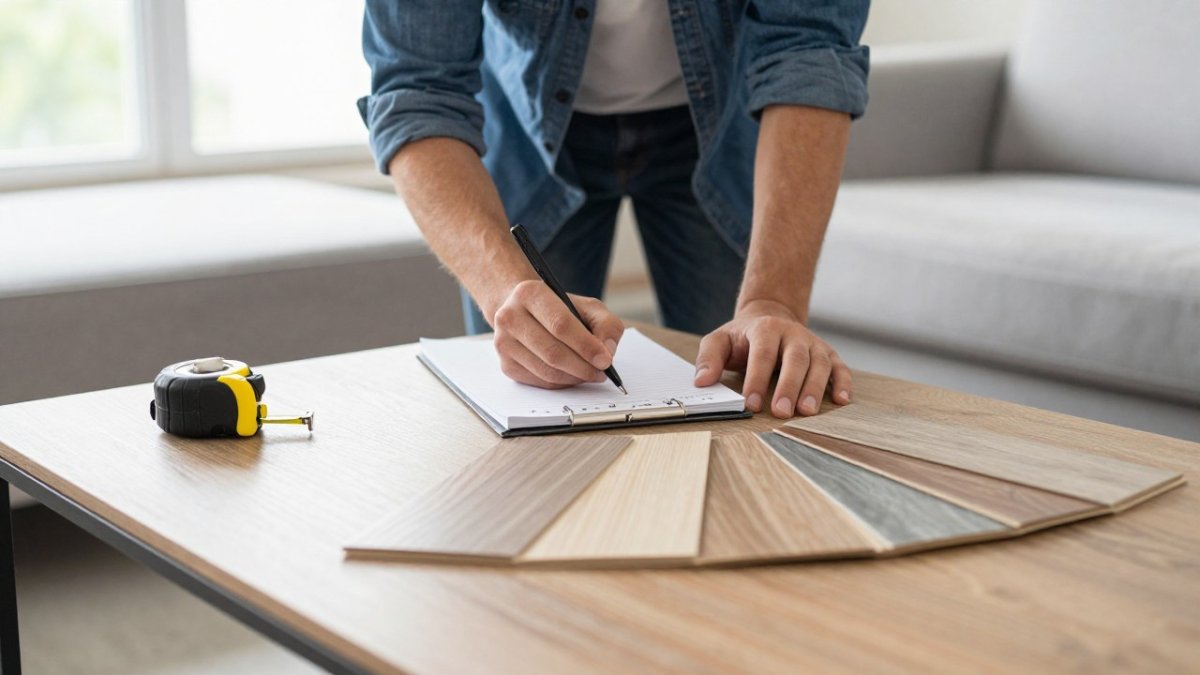
Work through this flooring consultation checklist:
- Note which rooms you want to cover, and whether any are being renovated at the same time
- Measure each room's length and width (see the measuring section below)
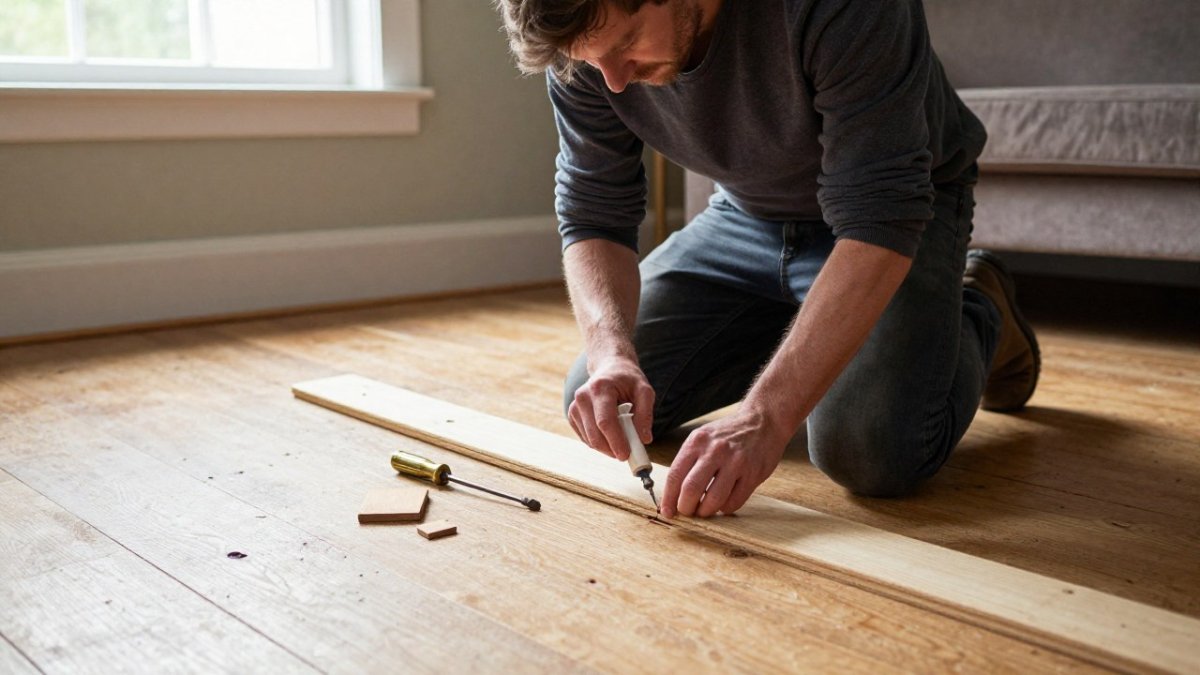
- Take photos of the existing floor, any damaged areas, and the subfloor if it is exposed
- Gather a paint chip, fabric swatch or photo of a favourite room to show your colour direction
- Decide on a rough budget range, including whether you want the quote to cover uplift and disposal of the old floor
- Note your timeline, when you need the work finished and whether you are coordinating with other trades
- List who uses each room and how busy it is, plus any pets, children, allergies or mobility needs
- Jot down any existing product details you already like, such as a flooring brand, colour name or sample you have seen
- Check parking and access arrangements for the consultant's visit
Bring your notes, photos and measurements to the visit. Having them ready saves time and helps your consultant tailor advice to your home. If you are unsure about any item, note it as a question rather than leaving it blank, the consultation is the right place to resolve it.
A common pattern is for homeowners to focus on colour and style and overlook practical details such as subfloor condition or delivery access.
How to Measure a Room for Flooring Before the Visit
Accurate measurements are the foundation of any flooring quote. Measuring a room is simple with a tape measure and a pencil.
- Measure the longest wall, then the widest point across the room.
- Note alcoves, bay windows and door recesses separately.
- Sketch a rough floor plan with the measurements written on it.
- Mark the position of fixed items such as radiators, units and fireplaces.
Round to the nearest centimetre and write down any unusual shapes. Your consultant will take their own precise measurements, but your sketch gives them a useful starting point.
Watch out: Forgetting to measure cupboards, alcoves and stairs can leave gaps in your quote. Include every space that will be covered.
Clearing Access, Furniture and Valuables
Clear paths make the visit easier and protect your belongings. A clear room is always safer for everyone.
Before the consultation, try to:
- Clear a route from the front door to each room
- Move small furniture, rugs and ornaments out of the way
- Put fragile or valuable items in a safe place
- Secure or move pets so they stay safe and out of the way
- Make sure the room is safe to walk through, with no trip hazards (Preventing slips and trips at work)
Some items, such as large wardrobes or sofas, may need to be moved on installation day. Mention them during the consultation so the team can plan ahead.
What to Expect During a Flooring Consultation
A typical visit starts with a short chat about your plans. Your consultant will look at your existing floor and the condition of the subfloor, which is the layer beneath your finished floor. They will check whether surfaces are clean, dry and level.
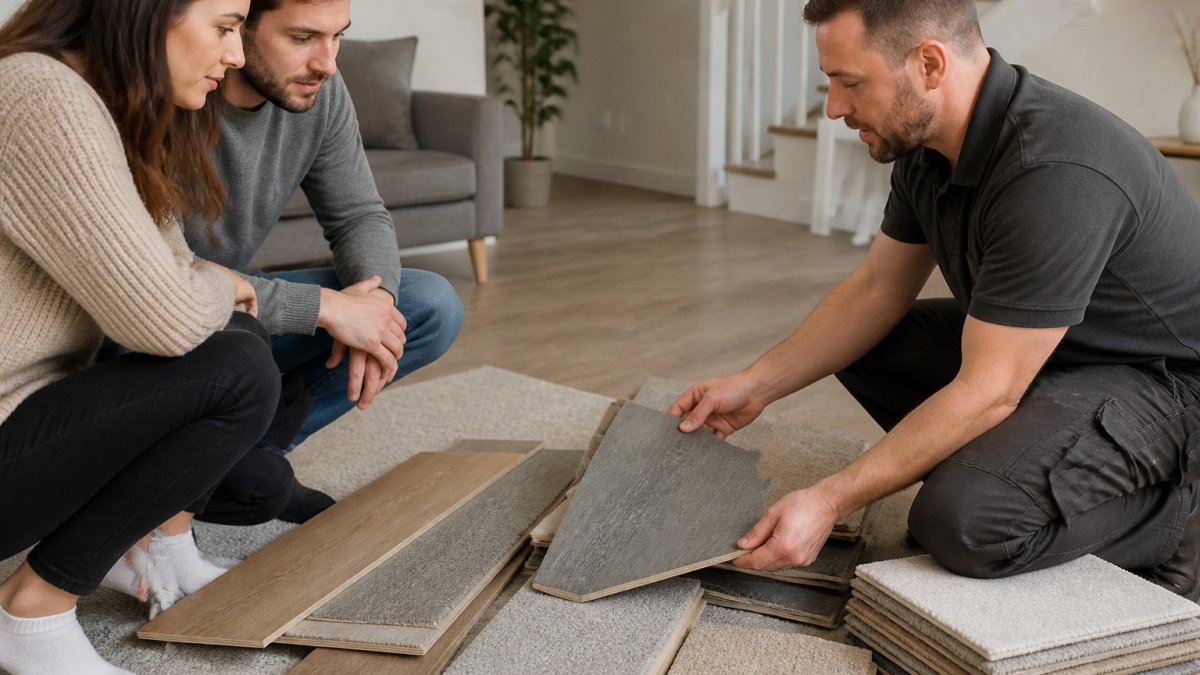
Next, you will look through samples together. Our showroom includes LVT, carpets and specialist options for wetrooms and accessible bathrooms.
Expect to discuss:
- How each room is used and how much foot traffic it gets
- Any household needs, such as pets, children or mobility requirements
- Your aesthetic preferences and colour direction
- Installation options and what preparation the fitters will need
By the end of the visit, you should have a clear shortlist and a sense of the next steps.
The visit follows a predictable pattern, so here is what happens and what to plan for at each stage.
| Stage | What happens | Your role |
|---|---|---|
| Opening chat | Discuss your plans and how each room is used | Share room uses and household needs |
| Floor check | Consultant inspects the existing floor and subfloor | Point out damaged or uneven areas |
| Sample review | Look through LVT, carpets and specialist options | Bring colour direction and a shortlist |
| Wrap-up | Agree a shortlist and the next steps | Note questions and the timeline |
Questions to Ask a Flooring Consultant
Asking the right questions helps you compare options and feel confident in your decision. Group your questions into four areas: the product, the quote, the installation, and the aftercare.
About the product and your home
- Which flooring suits high-traffic rooms, and why?
- How does the subfloor condition affect my choice, and will it need preparation such as levelling or a damp-proof membrane?
- How will the floor perform with pets, children, allergies or mobility aids?
- What maintenance will this floor need over time, and what products should I avoid?
About the quote and cost
- What does the quote include, and what is extra? Ask specifically about uplift and disposal of the old floor, underlay, trims, door adjustments and any subfloor preparation.
- Is the quote fixed or an estimate, and what could change it?
- How long is the quote valid, and are prices affected by delivery dates or stock availability?
- Can I have the quote in writing, itemised by room, so I can compare like for like?
About installation and responsibility
- Who is responsible for moving large furniture, and what do I need to clear before installation day?
- How long will installation take, and will I be without access to any room overnight?
- Ask how the fitters are arranged, and what insurance and guarantees cover their work.
About credentials and aftercare
- Ask what warranties come with the product and the installation, and what is excluded.
- What happens if I am not happy with the finished floor, and what is the complaints process?
- What aftercare advice will I receive, and who do I contact if a problem arises later?
A good consultant will answer these clearly and explain the trade-offs between options. Pricing depends on quantity, dates and delivery, so ask for a written quote rather than a rough guess. It also helps to ask what happens after the consultation: expect measurements to be confirmed, samples to be left for you to live with, a written quote to follow, and a clear timeline from selection to installation. If any of those steps are unclear, ask before the consultant leaves.
Booking Your Home Consultation and Next Steps
Once you have prepared your rooms and your questions, you are ready to book. Our team can arrange a convenient time and talk through what you need.
You can also contact us directly to arrange a visit that fits your schedule.
Before the visit, it may also help to read how to prevent damaged skirting boards: 7 essential steps, especially if you are clearing a room for the works.
For current prices and availability, please check with our team when you book. If you are planning a home visit, you can book an LVT appointment consultation to get specific flooring advice.
Frequently Asked Questions
What should I prepare before a flooring consultation at home?
Gather the room measurements, photos of each area, the room's current use and foot traffic, your budget range and the date you need the work finished. Clear access routes, move valuables and fragile items, and note any existing floor problems such as lifting boards or damp patches. Having this ready lets the consultant spend the visit on options and a realistic quote rather than on basic information gathering.
Should I measure my room before a flooring consultation?
Yes, measuring each room in metres to the nearest centimetre saves time and helps the consultant estimate quantities sooner. Measure the length and width at the widest points, note any alcoves, bay windows and door openings, and sketch a simple plan. Treat your figures as a helpful starting point rather than a final survey.
Do I need to move furniture before a flooring consultation?
You do not need to empty the room, but clearing small items, rugs and anything fragile from the floor areas helps the consultant see the subfloor and work accurately. Make sure a clear route exists from the front door to each room, and secure pets. If heavy furniture is in the way, let the consultant know so they can plan how it will be moved on installation day.
What questions should I ask a flooring consultant?
Ask what is included in the quote, and how long installation takes. Also ask how the recommendation suits your household's foot traffic and maintenance needs, and what happens if you are not happy once the floor is fitted.