 How-to
How Can You Extend the Life of Your Carpet?
Last Updated: November 16, 2026
Quick Summary
To extend carpet life, vacuum thoroughly two to three times a week in busy rooms, as grit left in the pile grinds fibres down with every footstep. Protect high-traffic zones with entryway matting, blot spills fast instead of rubbing, and book professional deep cleaning every 12 to 18 months.
- Vacuum low-traffic rooms weekly and high-traffic hallways and stairs daily or every other day.
- Slow vacuum passes remove more soil than several rushed passes over the same area.
- Blot spills from the outside in and never rub, which pushes stains deeper.
- Use mildly acidic to neutral cleaners on wool and keep water cool to lukewarm.
- Dry rooms with airflow after wet cleaning so carpet does not stay damp.
Table of Contents
- How Often to Vacuum Carpet to Extend Carpet Life
- How to Prevent Carpet Wear in High-Traffic Areas
- How to Remove Stains from Carpet: A Step-by-Step Guide
- Choosing Cleaning Products and Equipment That Protect Carpet Fibres
- How Often to Clean Carpets Professionally
- Moisture, Drying and Mould Prevention After Cleaning
- Signs of Wear, Repair Options and When to Replace
- Book a Home Flooring Consultation to Plan Your Carpet Care
- Frequently Asked Questions
How Often to Vacuum Carpet to Extend Carpet Life
If you want to know how to extend the life of your carpet, regular vacuuming is one of the most useful habits you can build. Most homes benefit from a thorough vacuum two to three times a week in busy rooms.
Here is why it matters. Carpet fibres wear out fastest when grit sits in them. Every footstep grinds that dirt deeper into the pile. Over time, the fibres fray and flatten, and no amount of cleaning brings them back.
At Mobile Carpets and Flooring SW Ltd, we have fitted carpets for over 25 years, and the homes that last are the ones where soil removal happens often. British Institute of Cleaning Science guidance on carpet care sets out the same principle: remove soil before it works its way down.
A Simple Vacuuming Schedule by Traffic Level
Match your routine to the room, not the whole house:
- Low traffic (spare bedroom): once a week
- Medium traffic (living room): two to three times a week
- High traffic (hallway, stairs): daily or every other day
- Homes with pets or children: add one extra pass per week
Slow passes beat fast ones. One careful pass picks up more than three rushed ones.
How to Prevent Carpet Wear in High-Traffic Areas
Carpet wear is not random. It clusters where feet land most: doorways, hallways, stairs and the strip in front of the sofa. Protecting those zones is the cheapest way to extend carpet life.
Entryway matting does most of the work. A good doormat traps grit before it reaches the carpet, and a second mat just inside doubles the effect. Shake both out weekly.
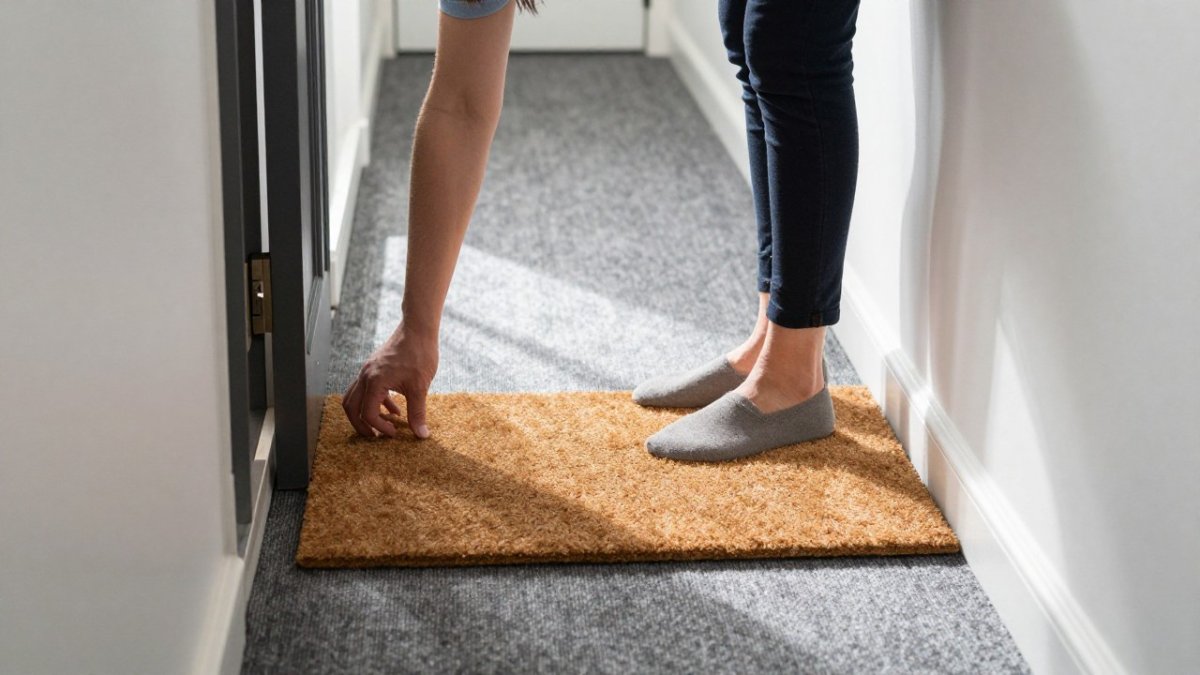
The woman is British.
Entryway Matting and Furniture Protection
Two more habits protect the pile:
- Move furniture slightly every few months so dents do not become permanent
- Use felt pads under chair and table legs
- Rotate rugs so wear spreads evenly
- Lift, never drag, heavy furniture across carpet
If your skirting boards and edges take a beating during moves or cleaning, our guide on how to prevent damaged skirting boards covers the detail.
How to Remove Stains from Carpet: A Step-by-Step Guide
Act fast, blot don't rub, and work from the outside in. Those three rules handle most spills. The longer a stain sits, the more it bonds to the fibre, so treat spills within minutes where you can.
Follow these steps:
- Scoop up any solids with a spoon
- Blot the liquid with a clean white cloth, pressing down
- Work from the edge of the stain inward
- Apply a gentle cleaner to the cloth, not the carpet
- Blot again until no more transfers
- Rinse with a damp cloth and blot dry
- Place a towel down and weigh it to draw out moisture
Never rub. Rubbing pushes the stain deeper and fuzzes the fibres.
Match the Treatment to the Fibre Before You Match It to the Stain
The carpet underneath matters as much as the spill. The same red wine stain may need different handling on wool than on solution-dyed nylon, so check the fibre before choosing a treatment.
- Wool: mildly acidic to neutral cleaners only. Strong alkaline products (many off-the-shelf stain removers) strip the natural lanolin and leave wool brittle and dull. Keep water cool to lukewarm, hot water can shrink and felt wool fibres.
- Nylon and polyester: tolerate a wider pH range, including mild alkaline detergents. Solution-dyed versions are the most forgiving because the colour is locked into the fibre rather than applied to the surface.
- Polypropylene (olefin): resistant to water-based stains but vulnerable to oil-based ones and to heat. Keep irons, hot pans and hair dryers well away.
- Natural fibre blends (sisal, coir, jute): absorb water readily and can brown or swell. Use the minimum moisture possible and dry quickly.
If you do not know the fibre, check the manufacturer's care label and test any product on a hidden corner first.
Stain Treatment by Type: Food, Drink and Oil
Different stains need different handling:
-
Tea and coffee: blot, then a mild detergent solution. Rinse with cool water, hot water can set the tannins.
-
Red wine: blot fast, then cold water and a gentle cleaner. Do not rub, and do not reach for salt, which can drive the pigment deeper.
-
Grease and oil: lift with paper towel first, then a degreaser made for carpet. Work from the outside in so you do not spread the ring.
-
Mud: let it dry completely, vacuum, then treat the residue. Wet mud smears and pushes deeper.
-
Blood: cold water only. Warm water coagulates the protein and locks the stain in.
-
Ink and marker: blot with a cloth dampened with surgical spirit, testing first on wool, which can be sensitive to solvents.
Know When to Stop and Call a Professional
Some stains are better left to a trained technician than worked at home. Stop and seek professional help if:
- The stain has been there for more than a few days and has dried in
- Your blotting keeps transferring colour after several attempts
- The affected area is larger than a dinner plate
- The carpet is wool, silk-blend or a natural fibre and the stain is oil-based
- You have already tried two products and the patch looks lighter or rougher than the surrounding pile
Home treatment can sometimes make a stain worse by spreading it or over-wetting the backing, so knowing when to stop is worthwhile.
Choosing Cleaning Products and Equipment That Protect Carpet Fibres
A gentle, pH-balanced carpet detergent is usually the safest choice for most wool and synthetic carpets.
Check the label for the fibre type it suits. Wool dislikes strong alkaline products, while solution-dyed synthetics tolerate more.
Your vacuum matters too. A machine with strong suction and a good brush bar lifts more soil. Empty or change the bag often, because a full vacuum cleans poorly.
How Often to Clean Carpets Professionally
Many homes benefit from professional cleaning every 12 to 18 months, and busy households with pets or children may find more frequent cleaning helpful.
Regular deep cleaning removes the soil that vacuuming cannot reach. It also lifts the pile and refreshes the look. Between visits, spot cleaning keeps small marks from becoming permanent.
A Practical Deep-Cleaning Schedule by Household and Carpet Type
"Regular" means different things in different homes. Use this as a starting point and adjust for how the room is used:
-
Single occupant, low-traffic rooms, synthetic carpet: every 18-24 months
-
Family home, medium traffic, nylon or polyester: every 12 months
-
Household with pets or young children: every 6-9 months, plus immediate spot treatment
-
Wool carpet in any busy room: every 9-12 months, using a wool-safe method
-
Home office or room with heavy chair traffic: every 6-12 months, focusing on the desk zone
Carpet type matters as much as traffic. Wool benefits from professional cleaning because it holds soil deep in the pile and responds well to proper extraction. Solution-dyed synthetics are more forgiving and can stretch to the longer end of each range.
DIY Versus Professional: How to Decide
Rented machines and home spot cleaners have their place, but they are not a like-for-like swap for professional cleaning. The deciding factors are usually:
- Drying and moisture: carpet that stays too wet can risk mould and delamination, so controlling moisture matters.
- Soil depth: DIY cleaning lifts surface soil. The grit that wears fibres sits at the base of the pile and needs proper extraction to remove.
- Stain severity: fresh, small marks are fine to tackle yourself. Set-in, large or oil-based stains are better handled professionally.
- Fibre type: wool and natural fibres need fibre-specific products and methods that most rental machines do not provide.
- Warranty: some carpet warranties set conditions for cleaning, so check the terms before relying on DIY.
A sensible pattern is to handle spills and spot cleaning yourself, vacuum thoroughly and often, and bring in a professional for the periodic deep clean.
Moisture, Drying and Mould Prevention After Cleaning
Over-wetting is the most common cleaning mistake. Carpet that stays damp for long periods can grow mould and delaminate from its backing, so thorough drying matters.
Dry the room properly after any wet clean:
- Open windows and doors for airflow
- Run fans or a dehumidifier
- Keep foot traffic off until dry
- Lift furniture legs onto foil or pads
With good airflow, carpets often dry within a day. If a patch still feels damp, keep drying it.
Signs of Wear, Repair Options and When to Replace
Know the difference between tired and finished. Some wear is fixable; some means replacement is the smarter spend.
| Problem | Likely Cause | Fix or Replace |
|---|---|---|
| Flattened pile in walkways | Foot traffic | Deep clean, then replace if it stays flat |
| Small burns or tears | Accidents | Professional repair if the patch is small |
| Ripples or loose edges | Poor installation | Re-stretch, not replace |
| Frayed seams | Wear over time | Seam repair |
| Widespread bald patches | Age and heavy wear | Replace |
If several rows point to replacement, it is worth browsing our carpets to see current options before you decide.
Book a Home Flooring Consultation to Plan Your Carpet Care
That is where we come in.
At Mobile Carpets and Flooring SW Ltd, we bring our mobile showroom to your door with thousands of samples. Our consultants help you choose flooring for each room, and our fitters install to a high standard.
You can book a phone consultation to talk through your rooms, or contact us to arrange a visit. Get started with Mobile Carpets and Flooring SW Ltd and give your floors a longer, better-looking life.
Carpet care rewards consistency more than effort. A steady vacuuming routine, quick stain response and sensible drying will keep any carpet looking its best for years. When the time comes to replace, our team can help you choose a floor built for the way you live.
Frequently Asked Questions
How often should carpet be professionally cleaned?
Most carpets benefit from professional cleaning every 12 to 18 months. Homes with pets, children or high foot traffic may need it every 6 to 12 months, while a lightly used spare room can go longer. Regular professional cleaning removes deep-set soil that vacuuming cannot reach, which helps extend carpet life and keeps fibres from matting.
Do doormats help protect carpets?
Yes. A good doormat traps soil and moisture at the entrance before it reaches your carpet. Use a coarse mat outside and a softer absorbent mat inside, and shake or vacuum them weekly. This simple step reduces tracked-in dirt, one of the main causes of carpet wear, and helps you extend carpet life with very little effort.
Can regular cleaning really make a carpet last longer?
Regular cleaning removes abrasive dirt and grit that cuts into carpet fibres with every footstep. Vacuuming frequently and spot cleaning spills promptly slow down fibre damage and keep the carpet looking fresher. Combined with professional deep cleaning, this routine helps you extend carpet life and delay the cost of replacement.
How do I stop carpet from flattening in busy areas?
Rearrange furniture every few months so traffic patterns shift, and use rugs or runners in walkways. Vacuum high-traffic areas more often, and occasionally brush the pile with a soft brush after vacuuming to lift crushed fibres. If flattening persists, a professional clean can help restore some of the pile's bounce.