 blog
How to Choose the Best Slip Resistant Flooring for Wet Rooms
Quick Summary
The best slip resistant flooring for wet rooms is a textured or matte surface with a proven wet grip rating, since surface finish matters more than material name alone. Porcelain tile, luxury vinyl tile and microcement can all work when the finish is chosen with care. Ask for the barefoot test result and check how the floor performs once soap and water are present.
- A 2021 study found unglazed lapatto tiles and unfinished glazed tiles kept anti-slip properties best.
- Polished porcelain can be very slippery when wet and is best kept to dry areas.
- Luxury vinyl tile is described as one of the safer bathroom options, combining moisture resistance with slip prevention.
- Ask for barefoot ratings, because a shod rating does not reflect how a wet bare foot will grip.
- Test a sample with soap and water in your own bathroom before committing to a full installation.
Table of Contents
- Why Wet Room Flooring Needs More Than Standard Grip
- Wet Room Flooring Types Compared
- Slip Resistance Ratings for Flooring Explained
- Testing Slip Resistance After Soap and Cleaning Products
- Wet Room Flooring for Disabled Users and Accessible Bathrooms
- How to Clean Safety Flooring Without Losing Grip
- Booking a Wet Room Flooring Consultation
- Frequently Asked Questions
Why Wet Room Flooring Needs More Than Standard Grip
Most wet room floors fail in the same way: they look fine when dry, then turn dangerous the moment water, shampoo and body oils pool on the surface. Other common damage and upkeep problems that affect wet areas are covered in how to prevent damaged skirting boards. Choosing the best slip resistant flooring for wet rooms means looking past appearance and checking how a surface behaves once it is wet and soapy.
The UK has no single flooring standard for domestic wet rooms, so the reliable starting point is measured slip performance. A 2021 experimental study of ceramic tiles found that unglazed tiles with a lapatto surface and glazed tiles with no finish had the best potential to keep their anti-slip properties among the surfaces tested (What Makes a Floor Slippery? A Brief Experimental Study of Ceramic Tiles). Surface finish, not material name alone, drives how a floor performs.
Homeowners often ask whether a tile or vinyl "non-slip" in name only is truly safe. The answer depends on texture, finish and how the floor is used, and that is what this guide covers.
Wet Room Flooring Types Compared
Wet rooms are usually finished in one of three materials. Each has a different balance of grip, water resistance and upkeep, and the right choice depends on the room's layout and who uses it.
Porcelain and Ceramic Tiles
Porcelain and ceramic tiles remain the most common wet room choice. Their slip performance depends almost entirely on surface finish. A textured or matte porcelain tile offers far more grip when wet than a polished one, which can become very slippery and is best kept to dry areas, according to the Tile Council of North America's floor safety guidance.
Pros: durable, highly water resistant, wide range of textures. Cons: grout lines need sealing, and polished finishes are a slip risk.
Vinyl and Luxury Vinyl Tile
Luxury vinyl tile (LVT) is a practical alternative. Retailers often describe it as one of the safest options for bathrooms because it combines moisture resistance with slip prevention, and it feels softer underfoot than tile (Kelly's Carpet flooring guide).
Pros: warmer and softer underfoot, quick to fit, easy to clean. Cons: seams need careful sealing, and cheaper products wear grip faster.
Microcement and Other Options
Microcement creates a seamless, continuous surface with no grout, which helps hygiene. Wet room guides list it alongside tiles and vinyl as a viable material (Wetrooms Online material guide). Its grip depends on the finish applied, so ask for slip test data before committing.
Pros: no grout lines, seamless look. Cons: requires skilled application, and grip varies with the topcoat.
Slip Resistance Ratings for Flooring Explained
Slip resistance is measured, not guessed, and the numbers only help if you know which test produced them. In the UK, two methods come up most often when specifying wet room floors, and they answer different questions.
The pendulum test (often called the Pendulum Test Value, or PTV) drags a spring-loaded rubber slider across the floor and measures how much friction it loses. It is usually reported as a PTV number: higher means more grip. The same test can be run with different slider materials, so a barefoot rating (using a softer slider that mimics a foot) is not interchangeable with a shod rating (using a harder slider that mimics a shoe sole). For a wet room used barefoot, ask specifically for the barefoot result.
The second common method is the ramp test, which gives a classification rather than a single number. A tester walks a ramp in the relevant condition (dry, wet, or wet with a contaminant) and the angle at which they slip is converted into a class. Ramp classifications are useful because they are tied to a stated condition, but they are not directly comparable with a PTV figure.
That incomparability is the trap. A supplier quoting "R10" or "PTV 36" is not giving you a universal score, and a number with no test method, slider type or surface condition attached tells you very little. When you compare products, line up the method, the condition (dry, wet, soapy) and the slider or footwear type before you compare the digits.
Watch out: a polished porcelain tile can carry a respectable dry rating and still be treacherous once water and body oils sit on it, so never accept a dry-only figure for a shower zone.
A practical way to use ratings is as a floor, not a ceiling. Treat a recognised wet barefoot result as the minimum entry point, then add the texture, drainage fall and cleaning regime that keep the surface performing in daily use. Ask any supplier for the test report itself, not just the headline number, and check the date and the sample tested against the batch you will actually receive.
The table below sets out the main points from this section so you can compare how each rating method works.
| Method | What it reports | Key caution |
|---|---|---|
| Pendulum Test (PTV) | Friction loss as a PTV number; higher means more grip | Slider type changes the result |
| Barefoot rating | Grip for a bare foot, using a softer slider | Ask for it for wet rooms used barefoot |
| Shod rating | Grip for a shoe sole, using a harder slider | Not the right figure for barefoot showers |
| Ramp test | A class tied to dry, wet or contaminated condition | Not directly comparable with PTV |
| Dry-only figure | Grip on a clean, dry surface | Can hide danger once water and oils sit on it |
Testing Slip Resistance After Soap and Cleaning Products
Most slip ratings are taken on clean, wet surfaces. Real bathrooms are not clean. Shampoo, body wash and cleaning residue can reduce grip significantly, and this is the gap most product guides ignore.
Ask whether the manufacturer has tested the surface with soap or cleaning products present. If it has not, consider a sample in your own bathroom: wet it, add a little soap, and walk across it barefoot before you commit to a full installation.
Wet Room Flooring for Disabled Users and Accessible Bathrooms
Accessible bathrooms need extra attention because users with reduced mobility, balance problems or sensory loss have far less margin for error. The floor has to offer consistent grip across the whole level-access area, not just in the shower footprint, and it has to work with the way the room is actually used: barefoot, with mobility aids, with a carer present, or during a transfer from a wheelchair or shower chair.
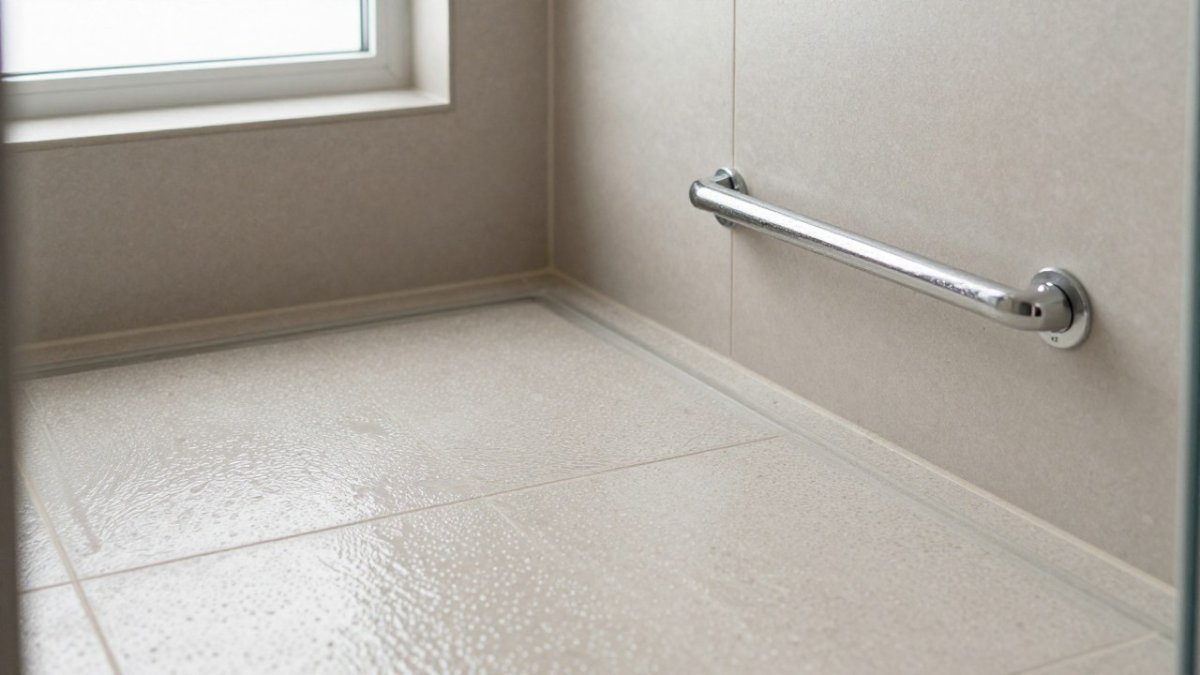
Start with barefoot grip. A floor rated well for shod use can still feel slick under a wet bare foot, so ask for the barefoot test result and check it holds across the whole floor, including the path from the door to the shower and the area beside the WC. Texture helps, but it must be fine enough not to abrade skin or catch on a footplate.
Then think about mobility aids. Wheels, walking frames and shower-chair castors behave differently on tile, vinyl and microcement. A very deep texture can slow a wheel and make self-propulsion harder, while a smooth surface gives the castor nothing to grip. A medium, consistent texture is often a sensible compromise, and it is worth testing a sample with the actual aid before committing.
Transfers and caregiver use add another layer. If a carer helps with washing or transferring, they need secure footing too, often in shoes, so the floor should perform for both barefoot and shod users. Avoid patterns that disguise level changes or the edge of a drain channel, and confirm the drain falls are correct so water does not pool where someone is standing or transferring.
Watch out: a floor that meets a slip benchmark in the shower can still fail at the doorway, where water tracks out and the surface may be a different material or finish.
Finally, plan the whole level-access area as one system. The flooring, tanking, drain detail and any threshold should be specified together, because a grip rating on a tile says nothing about whether the junction at the drain or the door will stay watertight and safe. A fitter can plan the layout around these needs during a home visit, and it is worth involving an occupational therapist where a specific aid or transfer routine is in use.
How to Clean Safety Flooring Without Losing Grip
Cleaning is where many slip-resistant floors can lose their performance. Harsh detergents and waxy polishes leave residue that makes the surface slippery. Use a pH-neutral cleaner, rinse thoroughly and avoid coating the floor with polish unless the manufacturer specifies it.
Clean grout lines regularly, since dirt trapped in them reduces traction and encourages bacteria. A soft brush and warm water usually does the job.
Booking a Wet Room Flooring Consultation
Choosing the right floor is easier when you can see the options in your own space. Our mobile showroom brings thousands of samples, including LVT, carpets and specialist wet room and accessible bathroom options, straight to your door in Plymouth. Our consultants will help you weigh grip, durability and style against your budget, and our fitters handle professional installation.
For current prices and availability, get in touch with Mobile Carpets and Flooring SW Ltd. Pricing depends on the area, the materials chosen and the installation requirements, so a quote tailored to your bathroom is the most accurate figure.
Last Updated: November 20, 2026
Frequently Asked Questions
What is the best flooring for a wet room?
There is no single best option, but textured or matte porcelain tiles are widely recommended for wet rooms because they combine a grip-oriented surface with water resistance. Vinyl is a strong alternative, particularly luxury vinyl tile, which is waterproof and softer underfoot. Polished porcelain should be avoided in wet areas because it becomes very slippery when wet, . Choose based on the surface finish and its slip performance, not the material name alone, and check the product's slip-resistance information before buying.
What slip-resistance rating should wet room flooring have?
Wet room flooring should be assessed against a recognised slip-resistance test rather than a general claim of being non-slip. Ramp test R-ratings are one way to compare slip resistance for barefoot wet areas. Ask your supplier which test was used and whether results were gathered under wet and soapy conditions. A rating is a guide to performance, not a guarantee that a floor will never feel slick.
Is vinyl or tile better for a wet room?
Both can work well in a wet room, and the better choice depends on the finish, installation and maintenance you want. Tiles offer durability and a textured surface can provide strong grip, but grout lines need regular cleaning. Luxury vinyl tile is waterproof, softer underfoot and quicker to install in many cases, though its slip performance depends on the surface pattern. Compare the specific products, including their slip ratings, before deciding.
How do you clean slip-resistant wet room flooring?
Clean slip-resistant wet room flooring with a pH-neutral cleaner recommended by the manufacturer, and rinse thoroughly to remove residue. Avoid harsh abrasives, wax-based polishes and high-gloss sealants, as these can reduce surface texture and grip over time. Soap, shampoo and some cleaning products can leave films that affect slip resistance, so regular rinsing matters. Check the manufacturer's care instructions before you start.