 blog
Hardwood vs Laminate Durability: Which Lasts Longer?
Quick Summary
Hardwood generally lasts longer overall, often 30 years or more with refinishing, while laminate typically lasts 10 to 20 years. Laminate resists everyday surface wear well, but hardwood can be sanded and refinished, so its true hardwood laminate durability depends on whether you value surface toughness or repairability.
- Hardwood often lasts 30 years or more with refinishing, according to a 2026 comparison guide.
- Laminate typically lasts 10 to 20 years without refinishing.
- Check the wear layer rating on laminate data sheets, looking for AC3 or above in busy rooms.
- Hardwood scratches can be sanded out, while damaged laminate boards usually need replacing.
- Neither floor is waterproof, so avoid standing water on either one.
Table of Contents
- Hardwood vs Laminate Durability: The Overall Comparison
- Hardwood vs Laminate Scratch Resistance in Everyday Use
- What the Wear Layer Rating Actually Tells You
- How Hardwood Species Affect Dent Resistance
- Water Resistance of Hardwood and Laminate: Where Each Floor Fails
- Hardwood vs Laminate Lifespan: Realistic Expectations
- Repairing Hardwood and Laminate Flooring Damage
- Installation Quality, Subfloors and Durability in Your Home
- Booking a Home Visit to Compare Durable Floors in Your Home
- Frequently Asked Questions
Hardwood vs Laminate Durability: The Overall Comparison
Last Updated: November 1, 2026
Choosing between hardwood and laminate is one of the most common decisions homeowners in Plymouth face when refreshing a room, and comparing their hardwood laminate durability is usually the first step. This is a question many homeowners ask when refreshing a room. Both floors look good when new, but they age very differently. Comparing hardwood versus laminate durability comes down to what kind of wear you expect and how long you plan to keep the floor.
Hardwood is a natural material that can be sanded and refinished. Laminate is a synthetic board with a printed photographic layer and a protective wear layer on top. That construction difference explains most of the gap in how each floor performs over time.
A 2026 comparison guide from Kapriz Hardwood Floors puts hardwood at 30 years or more with refinishing, and laminate at 10 to 20 years without it Kapriz Hardwood Floors 2026 hardwood and laminate lifespan comparison.
Surface durability and overall longevity are not the same thing, and hardwood laminate durability depends on which of the two you are judging. Laminate often resists scratches, stains and fading better than hardwood does. Hardwood, however, can be sanded back and refinished, which lets it stay in service far longer. Swiss Krono's comparison notes that high-quality laminate can outlast hardwood in some settings, which shows the answer depends on product quality Swiss Krono guide to deciding between hardwood and laminate flooring.
The short version: laminate handles daily surface wear well, while hardwood wins on repairability and total service life.
- Laminate: strong surface wear resistance, limited repair options
- Hardwood: softer surface, can be refinished several times
- Both: performance depends heavily on product grade and fitting quality
| Factor | Hardwood | Laminate |
|---|---|---|
| Surface scratch resistance | Moderate, shows marks | Good, depends on wear layer |
| Repairability | Can be sanded and refinished | Damaged boards usually replaced |
| Typical lifespan (general guide) | Often 30+ years with refinishing | Often 10 to 20 years |
| Water tolerance | Vulnerable to standing water | Vulnerable to standing water |
Hardwood vs Laminate Scratch Resistance in Everyday Use
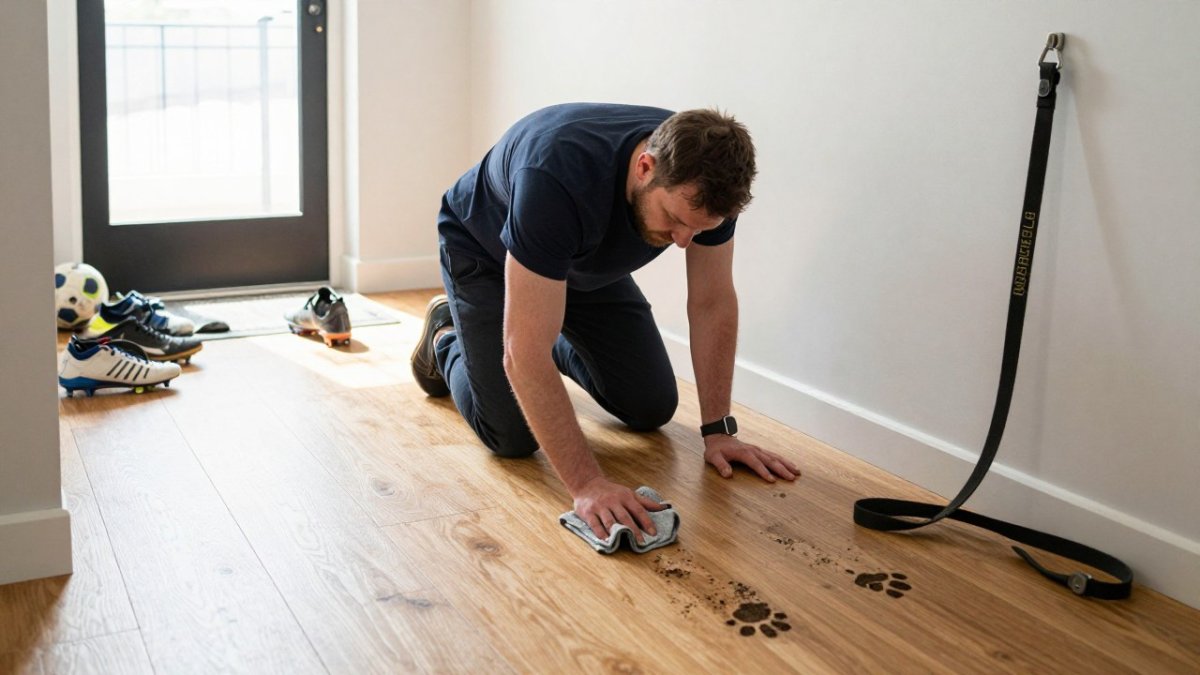
Scratches are the most visible problem in busy homes. Pets, shoes, furniture legs and grit all leave marks, and a family living room takes a beating every day.
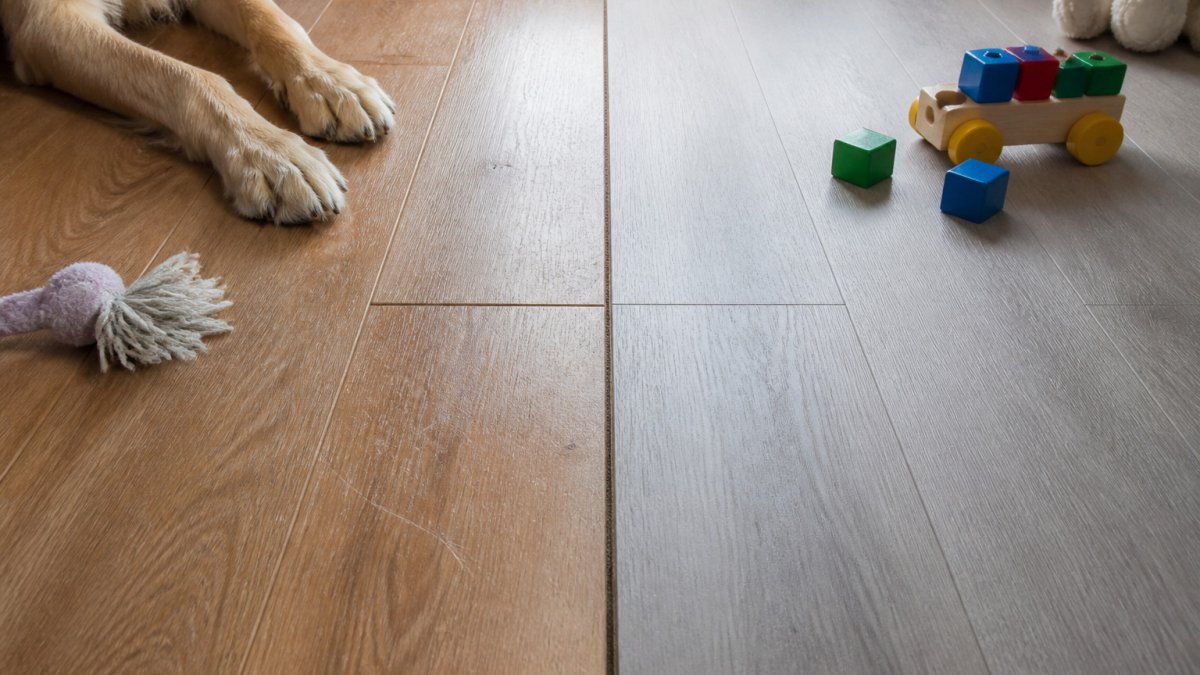
Laminate's protective wear layer does a good job against everyday abrasion. Hardwood scratches more readily, but a scratch can be sanded out when the floor is refinished. In practice, that means a scratched laminate board often needs replacing, while a scratched hardwood floor can be restored.
A common mistake is judging scratch resistance by the look of the sample. A sample board tells you little about how the wear layer will hold up after years of dragging a sofa across it.
What the Wear Layer Rating Actually Tells You
Laminate is sold with a wear layer rating, and this is the single most useful number when comparing surface durability. The wear layer is the clear protective film over the printed design, and its thickness and composition determine how long the floor resists scuffs, scratches and fading.
When you compare two laminate floors, a higher wear layer rating generally means better surface protection. Check the rating on the product data sheet rather than relying on the label or marketing language. A thick wear layer also helps the floor hold its appearance for longer, but it does not make the core waterproof or prevent edge swelling, those are separate properties covered below.
Hardwood has no equivalent single rating, so compare species instead. Hardwood durability varies by species, and denser timbers generally resist dents better than softer ones.
How Hardwood Species Affect Dent Resistance
Hardwood durability varies a lot by species. Harder timbers resist dents better than softer ones, so the wood you choose matters as much as the finish. Denser species hold up better under furniture and heavy footfall, while softer woods mark more easily. Ask for the species and its hardness before you decide, and remember that a factory finish adds its own layer of protection.
Water Resistance of Hardwood and Laminate: Where Each Floor Fails
Water is where both floors show their weak points, but the damage depends entirely on the type of exposure. Treating 'water resistance' as a single yes-or-no property is the most common mistake homeowners make, and it is why some laminate floors survive a spill that ruins another.
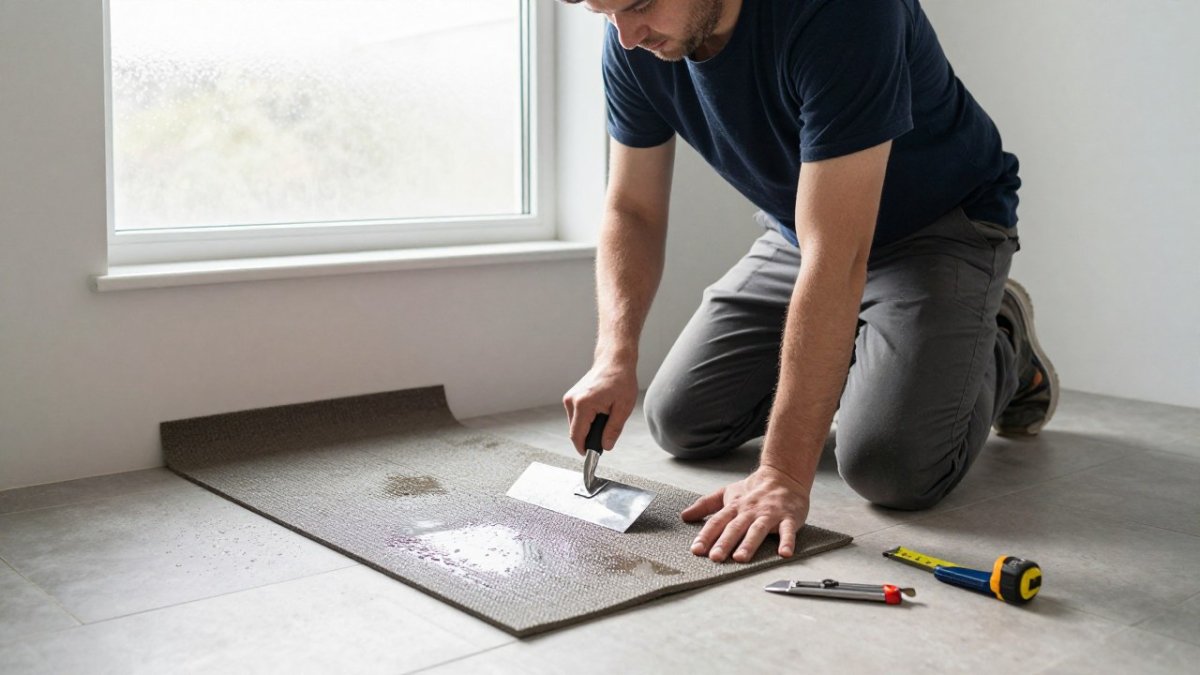
Spills and splashes. Small spills wiped up promptly are usually fine on either floor. On laminate, the risk is at the joints: water that sits in the seams can wick into the fibreboard core, which swells and lifts the edges. On hardwood, surface water is less immediately damaging, but repeated damp patches can dull the finish and, if left, stain the timber.
Humidity and seasonal movement. Hardwood reacts to moisture in the air, cupping and gapping as humidity shifts through the year. A stable indoor humidity range, most guidance suggests roughly 40-60% relative humidity, reduces this movement. Laminate is more dimensionally stable in normal conditions, but prolonged damp can still affect the core and the joints.
Standing water. Water left to sit is the worst case for laminate. The core is usually fibreboard, and once it soaks up water it does not recover; swollen boards usually need replacing rather than drying out. Hardwood can also be damaged by standing water, but solid timber can sometimes be dried and refinished if the damage is caught early.
Flooding and leaks. Neither floor belongs in a bathroom or an area prone to flooding without specialist advice. After a flood or a slow leak, laminate is usually a write-off because the core has taken on water. Hardwood may be salvageable depending on how long it was wet and how quickly it was dried, but it is not guaranteed.
Water resistance varies by product. Not all laminate is equal. That is not the same as waterproof, and no laminate should be treated as suitable for standing water or wet rooms. Check the manufacturer's specific claims and the warranty terms, because water damage is commonly excluded.
Once water damage occurs, the repair options differ. Damaged laminate boards are often swapped out, while damaged hardwood can be sanded and refinished if the damage is on the surface. For wet areas, you can ask our team for advice on suitable flooring for your space.
Hardwood vs Laminate Lifespan: Realistic Expectations
Lifespan depends on the product, the fitting and how the floor is cared for. The figures from the Kapriz guide give a rough picture: hardwood often lasts 30 years or more with refinishing, while laminate typically lasts 10 to 20 years Kapriz Hardwood Floors 2026 hardwood and laminate lifespan comparison. Those ranges are not guarantees.
Expect laminate to show wear sooner in high-traffic areas, and expect hardwood to need periodic refinishing to stay at its best.
Repairing Hardwood and Laminate Flooring Damage
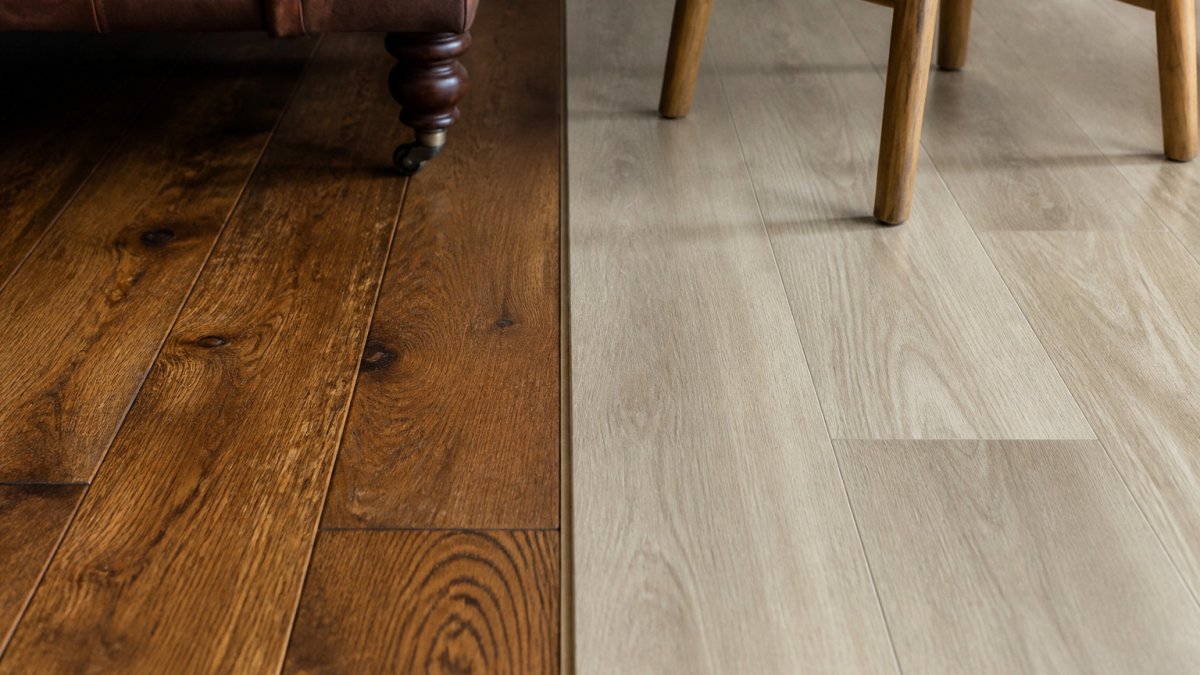
Repair is where the two floors separate most clearly. Hardwood can be sanded and refinished, sometimes more than once over its life, which restores the surface and extends the floor's service. Localised damage can often be fixed by replacing individual planks, though matching the colour and grain of older boards is not always straightforward.
Laminate is harder to repair. A damaged board can usually be replaced, but only if you still have spare boards from the same batch, and laminate ranges change over time. Matching a discontinued design is often impossible, which can leave an obvious patch.
Keep a few spare boards from your original order. It is a simple step that saves a lot of trouble later.
Installation Quality, Subfloors and Durability in Your Home
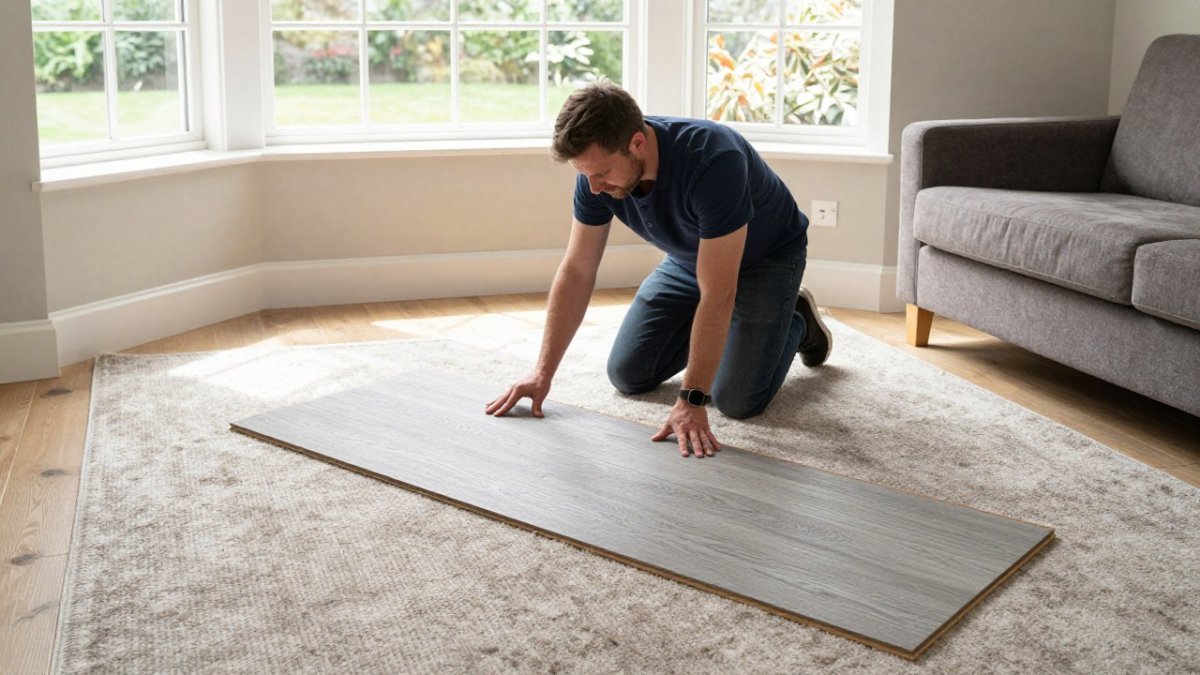
Installation has a bigger effect on durability than many people expect. A floor laid over an uneven or damp subfloor can fail early, whatever the material. Hardwood needs a stable, dry base and proper acclimatisation before fitting. Laminate needs a level, clean surface and a suitable underlay to cope with movement and noise.
Poor fitting shows up as squeaks, gaps, lifting edges and ripples. Choose fitters who check the subfloor first and follow the manufacturer's instructions. Good installers check the subfloor condition before any boards go down, which helps protect the floor you have chosen.
Booking a Home Visit to Compare Durable Floors in Your Home
Samples can look very different under your own lighting and in your own rooms, so seeing them at home helps. A mobile showroom can bring samples to your door, so you can compare durable options in the spaces they will actually cover.
If you are still weighing up your options, you can book an appointment to talk through your rooms and budget.
Frequently Asked Questions
Is hardwood or laminate flooring more durable?
Neither wins outright. Laminate often resists surface scratches, stains and fading better, particularly at higher wear-layer ratings. Solid hardwood usually lasts longer overall because it can be sanded and refinished several times. Which is more durable for your home depends on the room, the traffic it gets and whether you plan to refinish the floor later. Ask for the wear-layer rating on laminate and the species and construction on hardwood before you decide.
Which is more resistant to scratches, hardwood or laminate?
Laminate usually handles surface scratches better, because its wear layer is designed to resist abrasion from grit, pet claws and furniture. Hardwood dents and scratches more easily, especially softer species such as pine. However, hardwood scratches can be sanded out and the floor refinished, whereas a deep scratch in laminate usually means replacing the affected plank. Harder species such as oak tend to hold up better than softwoods in busy households.
Can hardwood floors be repaired more easily than laminate?
Generally, yes. Solid hardwood can be sanded and refinished, which removes scratches and restores the finish. Engineered hardwood can be refinished if it has a thick enough top layer. Laminate cannot be sanded, so localised damage is usually fixed by replacing individual planks, which works best when spare planks from the same batch are kept. Matching a replacement plank to a faded or older floor can be difficult, so keep leftover stock where possible.
How does water affect hardwood and laminate flooring?
Standing water damages both floors. Laminate's core is typically fibreboard that swells when it absorbs water, which can cause edges to lift and joints to open, so wipe up spills promptly. Hardwood can cup, warp or gap when exposed to moisture or humidity swings. Neither is suitable for wet rooms or areas with frequent water exposure. If you have a kitchen or utility room, check the product's water-resistance rating and clean up spills straight away.
Ready to compare durable floors in your own home? Get in touch with Mobile Carpets and Flooring SW Ltd and we will bring samples to you, with expert guidance on wear layers, species and installation so you choose with confidence.