 How-to
9 Hardwood Floor Care Habits Plymouth Homes Get Wrong
Last Updated: October 25, 2026
Quick Summary
Effective hardwood floor care means removing grit dry first, using the least moisture that lifts the mark, and matching your product to the finish. Sweep high-traffic areas daily, damp mop sealed floors with a wrung-out microfibre mop, and never steam mop. Protection, not repair, keeps Plymouth floors looking new.
- Sweep or dry mop high-traffic areas daily to remove grit before it acts like sandpaper.
- Test any new cleaner on an inconspicuous patch and leave it for 24 hours.
- Skip steam mops and multi-surface cleaners, the most common causes of dulled finishes.
- Check felt pads under chair and table legs monthly and replace worn ones.
- Keep indoor humidity steady and ventilate bathrooms and kitchens to limit swelling and gaps.
Table of Contents
- Why Hardwood Floor Care Fails in Plymouth Homes
- How to Identify Your Floor Type and Finish Before You Clean
- How to Clean Hardwood Floors Without Dulling the Finish
- Hardwood Floor Cleaning Tools Worth Keeping in the Cupboard
- How to Protect Hardwood Floors From Scratches and Dents
- A Room-by-Room Cleaning Schedule That Actually Gets Followed
- How Often to Refinish Hardwood Floors and When to Call a Professional
- Seasonal Care for Plymouth's Damp Air and Heated Rooms
- Frequently Asked Questions
Why Hardwood Floor Care Fails in Plymouth Homes
Most hardwood floor damage we see in Plymouth homes comes from good intentions. People mop too wet, skip the dry clean, and wonder why the finish goes dull within a year. At Mobile Carpets and Flooring SW Ltd, we have fitted and advised on floors for over 25 years, and the same handful of mistakes come up again and again.
Hardwood floor care is the routine of removing grit and spills before they work into the boards, using as little water as possible, and protecting the surface from scratches. Get those three things right and a good floor lasts decades.
The damp air here makes it harder. Boards take on moisture from the room, then dry out when the heating goes on. That swell-and-shrink cycle is what opens gaps and lifts finishes. Below, we break down the habits worth changing, room by room.
How to Identify Your Floor Type and Finish Before You Clean
Never clean a wooden floor until you know what is on top of it. A lacquered finish and an oiled finish need completely different care, and using the wrong product can strip or smear the surface.
Check the finish first. A lacquered floor has a clear plastic-like coat that sits on the wood and reflects light. Water beads on it. An oiled floor, finished with hardwax oil, soaks product in instead, so the surface looks more matte and water darkens it slightly.
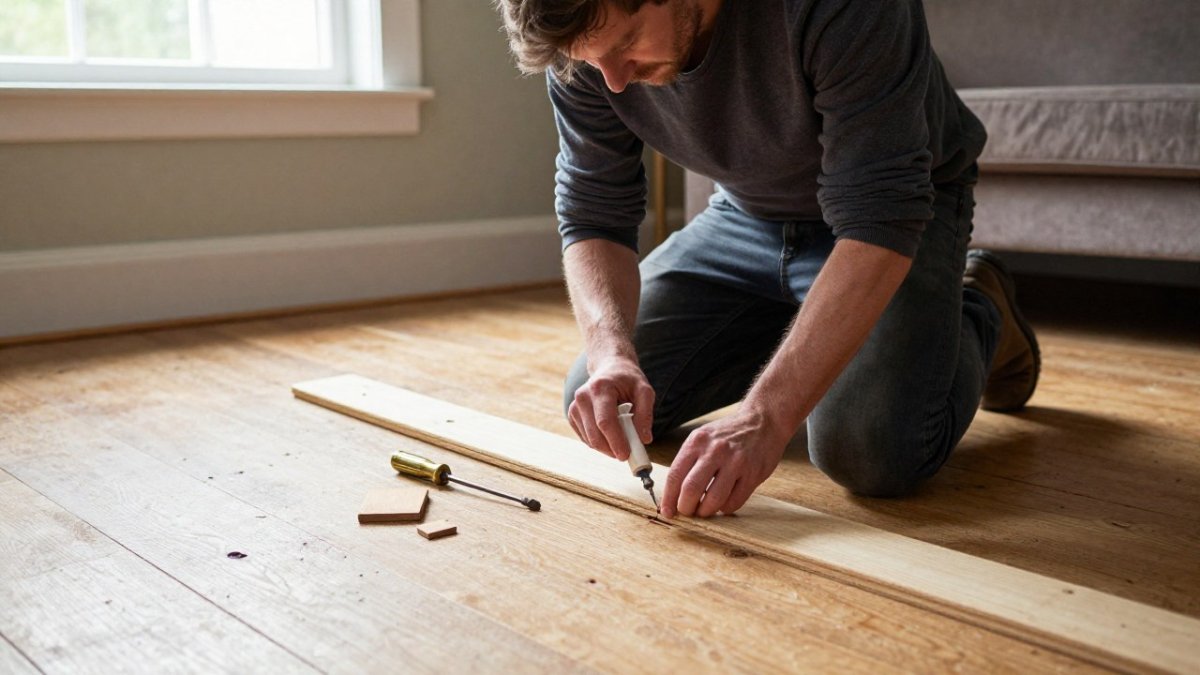
Then check the wood itself. Solid wood is one piece through the thickness and can be sanded many times. Engineered wood has a real wood top layer over a ply core, so it can only be refinished a limited number of times. Parquet flooring is solid wood in small blocks, often laid in patterns.
If you are unsure whether you have solid or engineered boards, you can check our engineered wood flooring range to compare construction before you choose a cleaning method.
How to Clean Hardwood Floors Without Dulling the Finish
Cleaning without dulling comes down to three things: remove grit dry first, use the least moisture that will lift the mark, and match the product to the finish. The Hardwood Information Center's guidance is blunt about wet mopping, it dulls the finish, and regular dry cleaning does more for the look of a floor than any product.
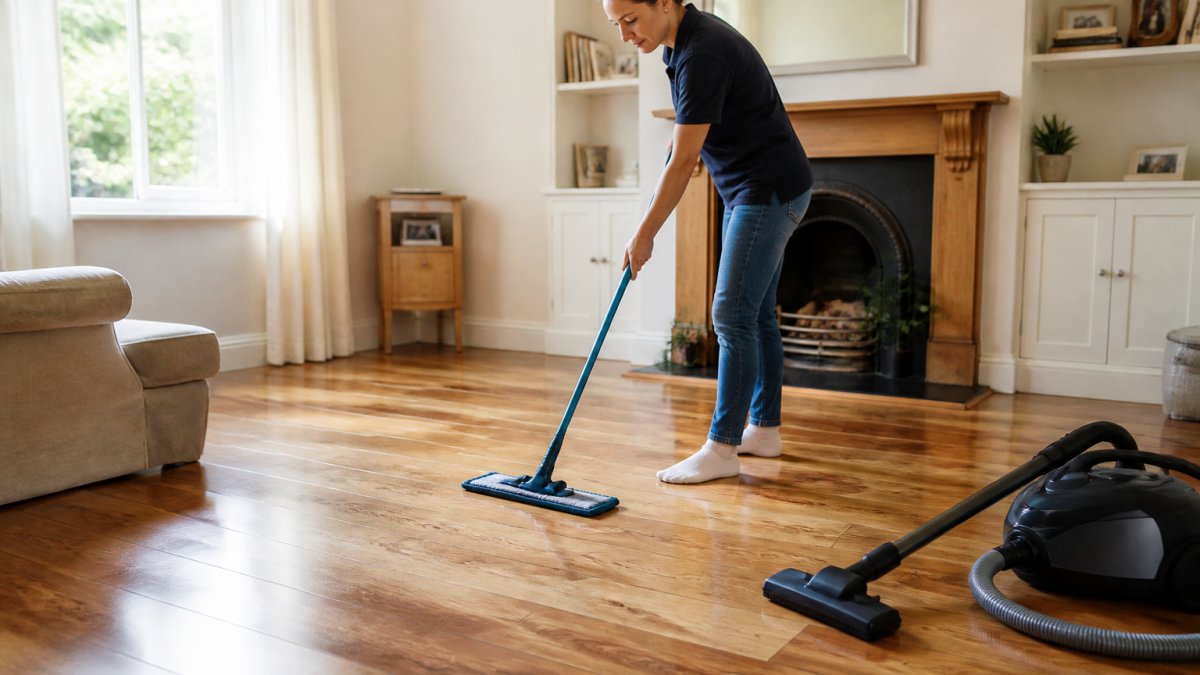
Match the Method to the Finish
A lacquered floor has a sealed coat on top, so a barely-damp microfibre pass with a pH-neutral wood cleaner is safe. An oiled or hardwax-oiled floor is different: it is designed to absorb maintenance oil, and a water-based cleaner can leave a smeary film or dry the surface out. For oiled boards, use a dedicated oil-refreshing cleaner or a lightly dampened cloth, then buff. If water beads on the surface, you have a sealed finish; if it darkens and soaks in within a few seconds, you have an oiled finish.
Dry Cleaning First: Sweep, Dust and Vacuum
Grit is the enemy. Every step across a floor with dust on it acts like sandpaper on the finish.
- Sweep or dry mop high-traffic areas daily
- Dust corners and under furniture weekly
- Vacuum weekly with a soft brush attachment, never a beater bar
- Empty the vacuum canister often so grit is not dragged back out
Damp Cleaning With Minimal Moisture
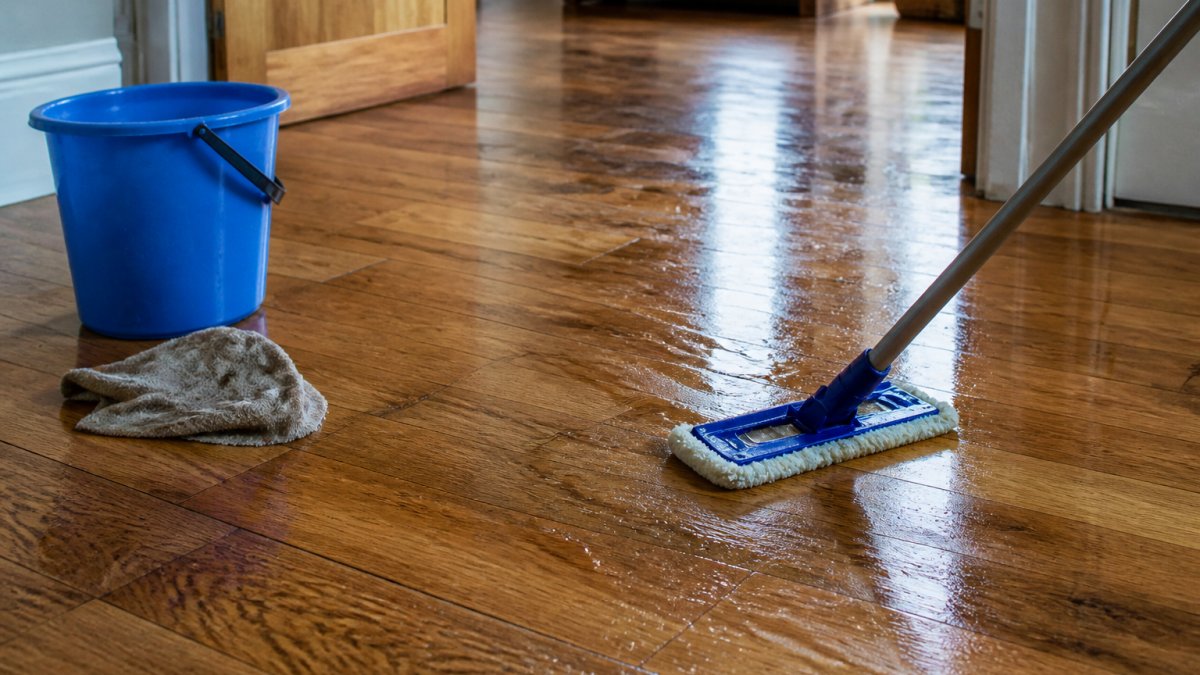
A microfibre mop wrung out until it is almost dry is all the moisture a sealed floor needs. Spray the cleaner onto the mop head, not the floor. Wipe with the boards, not across them. Buff dry straight after. Work in small sections so no patch stays wet for more than a minute or two, and never leave a damp mop head sitting on the boards between passes.
Test Any New Product Discreetly
Before using a new cleaner across a room, test it on an inconspicuous patch, inside a cupboard, under a rug, or in a corner behind a door. Apply, buff dry, and leave for 24 hours. If the patch looks duller, cloudier, or tackier than the surrounding floor, do not use the product. Check the label for pH-neutral wording and avoid anything with ammonia, bleach, or abrasive particles on a sealed finish.
Hardwood Floor Cleaning Tools Worth Keeping in the Cupboard
The right kit is short and cheap. A soft broom or dust mop, a vacuum with a soft brush attachment, a microfibre mop, and a pH-neutral wood floor cleaner cover almost everything.
Skip steam mops and anything labelled multi-surface. Both push water or harsh chemicals into the boards. For spills, keep a cloth handy and wipe immediately rather than letting liquid sit.
How to Protect Hardwood Floors From Scratches and Dents
Protection is cheaper than repair. Felt pads under every chair and table leg, a doormat at each entrance, and a no-shoes rule indoors will prevent most of the scratches and dents we get called out to fix.
Lift furniture rather than dragging it. Trim pet claws. Roller chairs need a hard mat underneath. And watch the skirting boards during cleaning and furniture moves, because they take knocks alongside the floor. Our guide on how to prevent damaged skirting boards covers that in detail.
A Room-by-Room Cleaning Schedule That Actually Gets Followed
Schedules fail when they are too ambitious. This one is short enough to stick to, and it separates the quick daily habits from the jobs that actually protect the finish.
| Task | Frequency | Where |
|---|---|---|
| Sweep or dry mop | Daily | Hallway, kitchen, living room |
| Spot-wipe spills | Immediately | All rooms |
| Vacuum with soft brush | Weekly | All rooms |
| Damp microfibre pass (sealed floors) | Weekly to fortnightly | High-traffic areas |
| Oil refresh (oiled floors only) | Every 2-3 months | High-traffic areas |
| Check felt pads, mats and door thresholds | Monthly | All furniture and entrances |
| Deep clean and finish check | Seasonally | Whole floor |
| Full inspection for cupping, gaps and finish failure | Annually | Whole floor |
Daily Habits That Take Under Five Minutes
A quick sweep of the hallway and kitchen each morning removes the grit that does the most damage. Keep a microfibre cloth near the kitchen so spills are wiped the moment they happen rather than left to sit. A doormat at every external door, inside and out, traps grit before it reaches the boards.
Weekly and Monthly Jobs
Vacuum with a soft brush attachment, working along the boards rather than across them. Once a month, lift each chair and table leg to check the felt pads: worn or missing pads are the most common cause of scratch clusters we see. Replace them before the floor shows the damage. Check door thresholds and mat edges for trapped grit.
Seasonal and Annual Checks
At the change of season, look along the floor at a low angle with a torch. Dull patches, fine scratches through the finish, or boards that have started to cup or gap are early warnings. Oiled floors benefit from a maintenance oil on high-traffic areas every few months; sealed floors generally need nothing beyond cleaning until the coat itself wears through. An annual inspection is the point to decide whether a professional clean or a refinish is worth booking.
How Often to Refinish Hardwood Floors and When to Call a Professional
Refinishing depends on wear, not a calendar. A busy hallway may need attention far sooner than a spare bedroom. Signs it is time: dull patches that no cleaner fixes, visible scratches through the finish, grey or dark boards, or gaps that keep opening.
Sanding and restoration is a job for a professional. If your floor has reached that point, you can book a phone consultation to talk it through, or use our contact details to get in touch.
Seasonal Care for Plymouth's Damp Air and Heated Rooms
Humidity is the quiet cause of most floor problems here. Damp winter air makes boards swell. Central heating dries the room out and they shrink, opening gaps and stressing the finish.
Keep indoor humidity steady, ventilate bathrooms and kitchens, and wipe up any damp straight away. In summer, keep blinds half-drawn on south-facing rooms so strong sun does not fade or dry the boards.
Frequently Asked Questions
How often should you clean hardwood floors?
Sweep or dry mop high-traffic rooms such as hallways and kitchens every day or two, and vacuum weekly with a soft brush attachment. Damp clean with a well-wrung microfibre mop every two to four weeks, or more often in kitchens. The Hardwood Information Center advises regular cleaning to lift dirt and grit from between the boards, because trapped grit acts like sandpaper underfoot and dulls the finish faster than any cleaner will.
Can you use water to clean hardwood floors?
Yes, but only sparingly. A microfibre mop wrung out until it is barely damp is fine for lacquered and hardwax oiled boards. Standing water is the problem: it seeps into seams, swells the edges of solid wood and lifts lacquer. Never wet mop, and never leave a puddle to air dry. Wipe spills up immediately with a dry cloth, then buff the area. If a spill has soaked in, treat it as a repair job rather than a cleaning one.
Which cleaning products should you avoid on hardwood floors?
Skip steam mops, bleach, ammonia-based cleaners, abrasive powders and anything labelled as a multi-surface spray with a heavy detergent load. These strip lacquer and dull hardwax oil. Use a wood floor cleaner matched to your finish, or a dilute pH-neutral solution, and test it on an inconspicuous board first. If you are unsure what finish you have, ask before you buy: the wrong product can cost more to reverse than the floor cost to clean.
How can you tell whether a hardwood floor needs professional attention?
Look for grey, worn patches in walkways, scratches you can feel with a fingernail, boards lifting at the seams, dark water stains or a finish that no longer beads when a drop of water sits on it. If a full room has lost its sheen, refinishing is likely due. Deep gouges, cupped boards or widespread water damage need assessment rather than another coat of cleaner. A home visit lets you see samples and get an honest view of whether sanding and restoration is worthwhile or replacement makes more sense.
Maintaining a wooden floor is mostly about small, regular habits. When a floor is beyond cleaning and needs replacing, we bring thousands of samples to your door and fit them properly. Get started with Mobile Carpets and Flooring SW Ltd and book a home visit to find flooring that suits your home and budget.