 Ultimate guide
Safe Flooring for Nursing Homes: A 2026 Guide
Table of Contents
- Why Safe Flooring Matters in Nursing Homes
- Key Safety Features: Slip Resistance, Fall Prevention, and Durability
- Flooring Material Options for Care Environments
- Best Flooring for Dementia Care Environments
- CQC Flooring Requirements for Care Homes
- Hygiene, Infection Control, and Maintenance Standards
- Is Safety Flooring Covered by Home Insurance?
- Life-Cycle Costs and Long-Term Value
- Frequently Asked Questions
Last Updated: September 3, 2026
Why Safe Flooring Matters in Nursing Homes
Selecting safe flooring for nursing homes is a critical infrastructure decision that directly affects resident safety, infection control, and long-term operational costs. Falls remain one of the leading causes of injury in care environments, and flooring plays an essential role in prevention (the CDC). The right flooring reduces slip hazards, supports mobility aids, and minimises acoustic disturbance that can agitate residents with dementia. Poor choices create cascading problems: increased fall incidents lead to injury claims, staff time spent on incident management, and potential regulatory scrutiny from the Care Quality Commission.
This guide covers the practical framework for choosing safe flooring for nursing homes, including slip-resistance standards, material options, dementia-friendly design, and life-cycle costs. Whether you're renovating a single care unit or planning a facility-wide upgrade, understanding these factors will help you make decisions that protect residents, satisfy regulators, and deliver value over decades of use.
Key Safety Features: Slip Resistance, Fall Prevention, and Durability
Safe flooring in nursing homes rests on three interconnected properties: slip resistance, impact absorption, and durability under high-traffic conditions.
Slip-Resistant Standards and Testing
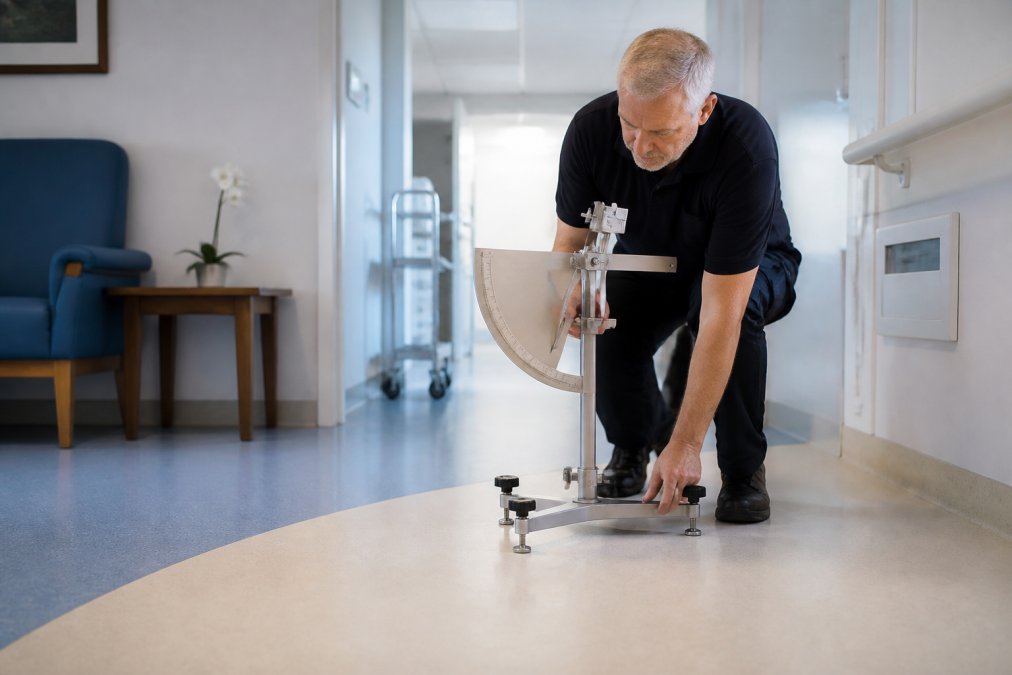
Slip resistance is measured using standardised testing protocols that simulate real-world conditions. The pendulum test measures the coefficient of friction between a flooring surface and a standard slider. Flooring rated for healthcare settings typically achieves a pendulum test value (PTV) of 45 or higher, indicating adequate slip resistance for wet and dry conditions (hse.gov.uk). This testing reflects actual performance under the specific conditions found in nursing homes, including cleaning residues and the gait patterns of elderly or mobility-impaired residents.
Many care facilities overlook post-installation testing. Once flooring is fitted, a simple pendulum test can verify that installation hasn't compromised slip resistance through improper sealing or unsuitable cleaning products.
Impact Absorption and Comfort
Impact absorption protects residents during falls and reduces strain on joints during daily movement. Rubber and specialist foam-backed vinyl absorb more shock than rigid materials like ceramic tile, making them preferred in care environments where residents have fragile bones or balance difficulties.
Flooring that's too soft can make movement with mobility aids harder, increasing fatigue and fall risk. The ideal balance provides cushioning without creating instability. Acoustic properties also matter significantly in dementia care: hard flooring amplifies footsteps and equipment noise, increasing agitation, while softer surfaces like carpet and cork naturally dampen sound and create a calmer environment.
Durability and High-Traffic Performance
Nursing homes operate 24 hours a day with constant foot traffic, heavy equipment movement, and frequent cleaning with moisture and chemicals. Flooring must withstand this punishment without degrading or creating new hazards.
Vinyl and LVT (luxury vinyl tile) are engineered specifically for these conditions and typically maintain performance standards for 15-20 years in high-traffic care settings (peer-reviewed research). Rubber flooring offers excellent durability but requires specific maintenance regimes. Carpet, while comfortable, has a shorter lifespan in healthcare environments and demands rigorous hygiene protocols. Poor durability creates operational disruption, safety risks during transition periods, and hidden expenses in increased maintenance labour.
Flooring Material Options for Care Environments
Different areas in a nursing home have different demands: corridors need durability and slip resistance; bathrooms require moisture barriers and antimicrobial properties; dementia units benefit from acoustic softness and visual contrast. Understanding each material's strengths allows you to match flooring to function.
Vinyl and LVT Flooring
Vinyl and luxury vinyl tile (LVT) are the dominant choice in modern nursing homes. These materials are non-porous, making them naturally resistant to bacteria and moisture, essential for infection control. They're easy to clean, resist staining, and can be sealed with antimicrobial coatings. Slip resistance is built into the surface texture, with modern healthcare-grade vinyl achieving excellent pendulum test ratings. Installation is straightforward, with options for welded seams that create a fully sealed floor, eliminating joints where moisture and bacteria could accumulate.
The main limitation is cost. High-quality healthcare vinyl is more expensive than standard flooring, though the long lifespan and low maintenance offset the initial investment.
Rubber and Carpet Solutions
Rubber flooring excels in impact absorption and acoustic dampening. It's durable, naturally slip-resistant, and antimicrobial properties can be incorporated during manufacturing. Rubber works well in corridors and rehabilitation areas where fall protection is paramount.
The trade-off is maintenance complexity. Rubber requires specific cleaning protocols, harsh chemicals can degrade the material, and it's susceptible to staining. Installation demands careful subfloor preparation to prevent moisture issues.
Carpet provides warmth, comfort, and excellent acoustic properties, making it valuable in lounges and bedrooms. Modern healthcare carpets are engineered with stain resistance and antimicrobial treatments. However, carpet has the shortest lifespan in care environments (8-12 years) and demands rigorous maintenance to prevent bacterial growth. It's not suitable for wet areas.
Cork and Specialist Materials
Cork combines comfort, acoustic dampening, and natural antimicrobial properties. It's warm underfoot, reduces noise, and is sustainable. However, cork requires regular sealing to maintain water resistance and is softer than vinyl, which can be problematic in very high-traffic areas.
Specialist materials, including antimicrobial-treated rubber composites and sealed concrete with non-slip coatings, offer targeted solutions for specific challenges but typically require expert installation.
Best Flooring for Dementia Care Environments
Dementia care flooring must balance safety with environmental psychology. Residents with dementia are at elevated fall risk due to gait changes and balance difficulties. Simultaneously, the flooring itself can either calm or agitate through colour, texture, and acoustics.
Visual contrast is critical. A clear distinction between floor and walls helps residents with visual perception difficulties navigate space safely. Patterns should be subtle; busy or high-contrast patterns can create visual confusion and increase agitation. Many dementia units use consistent, neutral flooring colours throughout while incorporating subtle directional cues through texture changes.
Acoustic properties deserve particular emphasis. Hard, reflective flooring amplifies footsteps and equipment noise, which research shows increases agitation and confusion in residents with dementia. Softer flooring materials, including carpet, cork, and acoustic-enhanced vinyl, create a calmer sensory environment.
Slip resistance remains paramount, but so does the absence of hazards that could confuse or frighten. Raised edges, uneven transitions, or highly textured surfaces can be misinterpreted as obstacles, increasing anxiety and fall risk. The ideal dementia-care floor is slip-resistant, acoustically soft, visually clear, and seamless in transitions.
CQC Flooring Requirements for Care Homes
The Care Quality Commission (CQC) doesn't prescribe specific flooring materials but assesses whether flooring meets the Health and Social Care Act 2008 (Regulated Activities) Regulations 2014. These regulations require that premises are clean, safe, and suitable for the purposes intended. Flooring is evaluated as part of environmental safety and infection prevention.
CQC inspectors examine whether flooring is in good repair, free from hazards (cracks, raised edges, water damage), and appropriate for each area's activities. They verify that flooring supports hygiene standards, particularly in bathrooms and kitchens, and assess whether flooring design supports residents' safety and independence.
Facilities that fail CQC inspections often cite flooring issues: trip hazards from damaged flooring, inadequate slip resistance, or flooring that harbours bacteria due to poor sealing. Documentation of flooring specifications, installation standards, and maintenance records strengthens your position during CQC inspections.
Hygiene, Infection Control, and Maintenance Standards
Flooring is a vector for pathogenic organisms, and care environments demand rigorous hygiene standards. Non-porous flooring materials, vinyl, rubber, sealed concrete, are preferred because they don't harbour bacteria in pores or crevices. Coving (curved transitions between floor and wall) eliminates corners where bacteria can accumulate and is increasingly standard in clinical areas.
Welded seams in vinyl flooring create a fully sealed surface, eliminating joints where moisture and microorganisms could penetrate. This detail is genuinely significant for infection control.
Maintenance regimes must match the flooring material. Vinyl and rubber require regular damp mopping with approved disinfectants. Carpet demands hot-water extraction cleaning on a regular schedule. Sealed concrete requires specific cleaning protocols to maintain the sealant's integrity.
Many care facilities underestimate the labour cost of flooring maintenance. A poorly chosen material that demands frequent specialist cleaning can generate ongoing operational costs exceeding the initial purchase price. Selecting flooring that's easy to clean and resistant to staining reduces staffing demands and operational expense.
| Flooring Type | Infection Control Rating | Maintenance Frequency | Typical Lifespan |
|---|---|---|---|
| Vinyl (welded seams) | Excellent | Daily damp mop | 15-20 years |
| Rubber (sealed) | Excellent | Daily damp mop | 12-18 years |
| Sealed Concrete | Very Good | 2-3x weekly | 10-15 years |
| Carpet (healthcare-grade) | Good | Weekly extraction | 8-12 years |
| Cork (sealed) | Good | Daily damp mop | 10-15 years |
Is Safety Flooring Covered by Home Insurance?
Standard home insurance policies rarely cover flooring upgrades unless required following a claim. Some specialist care facility insurance policies include provisions for safety equipment upgrades, but these are typically limited to specific circumstances, such as modifications required following a regulatory notice.
Safe flooring should be budgeted as a capital investment in facility infrastructure, not an insurance-recoverable expense. However, documenting that flooring meets safety standards and CQC requirements can strengthen insurance claims if a fall-related incident occurs, potentially demonstrating that the facility took reasonable precautions. Reviewing your policy with your insurance broker specifically regarding flooring standards is worthwhile.
Life-Cycle Costs and Long-Term Value
The conversation about flooring cost often stalls at the purchase price. A more useful framework is life-cycle cost analysis (LCCA), which accounts for purchase, installation, maintenance, and replacement over the flooring's expected lifespan.
Consider two scenarios: a facility installs budget vinyl at £15 per square metre and replaces it every 10 years, or invests in premium healthcare-grade vinyl at £28 per square metre with a 20-year lifespan. When you factor in installation labour, downtime, and replacement costs, the premium option often delivers lower total cost of ownership.
Maintenance costs vary dramatically by material. Carpet might require weekly hot-water extraction cleaning, demanding specialist equipment and trained staff. Vinyl requires only daily damp mopping with standard disinfectants. Over 15 years, labour savings from choosing easy-to-maintain flooring can exceed the material cost difference.
Flooring that fails prematurely creates hazards during replacement, disrupts residents, and may trigger CQC scrutiny. Premium flooring that lasts 20 years without degradation eliminates these risks and provides predictability for long-term planning. The most economical flooring choice is the option that delivers safety, durability, and low maintenance over decades of use.
Choosing safe flooring for nursing homes requires balancing immediate safety needs with long-term operational and financial realities. The right choice protects residents from falls, supports infection control, satisfies regulatory requirements, and delivers predictable costs over years of use. Mobile Carpets and Flooring SW Ltd brings over 25 years of experience in healthcare flooring installation, working with care facilities to select materials that meet safety standards, support dementia-friendly design where needed, and provide exceptional durability. Get in touch to discuss your facility's flooring requirements and discover how professional installation can transform your care environment into a safer, more supportable space for residents and staff.
Frequently Asked Questions
Q: What slip resistance standards apply to safe flooring for nursing homes?
A: Safe flooring for nursing homes must meet slip-resistance requirements. Flooring is typically tested using the pendulum test, which measures wet slip resistance. A Pendulum Test Value (PTV) of 36 or higher is recommended for high-traffic care environments. This standard helps prevent falls, which are among the most common causes of injury in care settings.
Q: What is the best flooring for dementia care facilities?
A: Best flooring for dementia care combines safety with visual clarity. Slip-resistant vinyl or rubber with high visual contrast helps residents with reduced sight or spatial awareness. Avoid glossy finishes that create glare or confusion. Non-porous, antimicrobial surfaces reduce infection risk. Acoustic insulation reduces noise, which can agitate residents with dementia. Welded seams prevent trip hazards and ensure durability in high-traffic areas.
Q: What are CQC flooring requirements for care homes?
A: CQC flooring requirements for care homes focus on safety, hygiene, and maintenance. Floors must be slip-resistant, non-porous (to prevent bacterial growth), and easy to clean. CQC inspectors check for proper subfloor preparation, coving (curved transitions at walls), and welded seams to eliminate moisture traps. Flooring must withstand high-traffic use and be maintained to prevent deterioration. Regular cleaning protocols and visual inspection for damage are mandatory.
Q: Is safety flooring covered by home insurance?
A: Is safety flooring covered by home insurance? Standard home insurance typically does not cover specialist safety flooring as a separate line item. However, if flooring is part of a larger renovation claim (e.g., bathroom upgrade), it may be included. Some policies cover slip-resistant flooring if installed for accessibility due to age or disability. Contact your insurer before installation to confirm coverage and understand any requirements they impose.
Q: What maintenance regime keeps care home flooring hygienic?
A: A regular maintenance regime includes daily damp mopping with appropriate antimicrobial cleaners, weekly deep cleaning, and monthly inspection for damage or staining. Non-porous materials like vinyl resist moisture and bacteria. Welded seams prevent water penetration. Avoid harsh chemicals that degrade flooring; use products recommended by the manufacturer. Document all cleaning and maintenance to demonstrate compliance with CQC standards and infection control protocols.
Q: How do material types affect fall prevention in nursing homes?
A: Material choice directly impacts fall prevention. Vinyl and rubber provide slip resistance and impact absorption, reducing injury severity if falls occur. Carpet offers comfort but requires careful selection to avoid roll resistance that impedes mobility aids. Cork provides thermal comfort and acoustic insulation but may absorb moisture if not sealed properly. Subfloor preparation and welded seams eliminate trip hazards. Visual contrast between flooring and walls helps residents with reduced sight navigate safely.