 Ultimate guide
Professional LVT Flooring Repair: What Gets Fixed
Last Updated: November 9, 2026
Quick Summary
Professional lvt flooring repair can fix many common faults, including surface scratches, lifted seams and some burn marks, usually by targeting the damaged area rather than the whole floor. Whether a repair is worthwhile depends on how widespread the damage is, whether the product is still available, and whether the subfloor is sound.
- Surface scratches are generally the easiest damage to fix, often with buffing and colour-matched filler.
- Lifted edges and separating seams are usually repairable by re-bonding and resealing.
- Water damage is often fixable if the floor is dried quickly; mould or a spongy subfloor points to replacement.
- Repair usually makes more sense for localised damage, while widespread wear generally calls for replacement.
- Ask any fitter to state the number of planks and the subfloor work separately in a written quote.
Table of Contents
- What Professional LVT Flooring Repair Actually Covers
- How to Fix Deep Scratches in Luxury Vinyl Flooring
- Can You Repair Water Damaged Vinyl Flooring?
- Repair or Replace: A Cost-Benefit Look at LVT
- LVT Tile Replacement Cost and What Affects It
- The Professional On-Site Repair Process
- Booking Your Free In-Home Consultation
- Frequently Asked Questions
Mobile Carpets and Flooring SW Ltd has spent more than 25 years helping Plymouth homeowners sort out their floors, and a damaged luxury vinyl tile (LVT) floor is one of the problems homeowners often ask about. Many people assume a scratch, a burn or a lifted seam means the whole floor has to come up. Often it does not. Professional LVT flooring repair can address a range of faults, and knowing what is repairable helps you make a sensible decision before you spend anything.
Here, we explain what a professional repair typically covers, how deep scratches and water damage are handled, when repair makes more sense than replacement, and what a convenient at-home consultation involves. Please contact Mobile Carpets and Flooring SW Ltd directly for current pricing or a quote.
What Professional LVT Flooring Repair Actually Covers
A repair usually targets localised damage rather than the whole floor. The common types of damage fall into a few groups, and each needs a different approach.
Quick summary of what is typically repairable:
| Damage type | Typical fix | Usually repairable? |
|---|---|---|
| Surface scratches | Light buffing and colour-matched filler | Yes |
| Deep gouges | Plank section replacement or filler | Often |
| Burn marks | Plank replacement or specialist blending | Often |
| Lifted edges and seams | Re-bonding and resealing | Yes |
| Water damage to the surface | Drying, then targeted repair | Depends on how long water sat |
| Widespread wear across the room | Full replacement | Usually not |
Scratches, Gouges and Burn Marks
Surface scratches are generally the easiest type of damage to deal with. Deeper gouges that have cut through the wear layer usually need more work than a surface scratch.
Burn marks are generally trickier to repair. A cigarette burn or a hot pan can melt the surface, and the affected area may need planks swapped rather than patched.
Seam Separation and Lifted Edges
Lifted edges and separating seams are common in high-traffic areas, around doorways, and where the floor meets a kitchen unit or bathroom. These problems are usually caused by adhesive failure or a subfloor that has moved. If the subfloor is the cause, fixing the surface alone will not hold for long, so the subfloor should be checked first.
How to Fix Deep Scratches in Luxury Vinyl Flooring
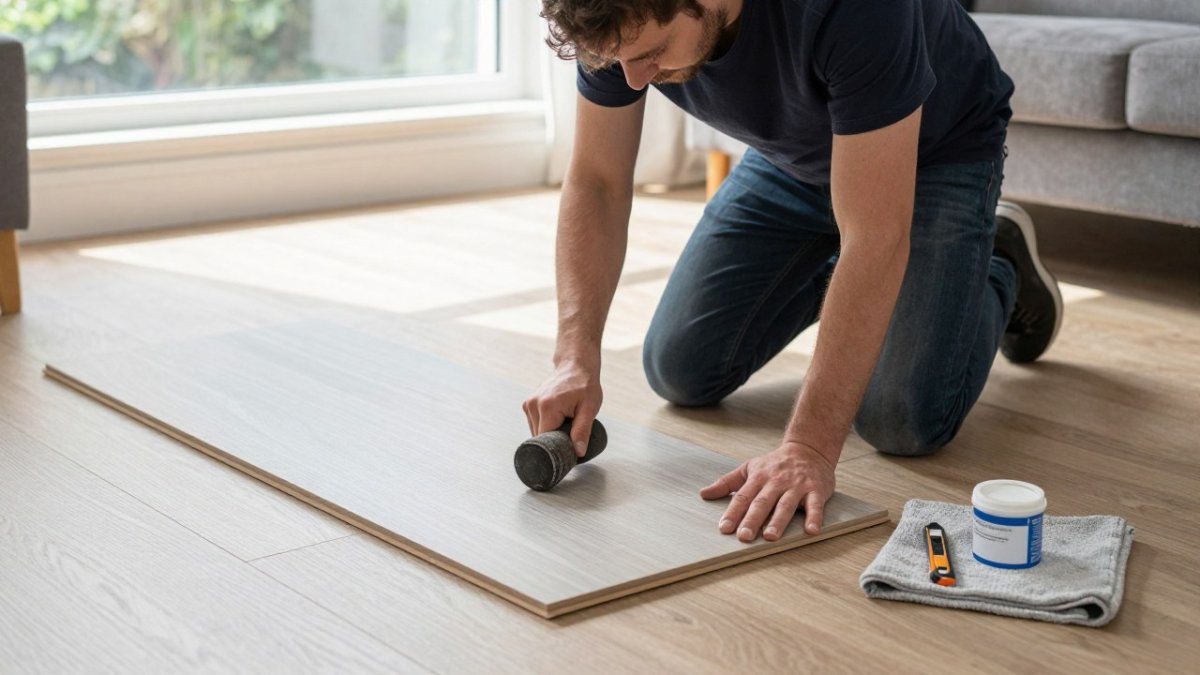
Deep scratches are the repair most people ask about, and it helps to know the general method before a fitter arrives. The steps below describe the general approach to this kind of repair, not a guaranteed result, because the outcome depends on the product and the depth of the damage.
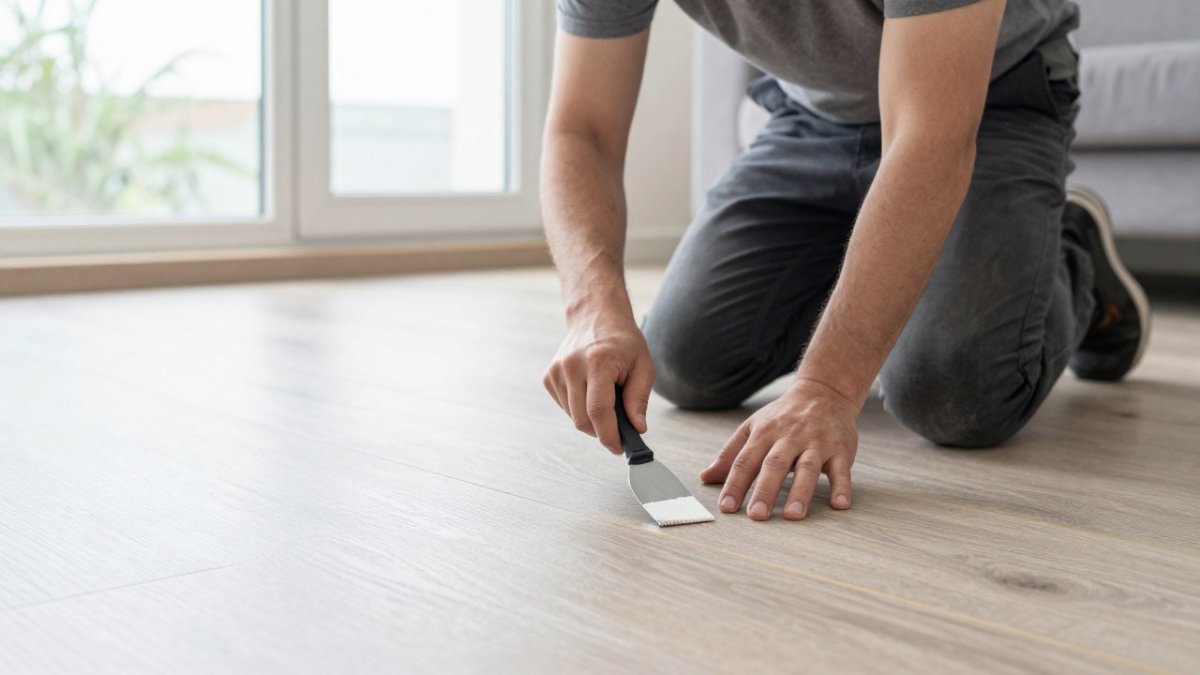
In general, the area should be cleaned thoroughly so the filler or adhesive bonds properly, and the depth of a scratch determines whether it can be filled or needs a section replacement. Checking the finish under normal room lighting is also advisable, since colour can look different in direct sun.
A common mistake is attempting a home fix with a mismatched filler. The colour rarely matches, and the repair can stand out more than the original scratch.
Can You Repair Water Damaged Vinyl Flooring?
Often, yes, but timing matters. LVT is designed to resist moisture on its surface, which is why it is popular in kitchens and bathrooms. However, water that seeps beneath the planks or sits along an edge for a long period can cause the adhesive to fail, the core to swell, or the subfloor to rot.
If water is cleared quickly and the floor is dried thoroughly, the surface is often unaffected. Mould, a soft or spongy subfloor, or planks that have buckled all suggest the problem goes beyond a simple surface repair, and in those cases replacement of the affected area is generally the safer course.
If you are dealing with water damage, dry the area as quickly as you can, avoid walking on any swollen boards, and arrange an assessment before the damage spreads.
Repair or Replace: A Cost-Benefit Look at LVT
Most homeowners ask the same question: is it worth repairing, or should the floor come up? The honest answer depends less on the size of the damage than on four practical tests. Run through them before you request a quote, because they will tell you which route is likely to be better value.
Test one: is the damage localised or widespread? A single burn, a gouge near a doorway or a lifted seam in one room is usually a repair job. Wear that runs across the whole traffic path, fading in front of the kitchen units and thinning at every doorway, is general wear and patching it simply moves the problem along the room.
Test two: is the product still available? LVT designs are discontinued regularly, and a repair that relies on a mismatched plank will be visible. If you have spare planks from the original installation, keep them, as they are useful for future repairs.
Test three: is the subfloor sound? A spongy patch, a hollow sound underfoot or a floor that has started to rock usually means the problem is beneath the planks, not in them. Surface repairs over a failing subfloor rarely last, and the cost of fixing the subfloor properly needs to be weighed against the cost of a full replacement.
Test four: how old is the floor and what is left of its wear layer? LVT has a printed design layer under a transparent wear layer. Once that wear layer has thinned across a large area, the floor is near the end of its service life and repair becomes a stopgap rather than a solution.
As a rough framework, a repair affecting a handful of planks in one room is generally cheaper than replacement, while damage covering a large part of the floor area, or damage combined with subfloor problems, tends to tip the balance towards replacement. These are not hard rules, but they are a sensible starting point for the conversation.
On the environmental side, the case for repair is straightforward. A targeted repair keeps the existing floor in service and avoids both the waste from removal and the packaging and transport of new stock. For a single room, that is a meaningful reduction in material sent to landfill, and it is one of the few home improvement decisions where the cheaper option is also the lower-waste one.
Watch out: a very cheap repair quote may not include checking the subfloor. Ask directly whether the subfloor has been checked, and get that answer in writing before work starts.
LVT Tile Replacement Cost and What Affects It
We do not publish fixed prices, because the cost of replacing LVT tiles or planks varies too much between jobs to quote responsibly from a web page. What we can do is explain the variables that move the price, so you can judge whether a quote you receive is reasonable and compare like with like.
Number of planks replaced. This is the biggest single factor. A repair involving two or three planks is a short job; relaying a large room is a day's work or more. Ask any fitter to state the number of planks in the quote, not just a total.
Product and design. Standard click-fit LVT is generally the most economical to replace. Glue-down LVT, rigid-core products and designs with a registered emboss or a complex pattern take longer to match and fit, and the plank cost itself varies widely by range. If your product is discontinued, the cost of sourcing a close match, or the decision to replace a larger area so the repair blends, needs to be discussed up front.
Subfloor condition. A sound, flat subfloor means the new planks can go straight down. Levelling compound, plywood overboarding or repairs to a failing screed all add labour and materials, and this is the item most often underestimated in a cheap quote.
Access and preparation. Emptying a room, moving white goods, protecting adjoining floors and disposing of old material all take time. A ground-floor room with clear access is a different job from an upstairs bathroom or a room full of fitted furniture.
Making good and finishing. Replacing planks in the middle of a floor means cutting out the damaged section cleanly, fitting the replacement and blending the edges so the repair disappears under normal lighting. Trims, thresholds and sealant at doorways and edges may also need renewing.
As a broad indication only, a small localised repair of a few planks is typically a fraction of the cost of replacing a whole room, and the gap widens as the room size grows. For a current figure tailored to your floor, please contact Mobile Carpets and Flooring SW Ltd directly for pricing or a quote.
Watch out: a quote that gives a single lump sum without listing plank numbers, subfloor preparation and disposal separately is difficult to compare against another quote. Ask for the breakdown in writing.
The Professional On-Site Repair Process
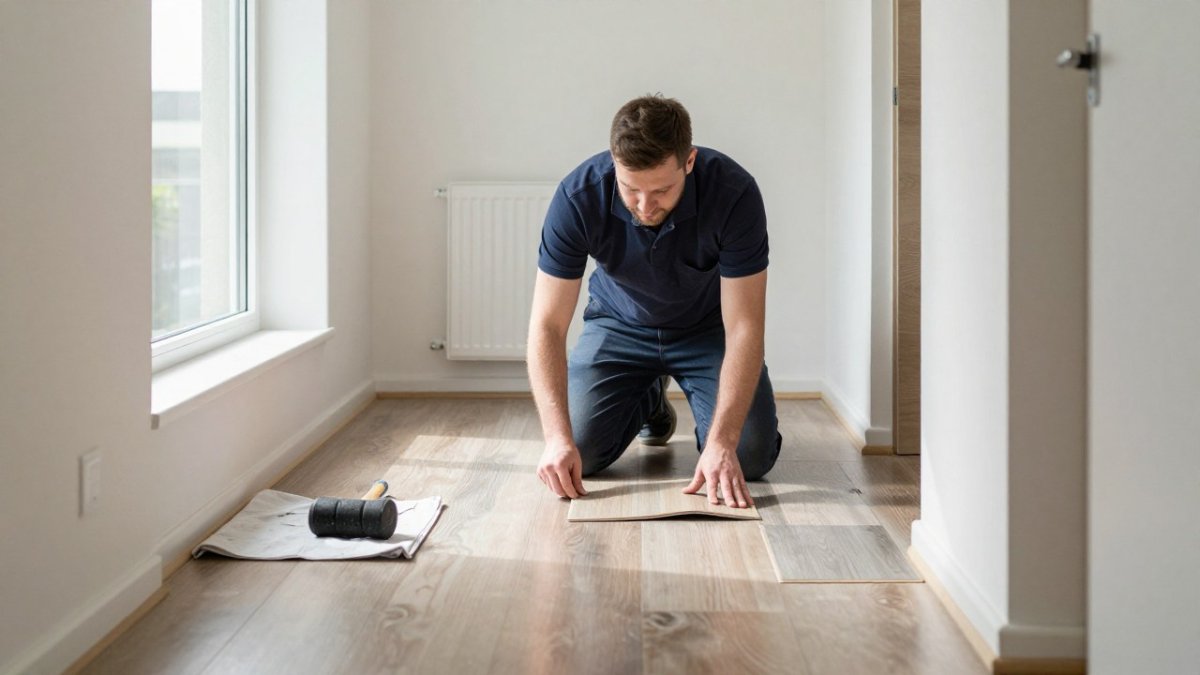
A professional repair follows a predictable sequence. First, the fitter inspects the damage and identifies the product, using a sample or a reference from the packaging where possible. Second, they check the subfloor and confirm that the repair will hold. Third, the damaged area is prepared: cleaned, cut out if needed, and dried. Fourth, the repair is carried out, whether that means filling, re-bonding or replacing planks. Finally, the work is checked under normal lighting, and the fitter explains any care steps.
Repairs are carried out at the property, so there is no need to bring the floor to us.
Booking Your Free In-Home Consultation
If you have damage you are unsure about, the simplest next step is a free in-home consultation. Mobile Carpets and Flooring SW Ltd brings a full mobile showroom to your Plymouth doorstep, so you can see sample options and discuss your floor without leaving home. A consultation can help assess the damage and advise whether repair or replacement is the better route.
Frequently Asked Questions
Can LVT flooring be repaired if scratched or gouged?
Yes, most surface scratches and shallow gouges can be repaired without replacing the whole floor. Repairs of this kind typically use a filler colour-matched to the plank, followed by buffing to reduce the visibility of the repair. Deeper gouges that go through the wear layer into the core may need a plank replacement instead. A professional assessment on site will show which approach suits your floor and how well a repair is likely to blend in.
Is it cheaper to repair or replace damaged LVT flooring?
Repair is usually cheaper when damage is limited to a few planks or a small area, because you avoid the cost of removing and relaying the whole floor. Replacement becomes more sensible when damage is widespread, the subfloor is affected, or the flooring is no longer available in a matching design. Pricing depends on the size of the affected area, the product and the access, so contact Mobile Carpets and Flooring SW Ltd for a quote to compare both options.
Does home insurance cover accidental damage to LVT flooring?
Many UK home insurance policies cover accidental damage to fixed flooring, such as a dropped object or a burst appliance, but cover varies by provider and policy. Wear and tear, gradual damage and damage from poor fitting are often excluded. Check your policy wording, note the excess, and keep photos and any receipts. A professional assessment can also help you document the damage clearly for a claim.