 How-to
How to Prevent Carpet Wear in Hallways and Keep Pile Looking New
Last Updated: October 31, 2026
Quick Summary
To prevent carpet wear in hallways, block grit at every entrance with a coarse outdoor mat plus an absorbent indoor mat, enforce a no-shoes policy, and vacuum the traffic lane often so dry soil lifts before it grinds into the pile. Rotate runners and shift furniture so footfalls do not concentrate in one strip.
- Dry soil and grit walked in from outside act like sandpaper, cutting through carpet fibre with each footstep.
- Vacuum the traffic lane 3-4 times a week in a medium-traffic family home, and daily in a busy one.
- Choose a hard-wearing, low-pile carpet with dense construction and a quality underlay for hallways.
- Turn a runner end-to-end and nudge furniture every few months so wear evens out along its length.
- On loop pile, switch the brush roll off and use suction only to avoid snagging and fuzzing the loops.
Table of Contents
- Why Hallway Carpet Wears Faster Than Any Other Room
- How to Protect Carpet in High-Traffic Areas Before Wear Sets In
- Choosing the Best Carpet for Hallways: Fibre, Pile and Underlay
- How to Avoid Traffic Lanes on Carpets by Spreading the Load
- Why a Hallway Carpet Runner Is the Cheapest Wear Protection You Can Fit
- Vacuuming and Cleaning Without Damaging the Pile
- Spotting Early Wear Versus Damage That Needs Repair
- Book a Home Visit to Match Your Hallway With the Right Carpet
- Frequently Asked Questions
Why Hallway Carpet Wears Faster Than Any Other Room
Hallway carpet wears faster than any other floor in the house because it takes the most foot traffic with the least protection. Every pair of shoes crosses it multiple times a day, carrying grit straight off the street.
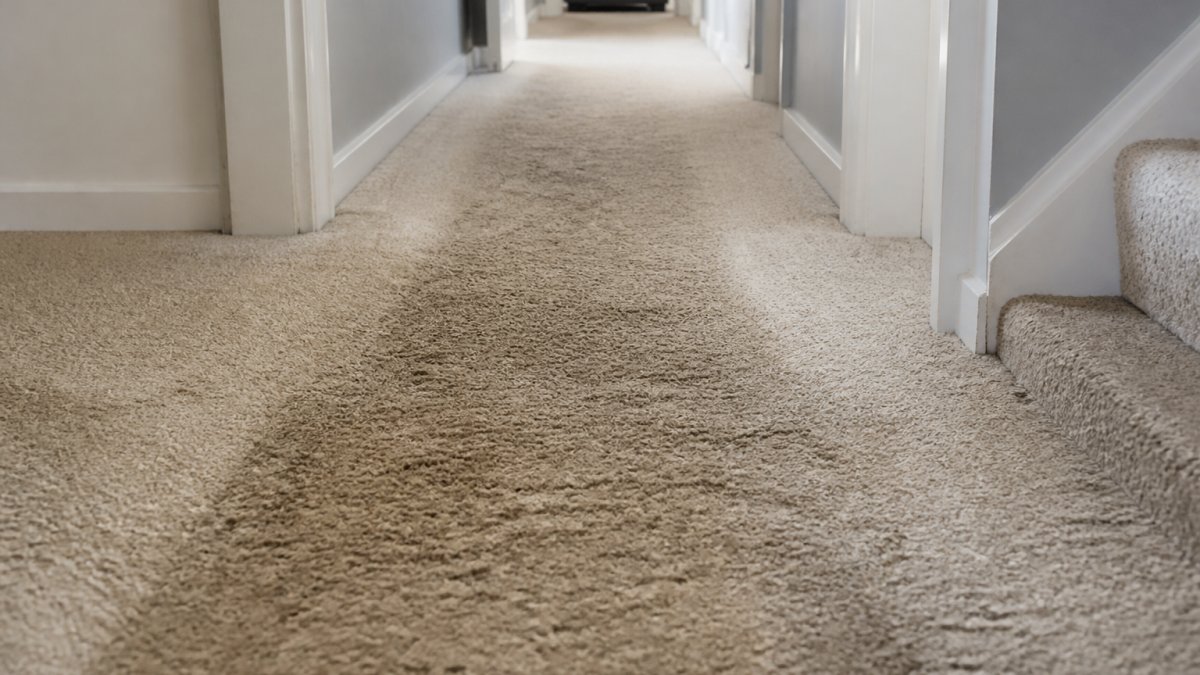
The wear pattern is rarely random. It follows the route people take, which is why you get a visible traffic lane rather than damage spread evenly across the room.
The grit that acts like sandpaper on carpet fibre
Dry soil is the main enemy of any carpet pile. Tiny particles of grit, sand and debris get walked in and settle deep in the fibres.
Over months, that friction cuts through the fibre. The pile flattens, loses its bounce, and starts to look worn long before the carpet is genuinely old.
The fix is simple but easy to forget: stop the dirt at the door, and lift out what gets past it.
How to Protect Carpet in High-Traffic Areas Before Wear Sets In
Protecting carpet in high-traffic areas comes down to three habits: block dirt at the entrance, remove what gets in, and spread the load.
Here is a practical routine, ordered by impact:
- Doormats at every entrance. A coarse outdoor mat plus an absorbent indoor mat traps most grit before it reaches the hallway.
- A no-shoes policy. Ask family and guests to remove shoes at the door. This alone cuts a large share of the soil coming in.
- Vacuum the traffic lane often. Little and often beats one big clean. Dry soil lifts easily before it works its way down.
A maintenance schedule based on household traffic
Match the routine to how busy the hallway actually is.
| Household traffic | Vacuum traffic lane | Deep clean | Check mats and runners |
|---|---|---|---|
| Low (1-2 people, few visitors) | 2 times a week | Every 12-18 months | Monthly |
| Medium (family home) | 3-4 times a week | Every 9-12 months | Fortnightly |
| High (busy home, pets, frequent guests) | Daily | Every 6-9 months | Weekly |
A quick pass midweek can help keep grit from settling.
Choosing the Best Carpet for Hallways: Fibre, Pile and Underlay
The best carpet for hallways is a hard-wearing, low-pile option with a dense construction and a good underlay.
Fibre type. Synthetic fibres such as polypropylene and nylon are popular for hallways because they resist staining and hold up to foot traffic.
Pile height. A short, tight pile (often called a loop or twist) copes better with traffic than a deep, loose pile.
Underlay. A quality underlay cushions each footstep and helps the carpet recover its shape.
Match these three and you have a hallway carpet built for the job. Get one wrong and even a good carpet will show wear early.
How to Avoid Traffic Lanes on Carpets by Spreading the Load
Traffic lanes form because everyone takes the same path. To avoid them, you spread foot traffic across more of the carpet rather than concentrating it in one strip.
Try these moves:
- Shift furniture slightly. Nudge a console table or shoe rack a few centimetres every few months so feet take a new route.
- Rotate rugs and runners. Turn a runner end-to-end so the wear evens out along its length.
- Vary the walking line. Where space allows, keep the centre of the hall clear so people do not all hug one wall.
Rearranging furniture will not suit every hallway, especially narrow ones. Even small shifts help. The goal is fewer repeated footfalls in exactly the same spot.
Why a Hallway Carpet Runner Is the Cheapest Wear Protection You Can Fit
A hallway carpet runner puts a replaceable layer over the busiest strip. When the runner wears out, you can swap it rather than the whole carpet.
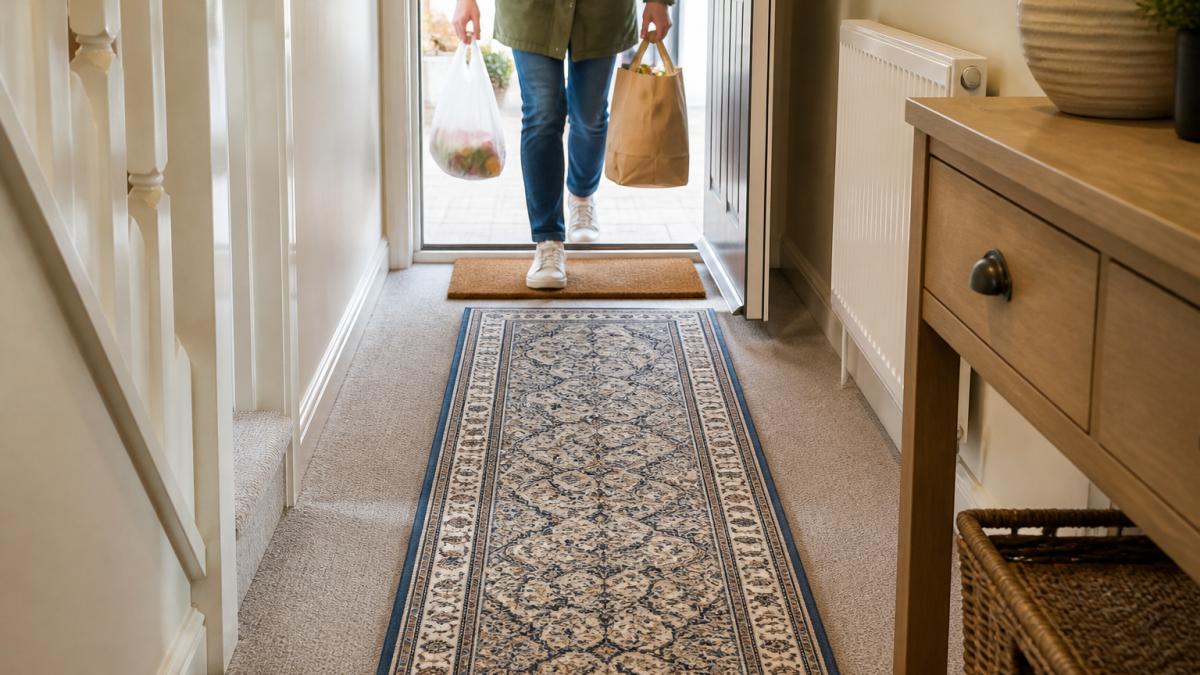
A few practical points on runners and protectors:
- Grip matters. Choose a runner with a non-slip backing, or add an underlay or grip pad, so it stays flat and safe.
- Watch the edges. A runner that curls at the corners is a trip hazard. Fix it down properly.
- Clean underneath. Lift the runner now and then so grit does not build up between it and the carpet.
Think of a runner as a shock absorber for your hallway. It takes the friction so the carpet beneath keeps its pile recovery.
Vacuuming and Cleaning Without Damaging the Pile
Cleaning well is about technique, not force. The right vacuum and the right settings lift dirt without pulling the pile apart. Matching the machine to the pile type matters, because the wrong brush roll can damage the pile.
Match the vacuum to the pile
- Loop pile (including berber-style). A spinning brush roll can snag and fuzz the loops, pulling individual tufts and leaving a permanent fuzzy patch. Switch the brush roll off and use suction only, or use a vacuum with a dedicated delicate or hard-floor setting that disengages the beater bar.
- Twist and cut pile. A gentle brush roll is usually fine and helps lift embedded grit. Avoid aggressive beater bars with stiff bristles, which can fray the yarn tips over time.
- Deep or long pile. Use a high suction setting with the brush roll on a low height, and avoid pressing the head hard into the carpet. Let the suction do the work rather than scrubbing.
Suction, speed and passes
- Go slow. Slow passes pick up more grit than fast ones. Two slow passes over the traffic lane lift more dry soil than five quick ones.
- Overlap your passes. A common pattern is to overlap each pass by about half the width of the vacuum head so no strip is missed.
- Empty and clean filters. A clogged vacuum just pushes dirt around. Keep the bin and filter clear, and check the brush roll for wrapped hair and fibre that reduce pickup.
Spot cleaning without over-wetting
- Blot stains, do not rub. Rubbing spreads a spill and damages fibres. Blot from the edge inward with a clean cloth.
- Use as little liquid as the job allows. Too much moisture can loosen the backing and leave a mark. Apply cleaning solution to the cloth, not the carpet, and work in small sections.
- Test products first. Try any cleaning product on a hidden patch before using it on the traffic lane, and allow it to dry fully to check for colour change.
Use as little liquid as the job allows during spot cleaning.
Spotting Early Wear Versus Damage That Needs Repair
Early wear is normal and manageable. Real damage needs a different response. Knowing which is which saves you from replacing a carpet too soon, or too late. The useful skill is not just spotting a problem but matching it to the right action.
Signs of early wear, maintain and monitor
- Pile looks flattened in the traffic lane but recovers after vacuuming. This is normal foot traffic. Keep vacuuming little and often and consider a runner over the busiest strip.
- Slight dulling of colour along the walkway. Often surface soil rather than fibre loss. A thorough vacuum and a professional clean usually restore appearance.
- Matting that brushes back up with a little effort. Use a soft brush or vacuum with a gentle brush roll to lift the pile.
Response: maintain the routine, add or rotate a runner, and book a professional clean if the appearance does not improve.
Signs of damage that need repair
- Pile that stays flat and no longer springs back. This can indicate crushed fibre or a worn underlay. A professional clean may help, but if the pile has lost resilience across the traffic lane, a runner or partial replacement is often more practical than repeated cleaning.
- Frayed loops, snags, or a visible bald patch. These are structural failures. Do not pull loose loops; trim them carefully and seek a repair. A bald patch usually means the tuft has been pulled from the backing and needs re-tufting or patching.
- Ripples or waves in the carpet surface. This often points to fitting or backing problems rather than surface wear. Ripples can be a trip hazard and usually need re-stretching by a fitter rather than cleaning.
Deciding between clean, repair and replace
A simple way to decide:
- Clean when the issue is surface soil, dulling, or matting that responds to vacuuming.
- Repair when the issue is localised, a snag, a seam, a ripple, or a small patch, and the rest of the carpet is sound.
- Replace when the damage is widespread across the traffic lane, the backing has failed, or repairs would cost a large share of replacement.
If you are unsure, a home visit can help you decide what suits your hallway.
Book a Home Visit to Match Your Hallway With the Right Carpet
Getting the right hallway carpet is easier when you can see and feel the options in your own space.
Mobile Carpets and Flooring SW Ltd brings a mobile showroom to your door with thousands of samples, including carpets and LVT flooring.
We are a family-run business with over 25 years of experience.
Get started with Mobile Carpets and Flooring SW Ltd and match your hallway with a carpet built to take the traffic.
Frequently Asked Questions
How often should you vacuum a hallway carpet?
In a busy household, vacuum the hallway every day or at least every other day, because it takes the heaviest foot traffic in the home. A quieter household can manage two to three times a week. Use a suction setting rather than a stiff beater bar on loop pile, and go over the traffic lane twice. Removing dry grit before it works down into the backing is the single most effective way to slow carpet wear.
Can a hallway carpet runner help prevent carpet wear?
Yes. A hallway carpet runner absorbs the foot traffic, grit and friction that would otherwise land on the fitted carpet, and it can be lifted, cleaned or replaced far more cheaply than a full floor. Choose one with a non-slip backing or fit an underlay grip so it stays flat, and rotate it end to end every few months so the wear pattern spreads evenly rather than concentrating in one stretch.
What are the early signs of carpet wear versus damage that needs repair?
Flattened pile that recovers after vacuuming, slight shading along the traffic lane and surface fuzzing are normal signs of wear and can be managed with cleaning and rotation. Damage needs action: a frayed edge, a lifted seam, a burn mark, mould or a backing that has split. Small burns and snags can often be repaired by a fitter, but a seam that has opened across a doorway usually means the carpet needs re-stretching.
Should you have carpet in the hallway?
Carpet works well in a hallway if you choose the right specification. Look for a dense, short-pile carpet in a solution-dyed polypropylene or a tight loop wool blend, paired with a good quality underlay. It softens sound, feels warmer underfoot and is more forgiving on stairs. If the hallway is exceptionally busy or leads straight from an outside door, a hard-wearing carpet with a fitted runner, or a hard floor with a rug, may last longer.