 How-to
How to Choose Pet-Proof Flooring for a Busy Home
Last Updated: October 30, 2026
Quick Summary
Choosing the right pet-proof flooring for Plymouth homes with pets starts with three questions: what kind of pet you have, which room the floor is going in, and what is underneath it. Work through five steps in order, profile the pet, map the rooms, check the subfloor, set your trade-off priorities, then shortlist and sample in the room.
- For a home with pets, AC3 is the sensible minimum laminate rating and AC4 is safer for hallways and large dogs.
- Luxury vinyl plank and tile is the practical all-rounder for most busy pet homes because it is fully waterproof.
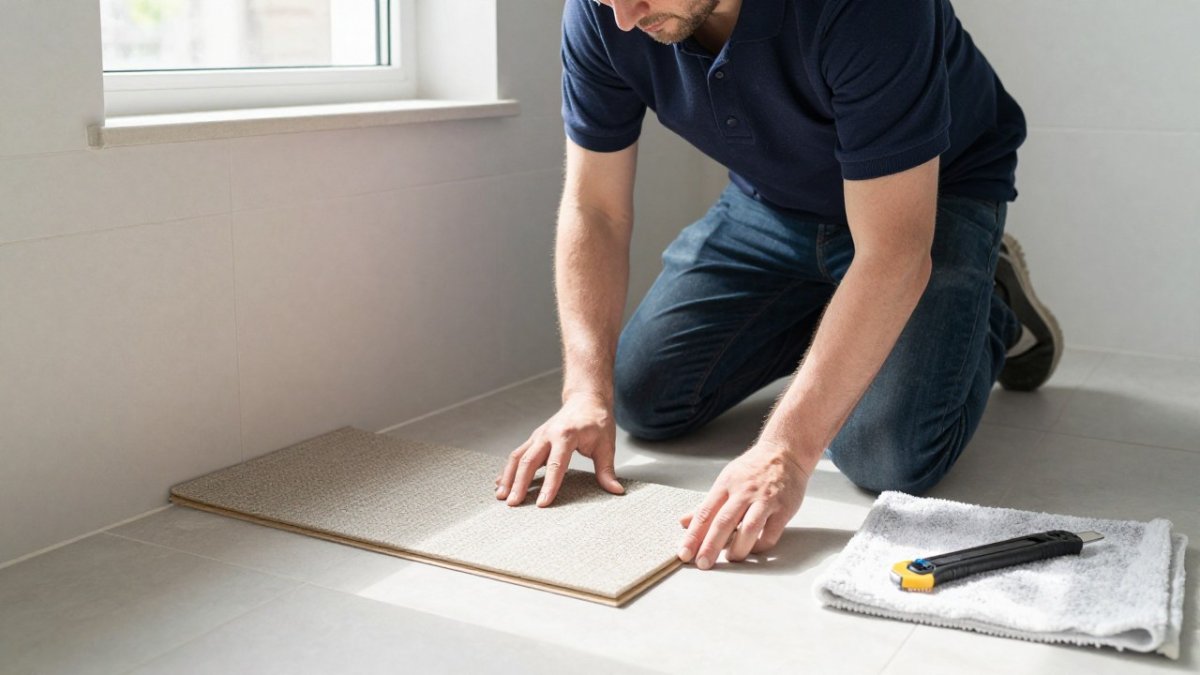
- Carpet tiles win for pet owners because you can lift and replace one stained square instead of the whole floor.
- Blot, do not rub, pet accidents, then clean with a pet-safe cleaner rather than bleach, which can dull a finish.
- The fewer seams a floor has, the less chance liquid finds a way underneath.
Table of Contents
- Start With the Pet, the Room and the Subfloor
- Pet-Friendly Flooring Options That Survive Real Life
- Scratch-Resistant Flooring for Pets: What the Ratings Actually Mean
- Easy-Clean Flooring for Pets: Mud, Hair and Accidents
- LVT Flooring for Homes with Pets: Where It Wins and Where It Doesn't
- Trade-Offs Beyond Scratch Resistance
- Book a Home Visit and See the Samples in Your Own Rooms
- Frequently Asked Questions
Start With the Pet, the Room and the Subfloor
Choosing the right pet-proof flooring for Plymouth homes with pets starts with three questions, not a sample book: what kind of pet you have, which room the floor is going in, and what is underneath it. Get those wrong and even the toughest surface will disappoint.
Many buyers start with a material, but it helps to work through a short, ordered process, because the order matters. If you pick a material before checking the subfloor, your favourite sample may not be a suitable option.
A Step-by-Step Selection Path
Work through these five steps in order. Each one narrows the field before you spend time on samples.
-
Profile the pet. Note species, size, age, claw length and accident risk. A large dog with long nails, an older cat with occasional litter-tray misses and a puppy in housetraining are three different flooring problems. Puppies and senior pets need grip and easy accident response; large dogs need scratch resistance and weight tolerance; cats need seam-free surfaces that do not trap hair.
-
Map the rooms. List each room the floor will go in and note traffic, moisture and mess. Hallways and kitchen walkways take the brunt of claws and grit. Bathrooms and utility rooms see water. Bedrooms and stairs are quieter but need comfort and safety underfoot. A common mistake is buying the same floor for the whole house, it rarely works, and matching material to room usually costs less and performs better.
-
Check the subfloor. Before any sample, confirm the existing floor is flat, dry and sound. Concrete, chipboard, floorboards and old vinyl behave differently under a new floor, and moisture is the quiet killer of solid wood and laminate. Ask whether the new floor will add height that catches a door, and whether the room has underfloor heating or is a wet area. A good fitter checks this before quoting.
-
Set the trade-off priorities. Decide what you will not compromise on: scratch resistance, waterproofing, comfort underfoot, warmth, noise, traction or repairability. No material wins on all of them, so rank them before you look at products. This is the step most buyers skip, and it is the one that prevents expensive regret.
-
Shortlist and sample in the room. Only now choose two or three materials that fit steps one to four, and view samples under your own lighting against your own walls. Samples look different in a showroom.
Match the Material to Claws, Accidents and Traffic
A large dog with long nails is a different problem from a cat that occasionally misses the litter tray. Heavy traffic through a kitchen doorway is different again from a spare bedroom.
Think in three categories:
- Claws and grip: hard surfaces resist scratching better than soft ones, but smooth tiles can be slippery for older pets. Textured finishes help.
- Accidents and spills: liquids need somewhere to sit without soaking in. Sealed surfaces win here.
- Traffic and wear: hallways and kitchen walkways take the brunt. Put your budget where the paws actually land.
Check the Subfloor Before You Fall for a Sample
The subfloor decides what you can fit. Concrete, chipboard, floorboards and old vinyl all behave differently under a new floor, and moisture is the quiet killer of solid wood and laminate.
Before you commit, ask three things:
- Is the existing floor flat, dry and sound?
- Will the new floor add height that catches a door?
- Does the room have underfloor heating or a wet area?
If nobody has looked under your existing floor, the sample you love may not be an option at all.
Pet-Friendly Flooring Options That Survive Real Life
Pet-proof flooring is any surface that resists claws, handles accidents without swelling, and cleans up without a fight.
Here is how the main options compare in practice:
| Option | Scratch resistance | Water resistance | Repairable | Best for |
|---|---|---|---|---|
| Luxury vinyl plank and tile | High | Fully waterproof | Moderate, per plank | Hallways, kitchens, bathrooms |
| Porcelain tile | Very high | Fully waterproof | Hard, tile by tile | Kitchens, wetrooms, doorways |
| Laminate | Moderate to high | Low unless sealed | Hard, whole floor | Bedrooms, low-traffic rooms |
| Engineered hardwood | Moderate | Low | Possible, sand and refinish | Living rooms, adult households |
| Carpet and carpet tiles | Low | None | Tiles yes, broadloom no | Bedrooms, stairs, quiet rooms |
| Cork and bamboo | Low to moderate | Low | Limited | Low-traffic, quiet spaces |
Luxury vinyl plank and tile is the practical all-rounder for most busy pet homes.
Porcelain tile shrugs off claws and accidents completely, but it is hard and cold, and dropped glasses do not survive it.
Laminate has improved enormously, but water is still its weak point. You can view laminate flooring choices as a practical pet-friendly alternative.
Engineered hardwood offers real timber with a stable core, yet claws will still mark it and accidents need clearing fast. You can explore engineered wood as a pet-friendly option and see what's on offer.
Carpet and carpet tiles are the quiet, warm choice for bedrooms and stairs. You can compare carpet options for a home with pets before deciding.
Cork and bamboo feel lovely but dent and mark easily.
Scratch-Resistant Flooring for Pets: What the Ratings Actually Mean
Scratch-resistant flooring for pets is rated by how well a surface copes with abrasion, not by a marketing sticker. In laminate and vinyl, the AC rating and wear layer tell you far more than the product photo.
AC Ratings, Wear Layers and Floor Thickness
The AC rating is a European abrasion standard for laminate. It runs from AC1, for light domestic use, to AC5, for heavy commercial traffic.
Wear layers matter for vinyl. A thicker wear layer resists scuffs and claw marks better than a thin one, and it is usually stated in millimetres.
Floor thickness is often misunderstood.
Watch out: a high AC rating on a laminate still does not make it waterproof.
Easy-Clean Flooring for Pets: Mud, Hair and Accidents
Easy-clean flooring for pets means fewer seams, a sealed surface and a finish that does not trap hair.
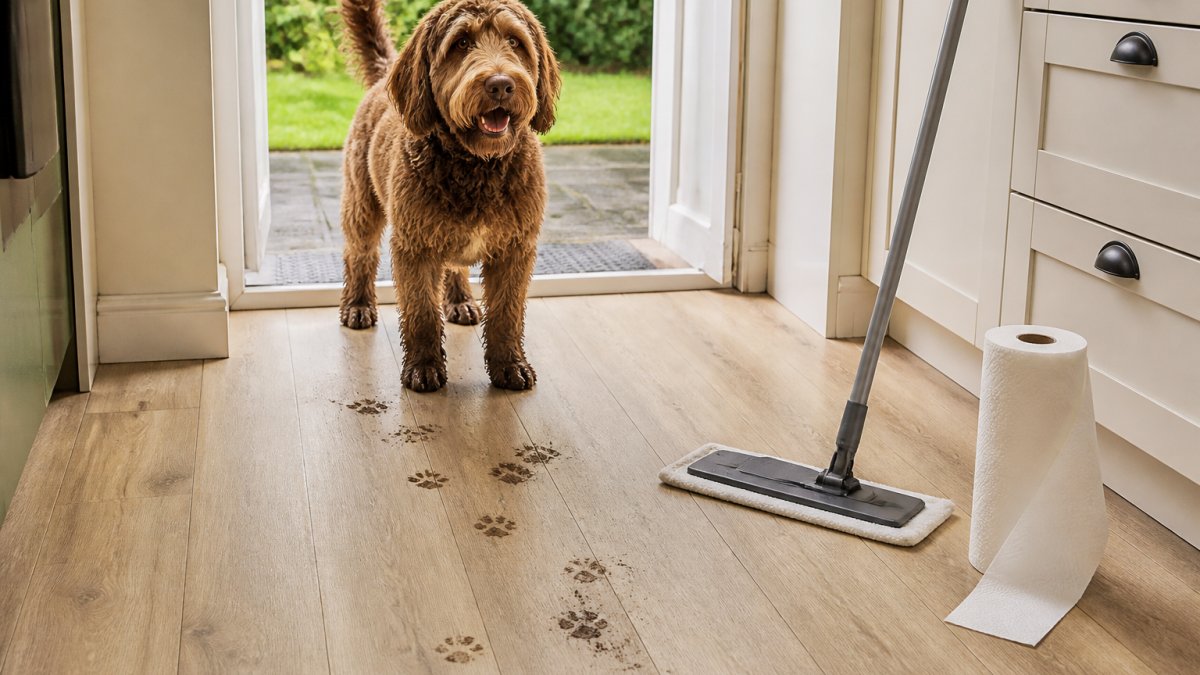
Pet hair is the giveaway. On carpet it works into the pile and needs a good vacuum.
Accidents need a fast, simple routine:
- Blot, do not rub, then lift solids with kitchen paper.
- Clean with a pet-safe cleaner rather than bleach, which can dull a finish.
- Dry the area fully, especially at seams and edges.
The fewer seams a floor has, the less chance liquid finds a way underneath. That single point explains why sheet and large-format products beat narrow planks in a utility room.
LVT Flooring for Homes with Pets: Where It Wins and Where It Doesn't
LVT flooring for homes with pets wins on waterproofing, comfort and cost, and loses on heat tolerance and heavy furniture. You can see the actual LVT product range and options available for your pet-friendly home. It is the most popular choice we bring to pet owners, and mostly for good reason.
Where it wins:
- Fully waterproof, so accidents and spills stay on the surface.
- Warm and quiet underfoot compared with tile.
- Realistic wood and stone looks at a sensible price.
Where it falls short:
- Heavy furniture and sharp objects can dent it.
- Very hot items or direct sunlight can mark some products.
- Cheap, thin LVT wears through its pattern faster than a quality board.
Best for: hallways, kitchens, bathrooms and busy family rooms. Skip if: you want a floor you can sand and refinish decades later.
Trade-Offs Beyond Scratch Resistance
Scratch resistance gets all the attention, but it is only one trade-off. The real decision is what you are willing to live with for the next ten years, and how the floor behaves underfoot, under noise, under furniture and at the seams.
Here is what most guides miss. The floor that survives your dog best may be the one you enjoy least. Hard tile is tough but unforgiving on bare feet and dropped crockery. Soft carpet is gentle but holds hair and stains.
Comfort, Noise, Traction and Warmth
Compare materials on the things you feel every day, not just the things that resist claws:
- Comfort underfoot: carpet and cork feel softest; LVT is warm and forgiving; porcelain tile is hard and cold. If you stand at a kitchen counter for long periods, tile can be tiring.
- Noise: hard floors amplify sound and paw clicks, especially in hallways and upstairs rooms. Carpet and cork absorb noise; tile and laminate reflect it. In a flat or terraced house, this matters to neighbours as well as to you.
- Traction and slip risk: smooth tile can be slippery for older pets and for humans carrying laundry. Textured LVT and carpet offer more grip. If you have a senior dog, traction is a safety issue, not a comfort preference.
Installation and Subfloor Considerations
How a floor is fitted affects how it performs with pets far more than most buyers expect.
- Subfloor condition: uneven or damp subfloors cause rocking joints, squeaks and premature wear. A fitter should check flatness and moisture before quoting.
- Moisture: concrete subfloors can transmit moisture vapour. Some LVT and laminate products require a damp-proof membrane; solid wood and laminate can swell if moisture is not controlled.
- Transitions and edges: doorways, thresholds and room edges are where liquids find a way underneath. Sealed transitions and matching profiles reduce risk.
Lifecycle Cost and Repairability
Think in terms of the whole life of the floor, not the day you buy it.
- Repairability: carpet tiles and LVT planks can be swapped individually. Broadloom carpet and laminate usually mean replacing a whole room.
- Maintenance: sealed hard floors need little more than a mop. Carpet needs regular deep cleaning.
- Replacement cycle: a cheap floor replaced twice costs more than a good one fitted once.
Ask any supplier two questions: what happens if one plank is damaged, and how do I replace it? The answer tells you more about value than the showroom ever will.
Book a Home Visit and See the Samples in Your Own Rooms
Samples look different under your own lighting and against your own walls. That is why we bring the showroom to you. Our consultants bring a mobile showroom of samples to your home and talk through the options room by room.
You can book an appointment to see how a floor looks in your own home before you decide.
Frequently Asked Questions
What is the best flooring for homes with pets?
There is no single winner because the right choice depends on the pet, the room and the subfloor. Waterproof luxury vinyl plank and tile handle accidents and muddy paws well, porcelain tile is among the harder surfaces to scratch, and laminate is an option for some budgets as long as standing water is avoided. Carpet can still work in bedrooms and on stairs when a low-pile option is chosen. Compare samples in your own rooms before committing, because colour and texture look different under your lighting.
Is LVT or laminate better for dogs?
LVT usually wins for dogs. Its waterproof core shrugs off urine and spilled water, and the wear layer resists claws better than most laminate surfaces. Laminate is cheaper and harder underfoot, but its core swells once moisture gets into the joints, so a single repeated accident can mean replacing boards. If your dog is prone to accidents or you have a garden door that lets in wet paws, LVT flooring for homes with pets is the safer bet. Check the wear layer thickness and AC rating before you buy.
Which flooring is most resistant to pet scratches?
Porcelain tile is the most scratch-resistant option because the glaze is harder than claws. Among scratch-resistant options, vinyl with a thick wear layer and higher-AC-rated laminate can also hold up well against large dogs. Real hardwood and bamboo dent and scratch more easily, though a factory finish helps. Whatever you choose, keep claws trimmed and place mats at doors, because grit trapped under paws acts like sandpaper on any surface.
How do you protect flooring from pet accidents and muddy paws?
Choose a waterproof surface with tight joints, then back it up with practical habits. Wipe accidents up promptly with a pet-safe cleaner rather than a steam mop, which can force moisture into seams. Put a washable mat inside each external door to catch mud and grit, keep water bowls on a tray, and trim claws every few weeks. For easy-clean flooring for pets, a light wood-look vinyl in a mid-tone hides hair and dust better than very dark or very pale finishes.
Picking a floor that survives claws, accidents and muddy paws is easier when someone who fits them every week is standing in your hallway. Mobile Carpets and Flooring SW Ltd has over 25 years of experience, a mobile showroom with thousands of samples, and specialist knowledge of LVT, carpets and wetroom flooring. Get started with Mobile Carpets and Flooring SW Ltd and choose a floor your pets can live on.