 Ultimate guide
Infection Control Flooring Maintenance Guide
Last Updated: October 23, 2026
Quick Summary
Infection control flooring maintenance combines routine detergent-and-water cleaning with targeted disinfection in high-risk zones like patient rooms and isolation areas. Research shows floor disinfection offers no advantage over regular cleaning in most clinical areas, so reserve disinfection for high-touch surfaces and high-risk zones to reduce chemical exposure while maintaining patient safety.
- Daily routine cleaning with detergent and water is sufficient for standard areas; disinfection should target only high-risk zones and high-touch surfaces.
- Disinfectant contact time, typically 10-15 minutes, must be maintained with the surface remaining wet; application alone does not achieve disinfection.
- Verify disinfectant compatibility with your flooring type before use, as some hospital-grade disinfectants damage vinyl wear layers and compromise infection control.
- Document all cleaning activities including date, time, products used, and contamination events to support compliance audits and identify patterns.
- Use neutral pH detergent on vinyl flooring and avoid abrasive scrubbers, bleach, or excessive water that damage the wear layer and create bacterial harbourages.
Table of Contents
- Why Infection Control Flooring Maintenance Matters
- Hospital Floor Cleaning Schedule: Evidence-Based Frequency
- Floor Cleaning and Disinfection Procedure: Step-by-Step
- Cleaning Vinyl Flooring in Healthcare Settings
- Selecting Disinfectants and Cleaning Solutions
- Infection Control Cleaning Checklist for Daily Operations
- High-Traffic and High-Touch Areas: Targeted Protocols
- Auditing and Measuring Cleaning Performance
- Frequently Asked Questions
Why Infection Control Flooring Maintenance Matters
Infection control flooring maintenance is the foundation of a safe healthcare environment.
Treating all surfaces equally misses the real risk zones: high-traffic corridors, patient rooms, and areas near sanitation facilities demand different protocols than back offices or storage areas.
At Mobile Carpets and Flooring SW Ltd, we work with facility managers in the Plymouth area who know the right flooring choice and maintenance protocol directly impact operational efficiency.
Hospital Floor Cleaning Schedule: Evidence-Based Frequency
How often to clean and disinfect floors should be driven by risk level, not habit.
Research into environmental cleaning practices reveals a more nuanced picture. According to CDC guidance on environmental services, studies have found that floor disinfection offers no advantage over regular detergent-and-water cleaning and has minimal or no impact on infection rates in most clinical areas.
A practical hospital floor cleaning schedule operates on three tiers:
Standard Areas (Offices, Corridors, General Waiting Rooms): Daily routine cleaning with detergent and water. No disinfection required unless visible contamination occurs.
Patient-Care Areas (Ward Floors, Treatment Rooms, Patient Bathrooms): Daily cleaning with detergent and water, plus targeted disinfection in high-touch zones and areas of potential biological hazard.
High-Risk Zones (Isolation Rooms, Infectious Disease Units, Wound Care Areas): Daily disinfection following your facility's infection-control protocols and local policy.
Frequency varies by facility type: a nursing home with stable residents may differ from an acute-care hospital with high turnover.
Floor Cleaning and Disinfection Procedure: Step-by-Step
A standardised cleaning procedure ensures consistency and reduces missed contamination, so it must be practical, time-efficient, and protective.
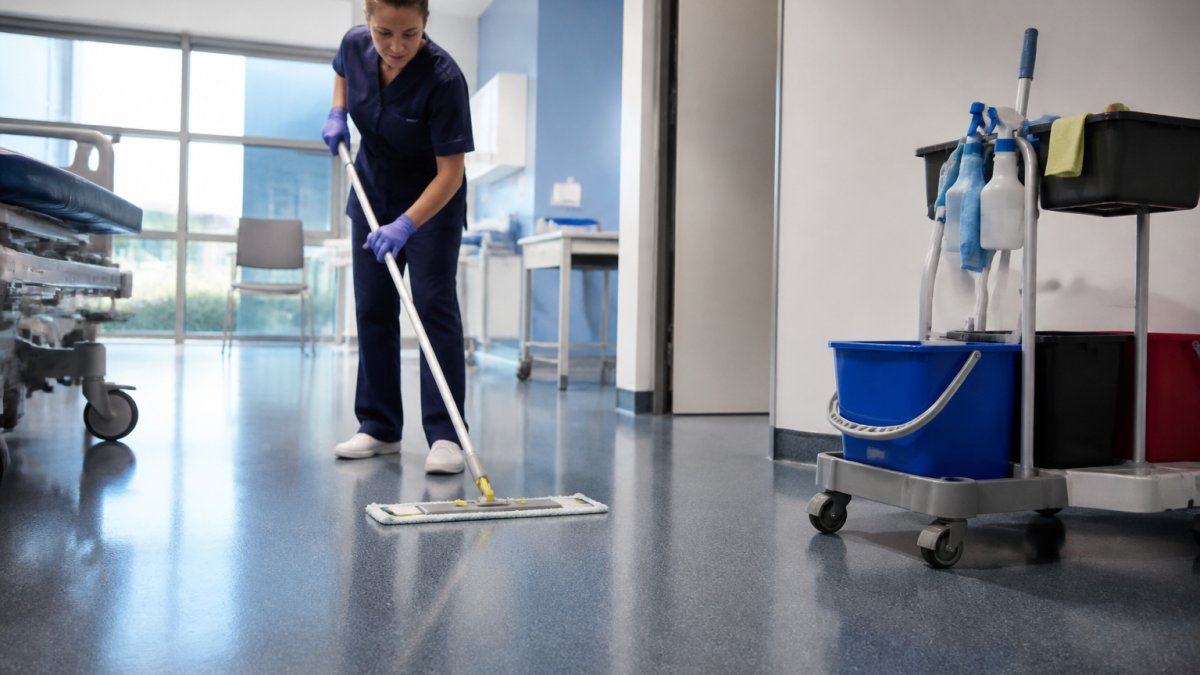
Preparation and Safety Setup
Set up for safety and effectiveness before cleaning begins to prevent cross-contamination and protect staff.
Step 1: Assess the Area and Identify Contamination Walk the floor and note visible soiling, spills, or biological hazards.
Step 2: Clear the Space Remove moveable obstacles, equipment, and furnishings to prevent recontamination and allow full access.
Step 3: Don Personal Protective Equipment Wear appropriate PPE: gloves, apron, and eye protection if splashing is possible.
Cleaning Process and Contact Time
The cleaning sequence matters: most failures occur because staff rush contact time or use incorrect dilution ratios.
Step 6: Apply Cleaning Solution For routine cleaning, use neutral pH detergent and water mixed per manufacturer instructions.
Step 7: Allow Proper Contact Time If disinfection is required, apply your chosen disinfectant and allow the manufacturer's contact time, often 10-15 minutes.
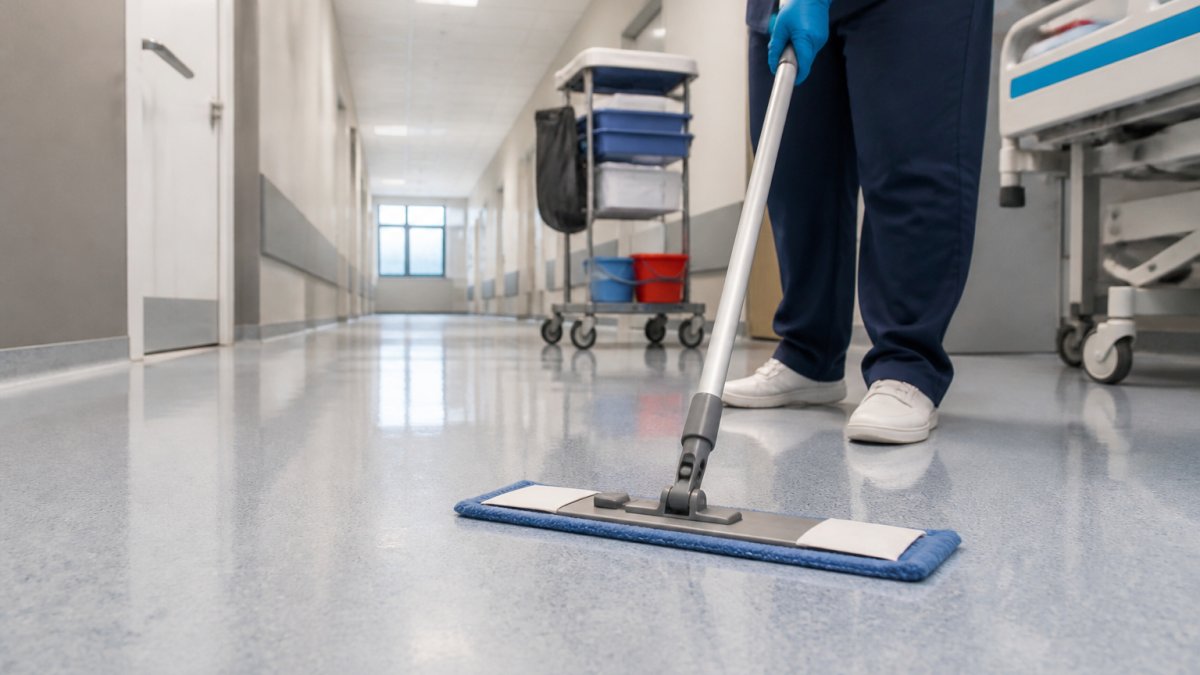
Step 8: Scrub or Agitate Use a mop or brush to agitate the solution, paying particular attention to corners, under furniture, and areas where contamination accumulates.
Rinsing and Final Inspection
Incomplete rinsing leaves chemical residue that can damage flooring, create slip hazards, and irritate skin or respiratory systems.
Step 9: Rinse Thoroughly Rinse the floor completely with clean water, changing it as needed since dirty rinse water recontaminates the floor.
Step 10: Dry the Floor Air-dry the floor or use clean towels or a wet-vacuum to remove excess moisture.
Step 11: Document and Inspect Record the cleaning date, time, products used, and any contamination events to support compliance audits and reveal patterns if infection-control issues arise.
Cleaning Vinyl Flooring in Healthcare Settings
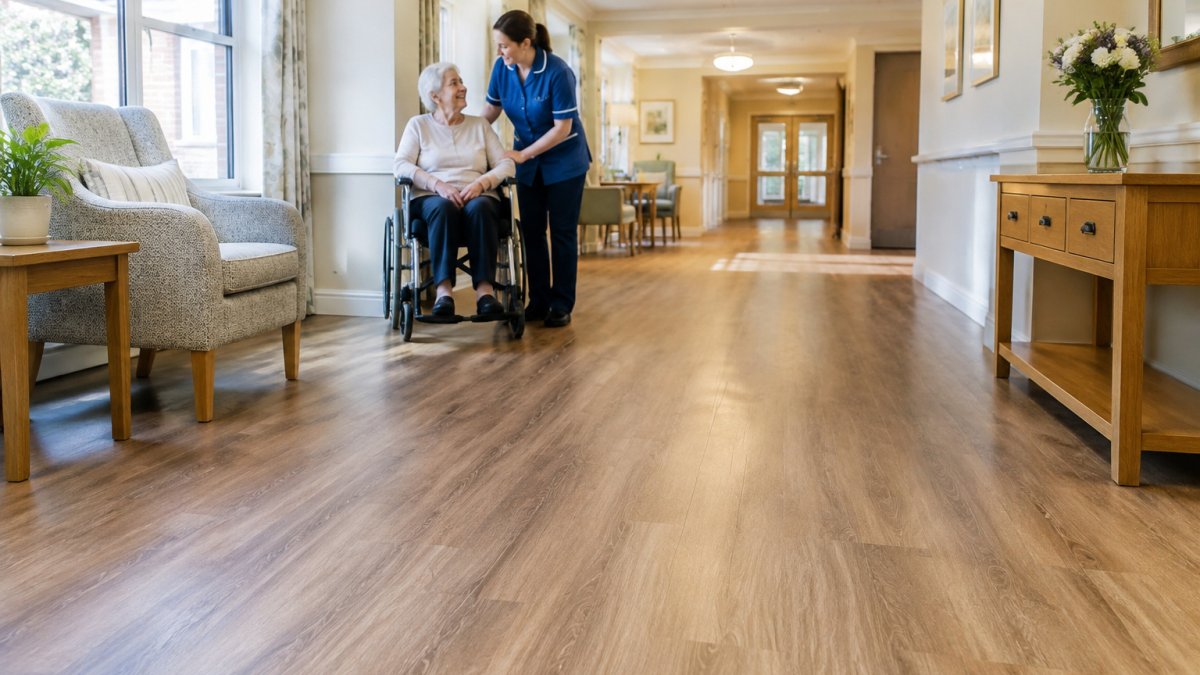
Luxury vinyl tile (LVT) flooring has become standard in healthcare environments because it combines durability, ease of cleaning, and water resistance.
Vinyl is resilient and its non-porous surface resists bacterial colonisation better than porous materials like concrete or grout.
Disinfection for Vinyl: If disinfection is required, verify that your chosen disinfectant is compatible with vinyl. Check the product label or contact the flooring manufacturer. Tarkett infection control flooring guidance recommends restricting disinfection to high-risk areas, as disinfectants may soil flooring elsewhere and unnecessary chemical exposure poses occupational health risks.
Stripping and Refinishing: Over time, vinyl accumulates cleaning residue, wax, or disinfectant film. Periodic stripping removes this layer and restores appearance.
Selecting Disinfectants and Cleaning Solutions
The choice of cleaning product affects both infection control and operational efficiency.
Disinfectant Types:
Chlorine-Based Disinfectants: Highly effective but corrosive, can damage some flooring finishes and discolour surfaces.
Alcohol-Based Solutions: Fast-acting (contact time under 5 minutes) but can strip protective coatings from flooring. Best reserved for small areas or high-touch surfaces rather than whole-floor disinfection.
Hydrogen Peroxide: Effective and breaks down into water and oxygen, reducing chemical residue.
Proper Dilution and Contact Time:
Many disinfection failures occur because staff dilute incorrectly or skip contact time.
Flooring Compatibility:
Before selecting a disinfectant, verify compatibility with your flooring material.
Infection Control Cleaning Checklist for Daily Operations
A standardised checklist ensures your team executes the procedure consistently and documents compliance. Adapt it to your facility's specific needs and risk areas.
| Task | Frequency | Responsible | Completed | Notes |
|---|---|---|---|---|
| Inspect floor for visible contamination | Daily, before cleaning | Environmental services lead | ☐ | Record any hazards or spills |
| Clear floor of obstacles and furniture | Daily | Cleaning staff | ☐ | Ensure safe access to all areas |
| Don appropriate PPE | Daily | Cleaning staff | ☐ | Verify gloves, apron, eye protection |
| Pre-clean heavily soiled areas | As needed | Cleaning staff | ☐ | Use detergent and water first |
| Apply cleaning solution | Daily | Cleaning staff | ☐ | Verify correct dilution ratio |
| Allow contact time for disinfectant | Per product label | Cleaning staff | ☐ | Monitor time; do not allow surface to dry prematurely |
| Scrub and agitate solution | Daily | Cleaning staff | ☐ | Pay attention to corners and under furniture |
| Rinse thoroughly with clean water | Daily | Cleaning staff | ☐ | Change rinse water as needed |
| Dry floor completely | Daily | Cleaning staff | ☐ | Use air-drying or wet-vacuum method |
| Inspect for residue or damage | Daily | Cleaning staff | ☐ | Note any issues for follow-up |
| Document cleaning activity | Daily | Environmental services lead | ☐ | Record date, time, products, incidents |
| Sanitise reusable equipment | After each use | Cleaning staff | ☐ | Store clean equipment in designated area |
High-Traffic and High-Touch Areas: Targeted Protocols
Not all floor surfaces pose equal infection risk. High-traffic areas and high-touch zones demand more frequent or intensive cleaning because they accumulate contamination faster.
High-Traffic Areas: Corridors, entrance vestibules, and main walkways accumulate soil, moisture, and organic matter rapidly.
Patient Bathrooms and Sanitation Facilities: These combine biological hazard with high-touch exposure, so daily disinfection is standard.
Isolation Rooms: Rooms housing patients with communicable infections require disinfection protocols defined by your facility's infection-prevention team.
Auditing and Measuring Cleaning Performance
Documentation and auditing close the loop between procedure and outcome.
Visual Inspection: Regularly inspect floors for residue, streaks, or visible contamination, which signal incomplete cleaning or inappropriate products.
Microbiological Testing: Some facilities use ATP (adenosine triphosphate) swabs to measure organic residue post-cleaning.
Staff Competency Verification: Train all cleaning staff on the correct procedure, including dilution, contact time, and safety protocols.
Healthcare Infection Control guidance emphasises that environmental cleaning is one component of a broader infection-prevention strategy, not a standalone solution.
When facility managers in the Plymouth area are ready to upgrade their flooring or implement a new maintenance strategy, specialist flooring solutions for healthcare environments can make a measurable difference. The right material choice, paired with a disciplined cleaning protocol, reduces your infection-control burden and protects both patients and staff. If you're planning a flooring refresh or need guidance on infection-control protocols for your current surfaces, contact the team to discuss your specific needs and explore options that align with your facility's standards and budget.
Infection control flooring maintenance is not complicated, but it requires discipline and precision.
Frequently Asked Questions
How often should floors be cleaned in healthcare settings?
Cleaning frequency depends on infection risk level and floor traffic. High-risk areas like isolation rooms and operating theatres require daily disinfection with contact-time protocols. Standard clinical areas typically need cleaning once daily or twice daily during peak patient contact times. Low-risk administrative zones may require routine cleaning with detergent and water only. Local policy and infection-control guidelines should determine your specific schedule. Evidence shows routine detergent-and-water cleaning is often sufficient for general areas, with disinfection reserved for high-risk zones.
What is the difference between cleaning and disinfecting a floor?
Cleaning removes visible dirt, debris, and organic matter using detergent and water, this reduces the microbial load but does not eliminate pathogens. Disinfection applies chemical solutions with specific contact times to inactivate or kill microorganisms, including bacteria and viruses. Disinfection requires proper dilution, application method, and contact time to be effective. Research shows routine detergent-and-water cleaning offers similar infection-control benefits to disinfection in many general healthcare areas, making disinfection most valuable in high-touch zones and high-risk environments.
Can disinfectants damage vinyl or safety flooring?
Yes, improper disinfectant use can damage vinyl and resilient flooring. Excessive moisture, undiluted solutions, and prolonged contact can cause swelling, discolouration, and surface degradation. Always check the flooring manufacturer's compatibility guidance before applying any disinfectant. Dilute solutions according to product instructions, apply them correctly, and ensure adequate rinsing and drying. Many facilities restrict disinfection to high-risk areas to protect floor finishes and reduce operating costs. Proper dilution and contact time protocols protect both infection control and floor longevity.
What should an infection control cleaning checklist include?
An effective checklist covers: area identification and risk level, cleaning frequency and schedule, equipment and tools needed, correct disinfectant and dilution ratio, contact time requirements, personal protective equipment, step-by-step procedure, high-touch surface priorities, rinsing and drying verification, and staff sign-off. Include spill response protocols for bodily fluids and contamination events. Document which areas require disinfection versus detergent-and-water cleaning only. Regular auditing of checklist compliance helps verify that procedures are followed and identifies training gaps among healthcare personnel.
How should spills and bodily fluid contamination be cleaned from floors?
Contain the spill immediately using absorbent material and appropriate signage to prevent slip hazards. Wear personal protective equipment including gloves and apron. Remove bulk contamination first, then apply a disinfectant solution appropriate for the contaminant type. Allow the required contact time, typically 10-15 minutes depending on the product. Wipe the area thoroughly and rinse with clean water to remove residual disinfectant and organic matter. Dry the floor completely to prevent slip risks and re-contamination. Document the incident and ensure staff follow local policy for managing bodily fluid exposure.
Do healthcare floors need to be disinfected every day?
Not necessarily. Research shows routine daily cleaning with detergent and water is sufficient for many general healthcare areas and offers no infection-control advantage over disinfection. Daily disinfection is most important in high-risk zones: isolation rooms, operating theatres, intensive care units, and areas where immunocompromised patients are treated. Standard clinical areas benefit from targeted disinfection of high-touch surfaces and high-traffic zones rather than whole-floor disinfection. Local infection-control policy and risk assessment should guide your specific schedule. Focusing disinfection on high-risk areas reduces operating costs and protects floor finishes.
Which cleaning products are suitable for healthcare flooring?
Use products approved for healthcare environments and compatible with your specific flooring material. Neutral pH detergents are safe for most vinyl and resilient flooring and effective for routine cleaning. Disinfectants must meet infection-control standards and include contact-time guidance on the label. Avoid bleach-based products on coloured vinyl as they cause discolouration. Always check the flooring manufacturer's compatibility guidance before applying any chemical. Dilute all solutions according to product instructions, undiluted products damage floors and waste resources. Select products that balance efficacy, safety for healthcare personnel, and compatibility with your floor finishes.
How can flooring maintenance reduce infection risks?
Well-maintained flooring with intact surfaces prevents contamination harbouring in cracks, seams, and damaged areas. Resilient flooring like vinyl provides a non-porous, cleanable surface that resists microbial colonisation better than porous materials. Regular cleaning removes organic matter and reduces the microbial load. Proper disinfection of high-touch and high-traffic areas breaks transmission chains. Rapid response to spills and contamination events limits pathogen spread. Durable, easy-to-clean flooring supports consistent cleaning procedures and reduces downtime for maintenance. Preventive maintenance extends floor life and ensures surfaces remain effective barriers against environmental contamination.