 How-to
How to Clean Safety Vinyl Flooring Without Losing Its Grip
Quick Summary
To clean safety vinyl, vacuum or sweep first, then mop with a pH-neutral cleaner diluted in lukewarm water. Scrub textured grooves gently with a soft brush, rinse thoroughly, and dry the floor. Avoid waxes, shine products, hot water and vinegar, since they leave residue that reduces grip.
- Sweep or vacuum before mopping, because grit acts like sandpaper on the texture.
- Use a pH-neutral cleaner labelled for vinyl and avoid products that promise shine or wax.
- Use lukewarm water, not hot, because hot water can soften vinyl and cause warping.
- Rinse the mop and the floor well, since leftover cleaner is a main cause of slippery residue.
- Clean oil and grease with an alkaline degreaser left on for 5 to 10 minutes, then rinse twice.
Table of Contents
- Why Safety Vinyl Needs Different Cleaning From Standard Vinyl
- Choosing a pH-Neutral Cleaner: The Best Cleaner for Safety Flooring
- Tools and Preparation Before You Start
- Step-by-Step: How to Clean Textured Vinyl Flooring
- How to Remove Stains From Vinyl Flooring Without Damaging the Grip
- How Often to Clean Safety Flooring: Daily Care Versus Deep Cleaning
- Restoring Worn Safety Flooring and Avoiding Common Mistakes
- Booking a Flooring Check for Your Home or Business
- Frequently Asked Questions
Why Safety Vinyl Needs Different Cleaning From Standard Vinyl
Clean safety vinyl has a textured surface, and that texture is what keeps people on their feet. The tiny ridges and grooves that give grip also trap dirt, grease and soap. Standard smooth vinyl can usually be cleaned with a quick mop and a general-purpose cleaner. Safety vinyl needs more care, because the wrong product or method can wear away the texture or leave a film that makes the floor slippery.
For this reason, cleaning safety flooring, including clean safety vinyl, is less about speed and more about getting into the surface without damaging it. Routine mopping with a harsh product can slowly remove grip, and water and soap can sit in the grooves and build up over time in bathrooms, kitchens and wet areas.
Key differences to keep in mind:
- Textured grooves hold more dirt than smooth vinyl
- Strong cleaners can strip the protective top layer
- Residue makes the surface more slippery, not less
- Scrubbing too hard can wear down the texture
Choosing a pH-Neutral Cleaner: The Best Cleaner for Safety Flooring
A pH-neutral cleaner is the best choice for safety vinyl in most homes and workplaces. It cleans effectively without being harsh enough to damage the surface or leave a sticky film.
Look for a cleaner labelled pH-neutral or specifically made for vinyl flooring. Avoid products that promise a "shine" or "wax," because these often leave a coating that fills the texture and reduces grip.
What to check on the label:
- pH-neutral or vinyl-safe wording
- No wax, polish or shine additives
- Clear dilution instructions
- Suitable for textured or safety surfaces
Some alkaline cleaners are used on safety flooring for heavy grease. Professional cleaning guidance suggests letting an alkaline solution sit on the surface for 5 to 10 minutes before agitating it, so it can break down stubborn grease. Use these only when a pH-neutral product has failed, and rinse well afterwards.
Tools and Preparation Before You Start
Good preparation makes cleaning faster and protects the floor. Before you begin, clear the room of rugs, mats and loose items. A clear floor lets you reach every corner and spot damage early.
What you will need:
- A soft-bristled brush or non-abrasive pad for the texture
- Two buckets: one for cleaning solution, one for rinsing
- A microfibre mop
- A soft cloth for drying edges
- Your pH-neutral floor cleaner
- A vacuum or dry sweeper
Preparation steps:
- Sweep or vacuum the floor thoroughly to remove grit.
- Grit left on the floor acts like sandpaper when mopped.
- Check the floor for any loose edges or lifting seams.
- Test your cleaner on a small hidden patch first.
Avoid hard-bristled brushes and steel wool. They can scratch the surface and wear down the grooves that give safety vinyl its grip.
Step-by-Step: How to Clean Textured Vinyl Flooring
Follow these steps for a clean floor that keeps its grip. Work in small sections so the solution does not dry before you rinse it.
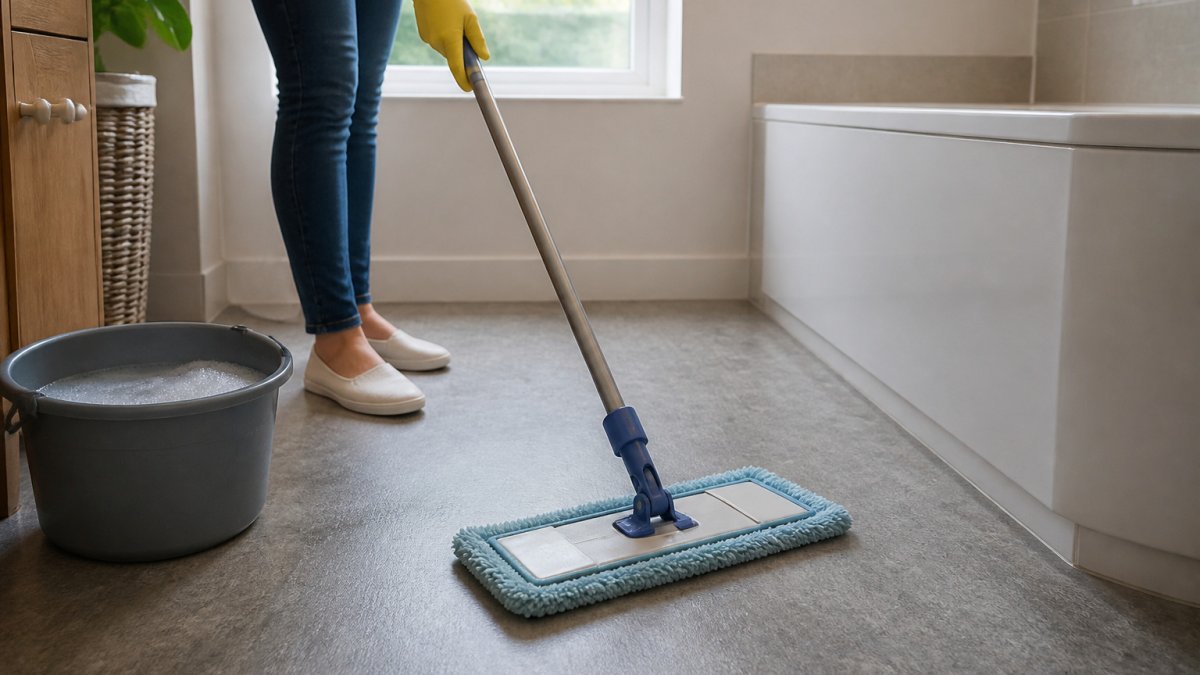
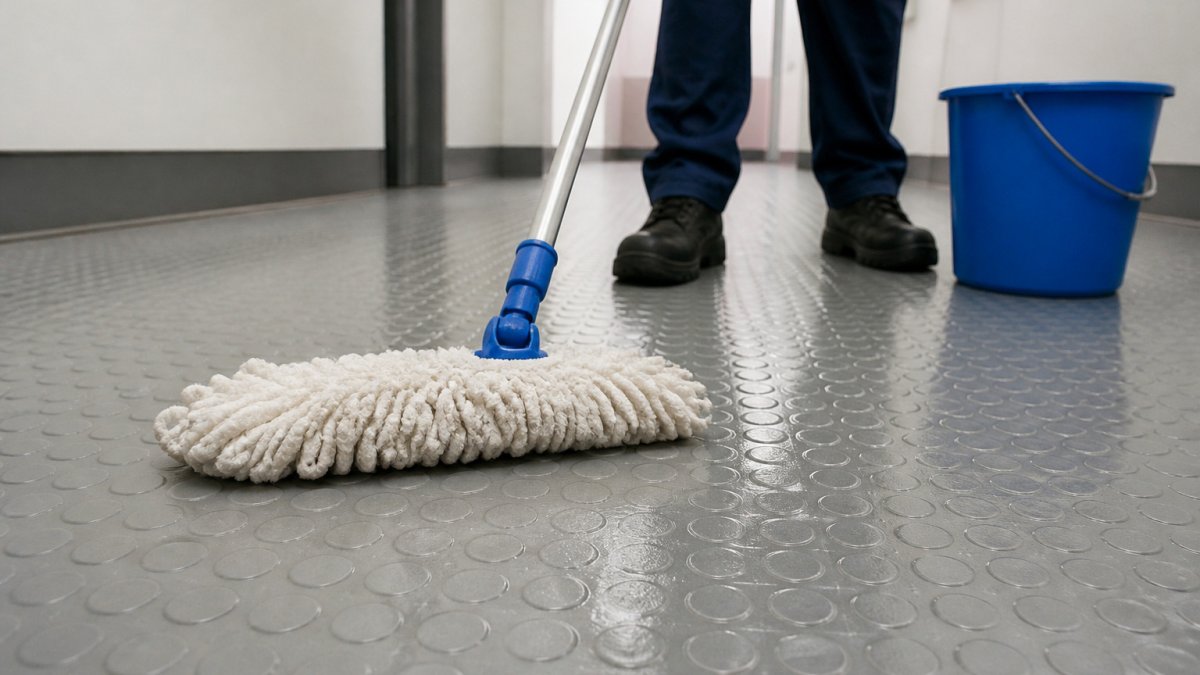
- Vacuum or sweep the whole floor to remove loose dirt.
- Mix the cleaner using the dilution ratio on the label. Use lukewarm water, not hot.
- Dampen the mop well. It should be damp, not dripping.
- Mop in small sections, working from the far corner towards the door.
- Use a soft brush on heavily textured areas, with light pressure.
- Rinse the mop in clean water and wring it out before going back over the floor.
- Rinse the floor with clean water to remove any leftover cleaner.
- Dry the floor with a microfibre cloth or let it air dry fully before walking on it.
Why Hot Water and Vinegar Cause Problems
Hot water can soften some vinyl and cause plank warping, especially with luxury vinyl plank. For this reason, use lukewarm water only.
Vinegar is also a common household suggestion, but many flooring manufacturers advise against it. Vinegar, detergents and wax-based products can leave residue that builds up in the grooves over time. Stick with a cleaner designed for vinyl.
The steps below sum up the cleaning process, so you can see the order and timing at a glance.
| Step | What to do | Time or frequency |
|---|---|---|
| Vacuum or sweep | Remove loose dirt from the whole floor | Before every clean |
| Mix the cleaner | Use the label dilution in lukewarm water | As per label |
| Dampen the mop | Damp, not dripping | Each section |
| Mop in sections | Work from far corner towards the door | Small sections |
| Brush textured areas | Light pressure with a soft brush | Heavily textured spots |
| Rinse the mop | Rinse in clean water and wring out | Before going back over the floor |
| Rinse the floor | Clean water to remove leftover cleaner | After mopping |
| Dry the floor | Microfibre cloth or let air dry fully | Before walking on it |
How to Remove Stains From Vinyl Flooring Without Damaging the Grip
Most everyday stains come out with a gentle approach. These need a different method. Start with the mildest option and only move to stronger products if needed, and always rinse thoroughly afterwards.
Common household stains:
- Food and drink: Wipe with a damp cloth and pH-neutral cleaner.
- Scuff marks: Rub lightly with a soft pad and cleaner.
- Dried dirt in grooves: Use a soft brush and cleaner, then rinse well.
Industrial and commercial spills:
- Oil and grease: These are the most common cause of slippery safety flooring. Apply a strong alkaline degreaser (pH 10-12) and let it dwell for 5-10 minutes. Agitate with a soft brush, then remove with a wet vacuum or clean mop. Rinse twice with clean water. Watch out: Oil can soak into the texture and re-appear after cleaning. You may need to repeat the degreasing step two or three times before the floor stops feeling slick.
- Chemical residues: Identify the chemical first. Acidic spills (e.g. descalers, some cleaning products) can be neutralised with a mild alkaline solution. Alkaline spills (e.g. oven cleaner, bleach) can be neutralised with a dilute acid rinse, but check with the chemical supplier before mixing anything. Always wear appropriate PPE and ensure adequate ventilation.
- Paint and adhesive: Use a proprietary adhesive remover or isopropyl alcohol on a cloth. Test on a hidden area first. Do not scrape with a metal blade, it will scratch the texture.
- Rust: Apply a rust remover gel designed for vinyl, leave for the recommended time, then rinse thoroughly. Rust removers are acidic and can dull the surface if left too long.
General rules for stain removal:
- Always rinse after treating a stain. Leftover cleaner is one of the main causes of slippery residue.
- If a stain will not lift, test a stronger product on a hidden area first, rather than scrubbing harder, which can wear the texture away.
- For unknown spills, absorb as much as possible with paper towels or an absorbent pad before applying any liquid.
- Never mix cleaning chemicals unless the label explicitly says to. Mixing bleach and acid, for example, produces toxic gas.
How Often to Clean Safety Flooring: Daily Care Versus Deep Cleaning
Safety flooring needs two levels of care: a quick daily routine and a deeper clean at set intervals.
Daily care:
- Sweep or vacuum to remove grit
- Wipe up spills straight away
- Mop lightly with pH-neutral cleaner in busy areas
Deep cleaning:
- Carry out a full clean with a brush and cleaner every few weeks, or more often in high-traffic or wet areas
- Check the grooves for buildup and clear them gently
- Rinse thoroughly and dry the floor
Busy homes and commercial sites may need more frequent deep cleans.
Restoring Worn Safety Flooring and Avoiding Common Mistakes
If your safety vinyl already feels slippery, residue is the most likely cause, but not the only one. Before you assume the floor is worn out, work through a simple diagnosis. Restoration starts with identifying which problem you have.
Diagnose the cause of slipperiness:
- Residue film: The floor looks dull or streaky and feels tacky when damp. This is the easiest to fix.
- Wax or polish buildup: The surface has a sheen that fills the texture. Often caused by using a 'shine' product or a mop that has been contaminated with polish.
- Surface wear: The texture feels smooth in high-traffic lanes but still grippy at the edges. This is physical wear and cannot be cleaned away.
- Contamination: Oil, grease or silicone has been tracked in and has soaked into the grooves. This needs a different approach to normal cleaning.
Restoration protocol for residue and wax buildup:
- Strip the residue using a dedicated vinyl floor stripper or a strong alkaline degreaser. Dilute according to the label and apply with a soft brush or non-abrasive pad. Work in small sections so the solution does not dry.
- Agitate gently with a soft-bristled brush, paying attention to the direction of the texture. Do not scrub hard, the aim is to lift the film, not to abrade the surface.
- Wet-vacuum the dirty solution away. If you do not have a wet vacuum, use a clean mop and bucket, but change the water frequently.
- Rinse thoroughly with clean water. Repeat the rinse until the water runs clear and the floor no longer feels sticky when damp.
- Dry the floor completely with a microfibre cloth or air mover before allowing traffic.
Check the manufacturer's guidance before using a steam cleaner on safety vinyl.
If the texture is worn through:
Cleaning will not restore grip if the physical texture has been worn away. In that case, a replacement may be the better option. Our Luxury Vinyl Tile range offers alternative styles if you are weighing up your options.
Common mistakes to avoid:
- Using too much cleaner, which leaves film in the grooves
- Mopping with dirty water that spreads grime
- Applying wax or polish that fills the texture
- Using hot water or vinegar
- Scrubbing hard with abrasive tools
- Using a mop that has been used with polish or wax on other floors
Booking a Flooring Check for Your Home or Business
If you are unsure whether your safety vinyl can be cleaned or restored, a professional check can help. You can get in touch with us to arrange a visit.
Frequently Asked Questions
How do you clean safety vinyl flooring?
Sweep or vacuum loose grit first, since particles trapped in the texture act like abrasive. Then mix a pH-neutral floor cleaner with warm water at the dilution ratio on the label. Apply it with a microfibre mop, allow the solution to dwell for a few minutes so it can loosen grease, agitate lightly with a soft brush in the textured areas, and rinse with clean water. Avoid soaking the floor, and let it dry fully before walking on it to keep the slip-resistant surface effective.
Can you use bleach on safety flooring?
Bleach is not recommended on safety vinyl. Strong chemicals can discolour the surface, degrade the wear layer and leave residue that reduces grip. A pH-neutral cleaner diluted in warm water is the safer choice for routine cleaning. For stubborn marks, a dedicated cleaner recommended by the flooring manufacturer is a better option than household bleach, and you should test any product on a small hidden area first.
How often should safety flooring be cleaned?
Sweep or dry mop daily in high-traffic areas, particularly kitchens, hallways and bathrooms, to stop grit building up in the texture. Wet clean once or twice a week, depending on use. Schedule a deeper clean every few months to lift residue that daily mopping misses.
What is the best cleaner for non-slip vinyl flooring?
The best cleaner is a pH-neutral floor cleaner made for vinyl. It cleans without leaving a film that can make the surface slippery or trap dirt in the texture. Avoid waxes, oily polishes and detergent-heavy household products, because these leave residue that undermines slip resistance. Always follow the manufacturer's dilution ratio.