 How-to
How to Choose Slip Resistant Flooring for Care Homes
Quick Summary
Choose slip resistant flooring for a care home by checking its measured wet slip rating, using a textured rather than glossy finish, and matching the floor to each room's risks. Bathrooms need the highest wet grip, while corridors need grip that still allows wheelchairs and trolleys to move easily.
- Compare slip ratings only within the same test method, such as pendulum against pendulum.
- Ask for wet test results, because dry ratings say little about bathroom and kitchen safety.
- Avoid high-gloss vinyl in wet areas, since it can be slippery when water is present.
- Choose a moderate texture so wheelchairs and walking frames can still be pushed easily.
- Check transitions between rooms, because most trip hazards occur where one floor meets another.
Table of Contents
- Why Slip Resistance Matters More in Care Settings
- Understanding Slip Resistance Ratings and Test Methods
- Comparing Flooring Materials for Care Home Bathrooms
- Balancing Slip Resistance With Wheelchair and Rolling Mobility
- Choosing Slip-Resistant Flooring for Care Homes Room by Room
- Easy-Clean Flooring for Care Facilities: Hygiene and Maintenance
- Non-Slip Flooring for Elderly Residents: Installation and Ongoing Inspection
- Booking a Flooring Consultation for Your Care Facility
- Frequently Asked Questions
Choosing slip resistant flooring is one of the few flooring decisions where a wrong choice can cause real harm. In care homes, a single fall can lead to a fracture, a hospital admission and a lasting loss of independence. This guide explains how to choose slip-resistant flooring for care homes, from how slip ratings work to how to balance safety with wheelchair and rolling mobility.
Compliant flooring and fall-related injuries in older adults A systematic review found some evidence that compliant flooring reduces fall-related injuries, although the strength of that evidence is limited. The review did not give a clear effect size, so treat it as supporting evidence rather than a precise number.
Why Slip Resistance Matters More in Care Settings
Care settings bring together several risk factors at once. Residents may have reduced balance, weaker reactions, medication side effects or conditions that affect how they walk. Staff move quickly with equipment, and water, cleaning products and spilled food are common.
Slip resistant flooring is only one part of the picture, though. Acute-care flooring guidance points to three priorities: slip resistance, rolling mobility and anti-fatigue comfort. A floor that is grippy but makes wheelchairs hard to push can create its own problems.
Key risks to plan for:
- Wet floors near sinks, showers and toilets
- Trip edges where flooring meets other surfaces
- Residents who are unsteady when they stand up
- Spills in corridors and dining areas
Understanding Slip Resistance Ratings and Test Methods
Slip resistance is measured, not guessed, and the numbers only mean something when you know which test produced them. They are not interchangeable, and a rating from one cannot be compared directly with a rating from the other.
The pendulum test (BS 7976) is the method most often used for commercial and healthcare flooring in the UK. A weighted rubber slider swings across the surface and the loss of energy gives a pendulum test value (PTV). The test is usually run wet, because wet conditions are what matter in bathrooms, kitchens and entrances. Results are reported as a PTV, and the Health and Safety Executive's guidance on slip resistance links PTV bands to risk levels: a PTV of 36 or above is generally treated as low risk for level surfaces, while lower values indicate higher slip risk.
The Dynamic Coefficient of Friction (DCOF) measures how a surface performs under a moving foot. It is often quoted for tiles and is expressed as a single number. A common specification figure is 0.42 or higher for level interior wet areas, but that figure comes from a particular test method and should not be read across to pendulum values. A DCOF of 0.42 and a PTV of 36 are not the same thing and do not describe the same conditions.
Why you cannot compare across methods: each test uses a different slider, a different speed and a different wetting regime. A product with a high DCOF may still perform poorly under the pendulum test, and vice versa. When you compare two products, compare like with like: pendulum against pendulum, DCOF against DCOF, and always confirm whether the figure is for wet or dry conditions and for the exact finish you plan to install.
What to ask for before you buy:
- The test method used and the standard it follows
- Whether the result is wet or dry
- The specific finish and batch tested, not just the product family
- Independent test reports or certificates you can keep on file
- Whether the manufacturer offers a retest service after installation
Treat published ratings as a starting point for specification, not a guarantee. Installation, cleaning products and wear all change how a floor performs in service, so plan to verify the rating on site once the floor is down.
Comparing Flooring Materials for Care Home Bathrooms
Bathrooms and wet rooms are the highest-risk areas in most care homes, so material choice matters most here. Below we compare the main options. Ask for a quote rather than relying on a general figure.
| Material | Slip resistance | Cleaning | Best for | Main drawback |
|---|---|---|---|---|
| Textured vinyl or LVT | Good with the right finish | Easy | Most bathrooms | Gloss finishes can be slippery when wet |
| Rubber | Very good | Moderate | Wet areas, high use | Harder to keep clean in seams |
| Linoleum | Good | Moderate | Hygiene-led spaces | Needs regular maintenance |
| Epoxy resin | Good when textured | Very easy | Commercial wet rooms | Usually needs professional installation |
Vinyl and Luxury Vinyl Tile Options
Luxury vinyl tile (LVT) is a popular choice. The catch is the finish. High-gloss vinyl can be slippery when wet, so choose a textured or matt surface with a verified wet slip rating. Ask for samples and test them with water before you commit.
Rubber, Linoleum and Epoxy Alternatives
Rubber gives strong grip and some cushioning, which helps if residents fall. Linoleum is a natural material with good slip performance, but it needs more upkeep. Epoxy resin can create a seamless, easy-clean surface, and a textured finish helps with grip. You can explore our resin flooring options in Plymouth to see what a resin floor involves. For all three, confirm the slip rating with the supplier and check how the floor will be sealed and maintained.
Balancing Slip Resistance With Wheelchair and Rolling Mobility
A very grippy floor can make wheelchairs and walking frames hard to move, especially on carpet-like or heavily textured surfaces. Staff then push harder, which adds strain and can increase the risk of injury.
To balance the two:
- Choose a moderate texture, not the most aggressive grip available
- Test wheelchair movement on samples before installing
- Keep transitions between rooms low and flush to avoid catches
- Consider floor colour contrast so residents can see edges clearly
Choosing Slip-Resistant Flooring for Care Homes Room by Room
Different rooms have different needs, so one floor type rarely fits the whole home. A room-by-room specification connects three things: who uses the space, what happens there, and what the cleaning and maintenance team can realistically sustain.
| Room | Priority | Suggested floor type | Slip focus | Watch-outs |
|---|---|---|---|---|
| Bathrooms and wet rooms | Safety and hygiene | Textured vinyl or LVT, welded seams | Wet pendulum value, textured finish | Gloss finishes, poorly sealed joints |
| Corridors | Rolling mobility and durability | Vinyl sheet or LVT with moderate texture | Good grip without drag on wheels | Over-textured surfaces that strain staff |
| Dining areas | Spill resistance and easy cleaning | Vinyl sheet or LVT, tight joints | Grip when wet from drinks and food | Staining, chair drag, frequent mopping |
| Bedrooms | Comfort and transition safety | Cushioned vinyl or low-pile carpet | Grip at bed edge and doorway | Trip edges at bathroom threshold |
| Clinical and treatment rooms | Hygiene and chemical resistance | Welded vinyl sheet or resin | Wet grip, seamless surface | Harsh disinfectants changing the finish |
| Entrances and reception | Soil control and wet weather | Entrance matting plus vinyl | Wet grip at the door line | Water tracking into corridors |
Bathrooms and wet rooms carry the highest risk because water is always present. Specify a textured surface with a verified wet pendulum value, and insist on welded seams rather than butt joints so water cannot get under the floor.
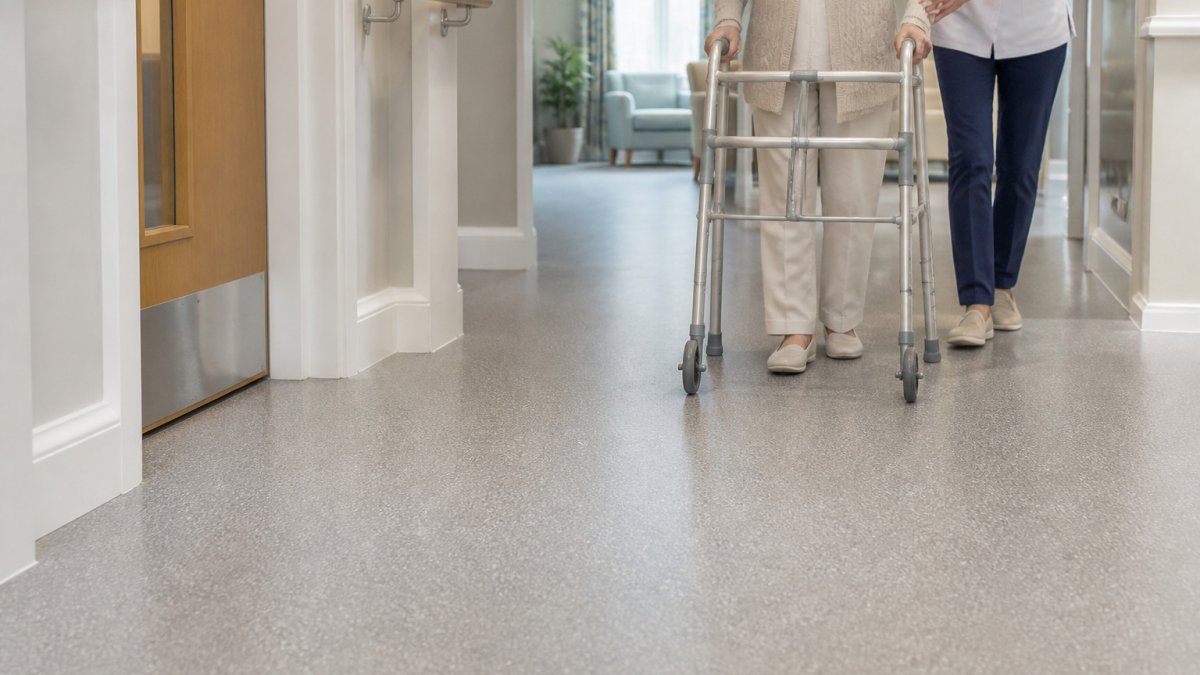
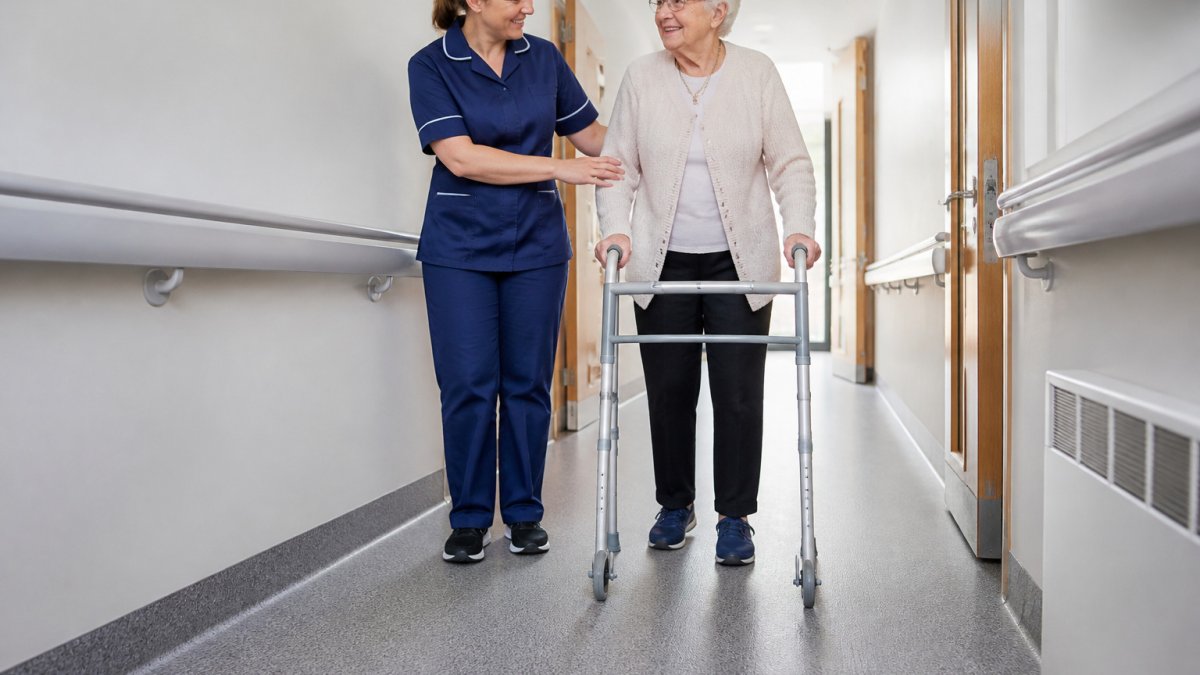
Corridors are where slip resistance and rolling mobility collide. Staff push wheelchairs, walking frames, beds and trolleys along these routes many times a day. A moderate texture gives grip without the drag that comes from aggressive surfaces.
Dining areas see spills of drinks, food and cleaning products. Choose a tight-jointed or welded surface that can be mopped frequently without water pooling in seams. Colour contrast at floor edges helps residents with reduced vision see where surfaces change.
Bedrooms need comfort underfoot and a safe route to the bathroom. A low-profile transition strip at the doorway reduces trip risk, and the flooring should be secure enough that a walking frame does not catch on it.
Clinical and treatment rooms are cleaned more intensively than other spaces. Confirm with the supplier that the finish tolerates the disinfectants your team uses, because repeated exposure to harsh chemicals can change the surface and reduce grip over time.
Entrances and reception are where wet weather enters the building. Entrance matting should extend far enough to dry shoes before residents reach the main floor, and the flooring at the door line needs a wet slip rating that reflects the reality of a rainy day.
Plan each room's floor as part of the whole layout, so textures, heights and edges work together. A floor that is right for a bathroom can be wrong for a corridor, and the specification should show that you have considered both.
Easy-Clean Flooring for Care Facilities: Hygiene and Maintenance
Hygiene is central in care settings. Look for seamless or tightly jointed floors that trap less dirt, and surfaces that tolerate regular disinfection without wearing down. Ask the supplier which cleaning products are approved, because harsh chemicals can change the slip rating over time.
Maintenance affects safety too. A floor that is cleaned with the wrong product or too little can become slippery. Set a cleaning schedule, and check the surface regularly for wear that could change its grip.
Non-Slip Flooring for Elderly Residents: Installation and Ongoing Inspection
Installation quality often decides how well a floor performs. Poor adhesion, uneven subfloors and badly fitted transitions create trip hazards that no material choice can fix. Make sure installers prepare the subfloor properly and finish edges and thresholds neatly.
After installation, inspect the floor on a regular schedule. Look for lifting edges, worn patches, water pooling and changes in texture. Record findings so you can spot patterns over time.
Inspection checklist:
- Check for lifting or loose edges each week
- Look for worn or polished areas each month
- Confirm transitions are flush and secure
- Retest slip resistance after major cleaning changes or wear
Booking a Flooring Consultation for Your Care Facility
Choosing the right floor for a care home is easier when you can see and touch real samples in the space. You can book a phone consultation to talk through your facility's needs before we visit. Mobile Carpets and Flooring SW Ltd brings a mobile showroom to your site, so you can compare materials in the actual rooms they will go into.
You can book a flooring consultation to discuss your care home's needs. Before you choose a material, you can also browse our safety flooring options for bathroom and wet-area use, or look at our luxury vinyl tile range for corridors and living spaces.
Frequently Asked Questions
What flooring is best for care facilities?
The best choice depends on the room. Compare options against the slip resistance rating, hygiene requirements and how often the floor will be cleaned before deciding.
How do you choose slip-resistant flooring for a care home?
Start by identifying the wet areas, high-traffic routes and rooms where residents move with frames or wheelchairs. Check the slip resistance rating of each product and confirm it suits the conditions in that room. Consider how the flooring will be cleaned and how smooth the transitions between rooms are.
Is vinyl flooring suitable for care home bathrooms?
Yes, slip-resistant vinyl is commonly specified for care home bathrooms when it has a textured or anti-slip finish.
How often should care-home flooring be replaced?
There is no single replacement interval, because wear depends on footfall, cleaning methods and the material chosen. Inspect the floor regularly for lost texture, worn patches, lifting edges and trip hazards. When slip resistance drops below the level needed for that room, or when repairs no longer hold, plan replacement. Keeping a record of inspections and cleaning routines makes it easier to justify the decision and to budget for the work over time.