 How-to
How to Ask the Right Questions at a Flooring Consultation
Last Updated: October 29, 2026
Quick Summary
Ask about material suitability for each room's moisture and foot traffic, subfloor preparation and who handles it, the full installation sequence and timescale, and what is included or excluded from the written estimate. A flooring consultation should also cover workmanship guarantees, payment schedules and the named contact for problems after fitting. Write your questions down before the visit.
- Gather rough room measurements, photos of damp or uneven areas, your budget range and ideal start date beforehand.
- Ask which underlayment is recommended and what the acclimation period is for each material.
- For kitchens and hallways, ask about water resistance, stain protection and how surfaces handle dropped items.
- Ask whether subfloor remedies are priced at the quoted rate or charged as a variation.
- Request a written estimate separating materials, labour, preparation and finishing rather than one lump sum.
Table of Contents
- What to Prepare Before Your Flooring Consultation
- Flooring Consultation Checklist: Questions About Materials and Suitability
- Flooring Suitability for Different Rooms: What to Ask Room by Room
- Questions to Ask a Flooring Installer About Preparation and Subfloors
- Flooring Installation Process and Timescale: What to Expect
- Costs, Contracts and Red Flags to Raise in the Consultation
- Book Your At-Home Flooring Consultation
- Frequently Asked Questions
What to Prepare Before Your Flooring Consultation
A flooring consultation is a structured visit where a specialist assesses your space and discusses materials and options. At Mobile Carpets and Flooring SW Ltd, we run these appointments as part of our service, and the homeowners who get the most from them tend to do the same preparation first.
The single biggest mistake is treating the visit as a browse. It is not. It is your one chance to pin down the details that decide whether the job runs smoothly six weeks later.
Before anyone arrives, gather these:
- Rough measurements of each room, or a floor plan from your purchase paperwork
- Photos of any damp patches, cracked screed or uneven boards
- A note of who lives in the home, including pets and anyone with mobility needs
- Your budget range and your ideal start date
- Any samples you have already seen and liked
You do not need precise figures. A rough sketch with room names is enough to start a sensible conversation.
One insider point: write your questions down before the visit.
Flooring Consultation Checklist: Questions About Materials and Suitability
Material choice is where a flooring consultation earns its keep. Ask directly which options suit your home, and push for the trade-offs rather than a sales pitch.
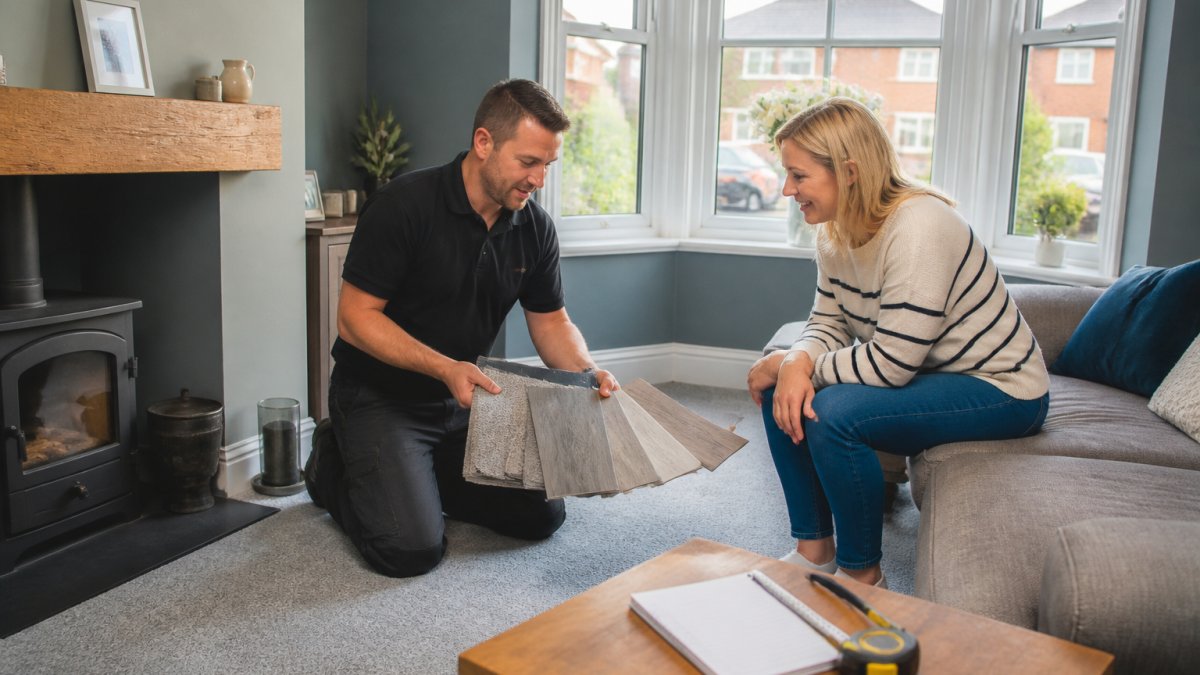
Work through this list:
- Which material suits this room's moisture and foot traffic?
- What is the wear layer or pile weight, and what does that mean for lifespan?
- How does each option feel underfoot and sound when walked on?
- What does material durability look like after ten years of family use?
- Which underlayment is recommended, and why that one?
- Can I see larger flooring samples in my own lighting before deciding?
- What is the acclimation period for each material?
If you are weighing tile against timber, our luxury vinyl tile range is worth a look.
Ask one more question most people skip: "What would you fit in your own home here, and why?" The answer tells you plenty.
Flooring Suitability for Different Rooms: What to Ask Room by Room
Different rooms fail for different reasons. A carpet that suits a landing can be a poor choice in a steamy bathroom.
Kitchen and hallway: Ask about water resistance, stain protection and how the surface handles dropped items. These are the highest traffic patterns in most homes.
Bathrooms and wetrooms: Ask whether the product is suitable for wet areas and what slip resistance it offers.
Bedrooms and living rooms: Ask about underlay, sound insulation and how easy maintenance requirements really are. You can also browse our carpets suited to bedrooms and living areas.
Stairs: Ask about transition strips, nosings and how the fitter finishes the edges.
For busy family homes, easy-clean surfaces usually beat luxury feel. For a spare room, the reverse is often true.
Questions to Ask a Flooring Installer About Preparation and Subfloors
Subfloor preparation decides whether your new floor lasts.
Ask any flooring contractor these:
- Who moves the furniture, and who handles debris removal?
Flooring Installation Process and Timescale: What to Expect
The flooring installation process and timescale depends on area, material and subfloor condition. Get the sequence in writing before you commit, because the order of works is where most delays and disputes begin.
The sequence, stage by stage
- Site inspection at the consultation.
- Order placed and materials delivered, allowing for any acclimation period the product requires. Ask for the specific figure for your product.
- Old floor lifted and subfloor prepared. This is the stage most likely to overrun. Damp screed, failed self-levelling compound or rotten timber can add days.
- Underlayment and flooring laid, with transition strips, nosings and door thresholds fitted.
- Finishing, skirting and a final walkthrough, including a snagging list signed by both parties.
Ask how many working days each stage takes for your specific rooms, and who manages the project day to day, the person who quotes is not always the person on site.
What happens if the subfloor fails inspection
This is the question that separates a prepared homeowner from a surprised one. Ask, before work starts:
- What is the acceptable moisture reading for this substrate, and what happens if it is exceeded?
- If damp or damaged screed is found, is the remedy priced at the quoted rate or as a variation?
- Will you pause and get written approval before carrying out extra preparation?
- What is the contingency sum in the estimate, and what is it based on?
A common pattern is for the subfloor to need more work than the initial survey suggested. The difference between a smooth job and a difficult one is usually whether that possibility was discussed and priced openly at the consultation.
Post-installation: what to do if something goes wrong
Most guides stop at hiring. The more useful question is what happens after the fitter leaves.
- Who do I contact first, the installer, the supplier or the manufacturer, and within what timescale?
- What is the snagging period? Ask for a defined window, often stated in the contract, during which minor defects are put right at no cost.
- What does the workmanship guarantee cover versus the product warranty? Lifting planks, loose carpet or failed seams are usually workmanship; fading or wear-through is usually product.
- How are claims handled if the manufacturer and installer disagree about the cause?
- What maintenance records should you keep to support a future claim?
Project management and communication
Good project management shows up as a clear schedule and a named point of contact. Ask how you will be updated, daily, at stage boundaries or only when there is a problem, and whether the same person handles both the quote and the installation. If nobody can tell you the order of works, that is your answer.
Here is the installation sequence the article lays out, stage by stage.
| Stage | What happens | Note |
|---|---|---|
| Site inspection | Carried out at the consultation | First stage |
| Order and delivery | Materials delivered, acclimation period allowed | Ask for the specific figure |
| Old floor lifted, subfloor prepared | Stage most likely to overrun | Damp screed or rotten timber can add days |
| Underlayment and flooring laid | Transition strips, nosings and thresholds fitted | Follows subfloor preparation |
| Finishing and walkthrough | Skirting, snagging list signed by both parties | Final stage |
Costs, Contracts and Red Flags to Raise in the Consultation
Budget questions belong in the first meeting, not the last. Ask for a written project estimate that separates materials, labour, preparation and finishing, so you can see where the money actually goes. A single lump-sum figure is impossible to compare or challenge later.
Hidden costs beyond the materials price
Most quotes cover the flooring and the fitting. The costs that surprise homeowners sit around the edges. Ask specifically whether each of these is included or extra:
A quote that excludes subfloor preparation is not a cheaper quote. It is an incomplete one, and the extra work reappears later as a variation. Ask for the estimate to state explicitly what is excluded, not just what is included.
Contract terms worth reading before you sign
Check these clauses line by line:
- Scope of works, rooms, materials, preparation, finishing and who supplies what.
- Price and payment schedule, the total, what triggers each stage payment, and whether a deposit is refundable. Be cautious of large upfront deposits; staged payments tied to completed work protect you better.
- Start and completion dates, and what happens if they slip.
- Variations, how extra work is priced and approved in writing before it starts.
- Workmanship guarantee, how long it runs, what it covers and whether it is separate from the manufacturer's product warranty.
- Cancellation rights, your right to cancel, and how it applies to a bespoke order.
- Complaints procedure, the named contact and the timescale for a response.
Red flags to name out loud
- A verbal quote with no written breakdown
- No written contract terms, or terms supplied only after payment
- Reluctance to provide references from similar jobs
- Pressure to pay a large deposit upfront or in cash
- No stated workmanship guarantee, or one that is vague about duration
- A quote that will not confirm whether subfloor preparation is included
- No mention of who is liable if the subfloor fails after installation
Indoor air quality and low-emission products
If anyone in the household has allergies or respiratory sensitivity, raise it at the consultation rather than after the order is placed.
Book Your At-Home Flooring Consultation
The right questions turn a sales visit into a proper plan. Bring your list, ask about subfloor preparation and warranties, and insist on written terms.
At Mobile Carpets and Flooring SW Ltd, we bring a large selection of samples to your door, so you can compare materials in your own rooms. Our consultants guide you through LVT, carpets and specialist options for wetrooms and accessible bathrooms. Our fitters then handle the installation.
Prefer a full visit with samples? Arrange an at-home flooring consultation and we will bring the showroom to you.
Frequently Asked Questions
What questions should I ask a flooring installer before booking?
Ask about their experience with your chosen material and what they provide in terms of workmanship. Check how they handle subfloor preparation and debris removal. A good installer will welcome these questions and give clear, specific answers rather than vague assurances.
How do I choose the right flooring for each room?
Match the material to traffic, moisture, and maintenance. For busy family living rooms and hallways, consider luxury vinyl tile (LVT) or carpet. Bathrooms and wetrooms need specialist options for wet areas. Ask your consultant to explain the options available for each room.
What should I prepare before a flooring consultation?
Clear the rooms you want measured, note any existing floor problems such as squeaks or damp, and gather inspiration photos or samples you like. Have a rough budget in mind and list your priorities, such as pet-friendly surfaces or underfloor heating compatibility. If you have a deadline, mention it early so the consultant can discuss timing with you.
What common flooring problems should I ask about?
Ask how the installer approaches common issues such as rippling and lifting edges, and what happens if problems appear after fitting. Check how they prepare the subfloor before installation.
Getting the questions right is the difference between a floor you love for years and one you tolerate. Start with your list, then let us take the guesswork out of the rest.