 How-to
7 Carpet Fitting Options for Limited Mobility at Home
Last Updated: November 12, 2026
Quick Summary
The best carpet fitting for limited mobility uses a firm, low-pile carpet under 6mm with a dense underlay and a tight, professional stretch fit. This keeps the surface flat under wheel pressure and reduces the effort needed to move, while deep pile and loose edges work against you.
- Short pile under 6mm with dense underlay and stable backing suits wheelchair users best.
- A lip above about 10mm can become noticeable under a wheel or frame tip.
- Strips under 5mm can be flat transition strips; 5-10mm needs a low-profile ramp.
- Fitters usually move furniture to one half, fit it, then shift furniture back.
- Loose rugs, foam tiles and deep pile are the three biggest problems for limited mobility.
Table of Contents
- Why Carpet Fitting Choices Matter for Limited Mobility
- The Best Carpet for Wheelchair Users: Pile, Underlay and Backing
- Low Pile Carpet for Mobility Aids: What to Specify
- Carpet Threshold Trip Hazards and Floor Transitions
- Comparing Carpet with Vinyl, LVT, Laminate and Rubber
- Carpet Fitting with Furniture in the Room: What to Expect
- Flooring to Avoid: Loose Rugs, Foam Tiles and Deep Pile
- Book a Home Flooring Survey Before You Commit
- Frequently Asked Questions
Why Carpet Fitting Choices Matter for Limited Mobility
A 2017 Cochrane review found that high-pile carpet increases rolling resistance and the average work per metre for wheelchair users compared with lower-pile carpet. That single finding explains why carpet fitting choices for limited mobility are not just about looks. The wrong pile, underlay or fitting method can turn a room into hard work.
At Mobile Carpets and Flooring SW Ltd, we have over 25 years of experience in carpets and flooring across the South West. A firm, short-pile carpet with the right underlay is generally the better choice for easier daily movement, while deep pile and loose edges work against that benefit.
Below, we break down the seven fitting options that matter most. You will learn what to specify, what to avoid, and how to plan a fit around furniture and doorways.
The Best Carpet for Wheelchair Users: Pile, Underlay and Backing
The best carpet for wheelchair users is a firm, low-pile carpet with a dense underlay and a stable backing. You can browse our carpets to see which low-pile options suit mobility needs. This combination keeps the surface flat under wheel pressure and reduces the effort needed to roll.
Grimley Flooring guidance on wheelchair-friendly floors notes that deep pile and very soft underlay make wheelchair movement harder. Low-pile, firm carpet is usually the better choice.
What to look for:
- Pile height: short pile, ideally under 6mm
- Underlay: dense and firm, not thick and spongy
- Backing: stable and tightly fitted, not loose or stretchy
Rolling Resistance and Wheel Pressure on Soft Carpet
Soft carpet compresses under a wheelchair's wheels. Each push sinks the wheels slightly, so the user works harder to move. The Cochrane review on compliant flooring confirms this effect for high-pile carpet.
Firm carpet spreads wheel pressure across a wider area. That keeps the surface stable and makes rolling easier.
Low Pile Carpet for Mobility Aids: What to Specify
Low pile carpet for mobility aids should be short-fibre, tightly tufted and fitted with a firm underlay. These three specs do most of the work.
When you order, ask for:
- A short-fibre pile, under 6mm
- A dense underlay rated for heavy foot traffic
- A tight, professional stretch fit with no ripples
- A low-profile threshold strip at every doorway
Carpet Concepts guidance on flooring for older adults recommends low-pile carpet or vinyl for areas used by people with mobility aids. Smooth flooring is easier to move on, but low-pile carpet still works well when specified correctly.
If you walk with a frame or crutches, short pile reduces the chance of a tip catching. The Center for Health Design's case for carpet notes that low-pile carpet can minimise resistance for wheeled equipment.
Carpet Threshold Trip Hazards and Floor Transitions
Carpet threshold trip hazards come from height differences between rooms. A carpet that sits higher than the adjoining hard floor creates a lip that catches wheels, frames and toes. The fix is not simply "fit a strip", the strip has to match the actual height difference, the door clearance and the way you move through the opening.
Start by measuring. At each doorway, check the finished floor height on both sides once the carpet and underlay are down, not before. A carpet at 12mm total thickness meeting a vinyl floor at 3mm leaves a 9mm step.
Match the transition to the gap:
- Under 5mm: a flat, self-adhesive transition strip or a slim cover strip is usually enough. These sit flush and give a smooth line between carpet and vinyl or tile.
- 5-10mm: a low-profile ramp strip, sometimes called a threshold ramp, tapers the height change so wheels roll up rather than catch.
- 10-15mm: a wider ramp or a purpose-made doorway ramp is safer, especially where a wheelchair or walking frame crosses regularly.
- Over 15mm: consider reducing the carpet build-up (thinner underlay, lower pile) or adjusting the subfloor rather than relying on a strip alone.
Door clearance matters as much as height. A strip adds 2-5mm under the door, and a ramp strip can add more. Check that the door still clears the new surface across its full swing, including any drop as it opens.
Common problem spots:
- Bathroom and wetroom doorways, where a waterproof floor meets carpet
- Kitchen-to-living-room openings, often the busiest threshold in the home
- Front and back doors, where an external threshold may already step down
- Any step between rooms, including a single step down into a conservatory
- Adjoining hard flooring such as LVT or laminate, which sits at a different height to carpet
A good fitter will measure floor height at each threshold and match the strip to it, then check the door swing before fixing anything.
Watch out: a strip chosen by eye rather than by measurement can leave a lip on one side of the doorway even when the other side is flush, so insist on a height check at both edges of every opening.
Comparing Carpet with Vinyl, LVT, Laminate and Rubber
Carpet is not the only option. Here is how the main flooring types compare for limited mobility.
| Flooring | Ease of Rolling | Grip | Comfort | Best For |
|---|---|---|---|---|
| Low-pile carpet | Good | High | High | Bedrooms, living rooms |
| Vinyl | Very good | Medium | Low | Kitchens, bathrooms |
| LVT | Very good | Medium | Low | High-traffic living areas |
| Laminate | Very good | Low when wet | Low | Hallways |
| Rubber | Very good | High | Medium | Wetrooms, care settings |
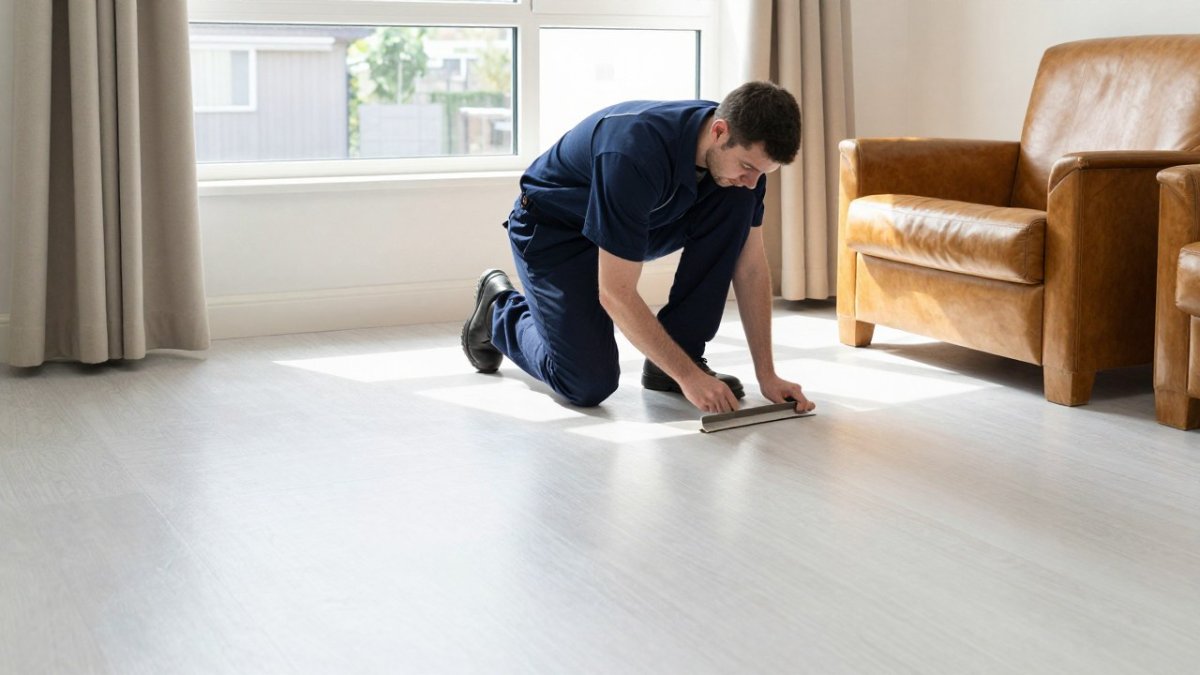
Vinyl and LVT are easier to roll on than carpet, but they feel harder underfoot. Low-pile carpet wins on comfort and grip. If you want to explore hard flooring, you can browse our luxury vinyl tile range or view our laminate options before you decide.
Carpet Fitting with Furniture in the Room: What to Expect
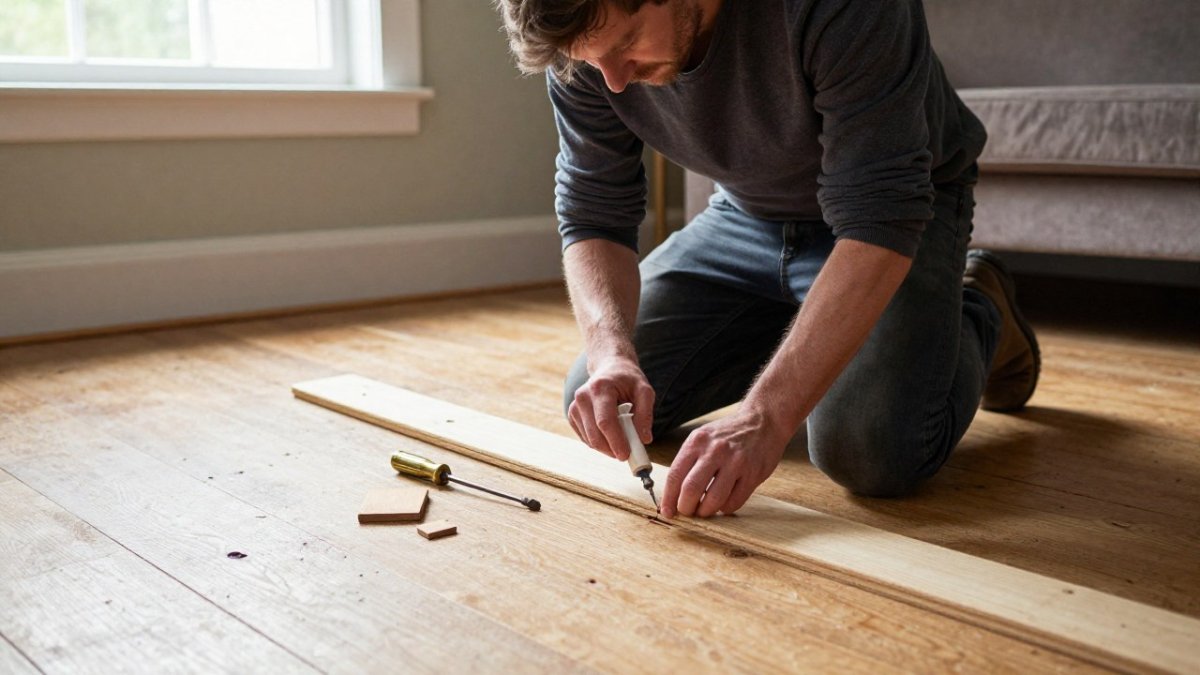
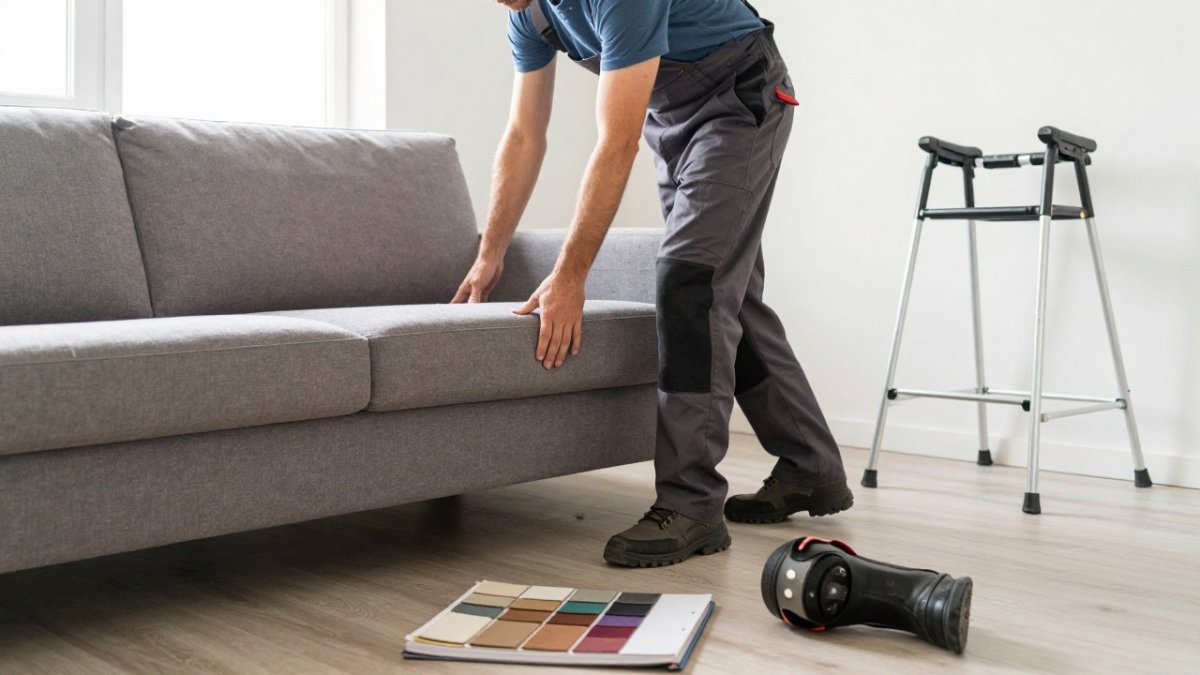
Carpet fitting with furniture in the room is normal and manageable. Most fitters move furniture to one side, fit half the room, then shift it back. What matters for limited mobility is the order of work and the route you keep open while it happens.
A typical sequence for a single room:
- Clear the small items first. Breakables, lamps, plants and anything on the floor should be out before the fitter arrives. This is the occupant's job, not the fitter's.
- Agree a safe route. Before any furniture moves, decide which doorway and corridor you will use during the fit and keep it clear. If you use a wheelchair or frame, tell the fitter in advance so they plan the order of work around that route.
- Move furniture in stages. Heavy items such as sofas and wardrobes are shifted to one half of the room, the exposed half is fitted, then the furniture is moved back and the second half is fitted. Beds are usually moved to one side and the carpet fitted around them, then the bed is shifted to finish.
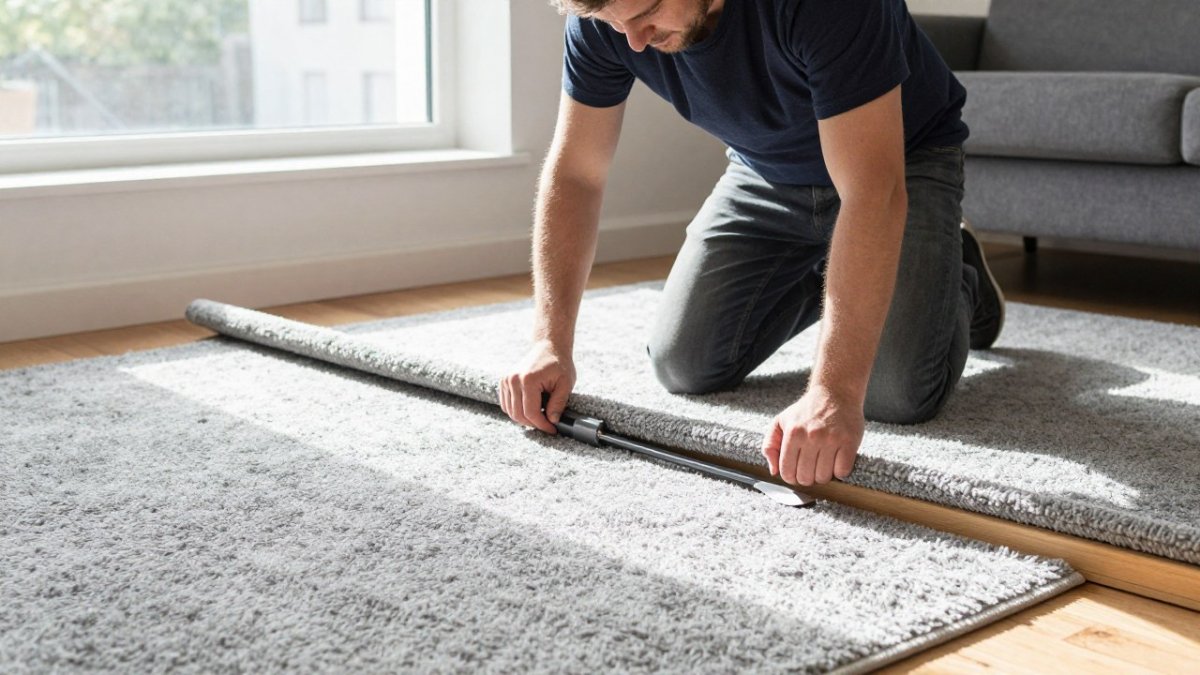
- Fit and secure the edges. Gripper rods go down at the perimeter, the underlay is laid, and the carpet is stretched onto the gripper. Doorways and thresholds are finished last so the transition can be checked against the finished height.
- Check the surface before furniture returns. Walk or roll the full room, check for ripples, lifting edges and any threshold lip, then move furniture back.
Plan for the room to be out of use for a few hours. A single room is usually a morning or an afternoon; a whole home takes longer and is often done room by room so you are never without a usable route.
What the fitter needs from you:
- Clear access to the room and a clear route through the home
- Small items and breakables removed
- Pets and children kept away from the work area
- A clear statement of how you move, so the fitter can plan around a wheelchair, frame or crutches
Watch out: furniture moved back too soon, before the carpet has settled onto the gripper, can pull the fit loose at the edges, so leave heavy items off the newly fitted area until the fitter confirms it is ready.
Flooring to Avoid: Loose Rugs, Foam Tiles and Deep Pile
Loose rugs, foam tiles and deep pile are the three biggest problems for limited mobility. Each one adds resistance, trip risk or instability.
- Loose rugs: they slide and curl at the edges, which is a trip hazard
- Foam tiles: they compress unevenly and can lift at the seams
- Deep pile: it sinks under wheels and makes movement harder
- Peel-and-stick flooring: it can lift at edges over time
If you need a safer surface, see our safety flooring options for trip-resistant choices that suit limited mobility.
Book a Home Flooring Survey Before You Commit
A home survey is the step that prevents costly mistakes. A fitter can measure pile height, check thresholds and confirm the underlay suits your needs before anything is ordered.
Our mobile showroom brings thousands of samples to your door, so you can compare options in your own home. Our fitters install to a professional standard.
To arrange a survey or quote, contact our team to discuss a convenient time.
Choosing flooring for limited mobility comes down to a few firm decisions: short pile, dense underlay, flush thresholds and a fitter who plans around your daily movement. Get those right and the floor works with you, not against you.
Mobile Carpets and Flooring SW Ltd brings the showroom to your home, with thousands of samples, specialist options for wetrooms and accessible bathrooms, and skilled fitters who install to a high standard. Get started with Mobile Carpets and Flooring SW Ltd and book a home survey that matches the floor to how you actually move.
Frequently Asked Questions
Is carpet suitable for someone with limited mobility?
Yes, provided the specification is right. A firm, low-pile carpet with a dense underlay gives a stable surface underfoot and is far easier to move a wheelchair or walking frame across than deep pile. Research has linked high-pile carpet to increased rolling resistance and the work needed per metre for self-propulsion. Smooth flooring such as vinyl or LVT is easier still for wheels, so the decision often comes down to comfort and warmth versus the lowest possible effort.
What type of carpet is easiest to walk on with a walking frame?
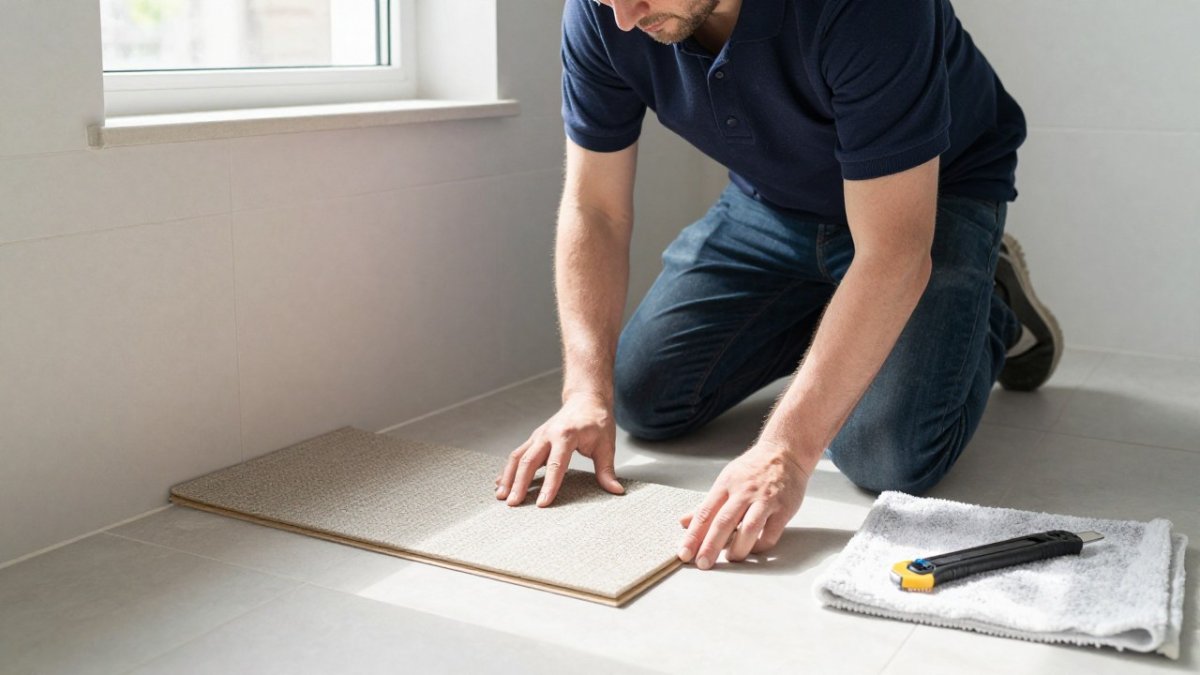
Short-fibre, low-pile carpet with a tight loop or cut pile of roughly 6mm to 10mm works best. Deep shag and very soft underlay let frame feet sink and catch, which makes each step harder. Ask for a firm, high-density underlay rather than a thick sponge one, and make sure the carpet is stretched tight at fitting so it cannot ripple under the frame. Carpet tiles are another option because a damaged tile can be swapped without refitting the whole room.
Can carpet edges and thresholds create trip hazards?
They can. A raised edge where carpet meets vinyl, tile or laminate is one of the most common trip points in a home adaptation. Keep the height difference to 10mm or less, use a tapered transition strip rather than a square-edged bar, and have the carpet gripper fitted so the pile sits flush with the hard floor. Loose rugs and curling carpet edges should be removed or fixed down, and any threshold over 15mm is worth reviewing with an occupational therapist.
Can carpet be fitted without moving all the furniture at once?
In most rooms, yes. Fitters routinely work in sections, moving furniture to one half of the room, laying and stretching that area, then shifting everything across to finish the rest. Larger items such as wardrobes and beds can often be moved rather than emptied. Tell the fitter in advance about any fixed furniture, heavy items or equipment that cannot be lifted, and clear small possessions, cables and breakables yourself before the visit.